Copetown Woods
Overview
Once struggling fields of Broccoli, Copetown Woods, has matured in the decades since opening to become one of Ontario’s most popular public golf destinations. This Dick Kirkpatrick design, stewarded by Copetown Woods team, is well loved by both enthusiasts and beginners of the game for its fun design characteristics, great conditioning, and affordability aspects.
AT A GLANCE
-
Dick Kirkpatrick (2002)
-
-
Not formally ranked
-
Fun, reasonably priced golf
Some neat architecture features not likely to be found at other public access courses in this price range
Canada’s most engaging golf course social media account - shout out Barry
Public access ($62-$83)
-
All In The Family - SCOREGolf
About
Copetown Woods may never appear on a SCOREGolf Top 100 list, and that isn't what the place is built for. Sitting west of Hamilton in the hamlet it's named for, the course has assembled one of the more devoted followings in southern Ontario on terms that have almost nothing to do with rankings.
For most of its first two decades it operated as a local secret — good golf at a fair price. That sort of all changed when general manager Barry Forth leaped into the club's social media accounts during COVID. Exploding in popularity thanks to his enthusiastic, and sometimes “funny old guy” approach to social media. But Barry isn’t the only reason Copetown is so deeply loved and appreciated. Everyone who visits, whether their first time or hundredth, knows the experience — a culture built around fun, creativity, and fresh ideas — is what they come for. For an industry that more often than not leans towards being stiff, Copetown has organized itself around the opposite, and that decision shows up in the food service, the conditioning, the pace of play, and in a general willingness to let players enjoy themselves without being managed. That formula now produces more than 40,000 rounds a year with people specifically seeking out Copetown, not just a place to play golf.
The Forth family has owned Copetown Woods since the course opened in 2002, hiring Dick Kirkpatrick to route eighteen holes across fields that had failed as broccoli farmland. The soil was too sandy for vegetables — the same quality that made it good ground for growing grass. Kirkpatrick's work has aged well: waste areas cut into the corridors, fescue framing the fairways, run-off surrounds on several greens, and a double green shared by the second and 18th adds a unique characteristic.
With players visiting from all corners of southern Ontario to experience what makes Copetown, Copetown, the golf course continues to flourish. In efforts to expand, and be one of the only developers building new golf in Ontario, Barry and crew have turned to architect Christine Fraser to design and build a 10-hole short course aimed at beginners, families, and those looking for a quick loop on an adjacent plot of land. The future of this particular project remains uncertain at this time.
Copetown Woods is not an architectural destination like some of the other profiles on this site, and doesn't present itself as one. Rather, it is rooted in a fun-first attitude. It gives players room off the tee and forgiveness where it matters without sacrificing a diversity needed for an engaging test, and that generosity is precisely why it works for the audience it serves; there's strategic interest and some heroic qualities here for better players, but strategy is not the organizing principle. Sitting at the intersection of being fun-first and architecturally diverse, Copetown displays the necessary qualities that make it a notable public golf course to visit in Southern Ontario.
Featured Holes and Course Details
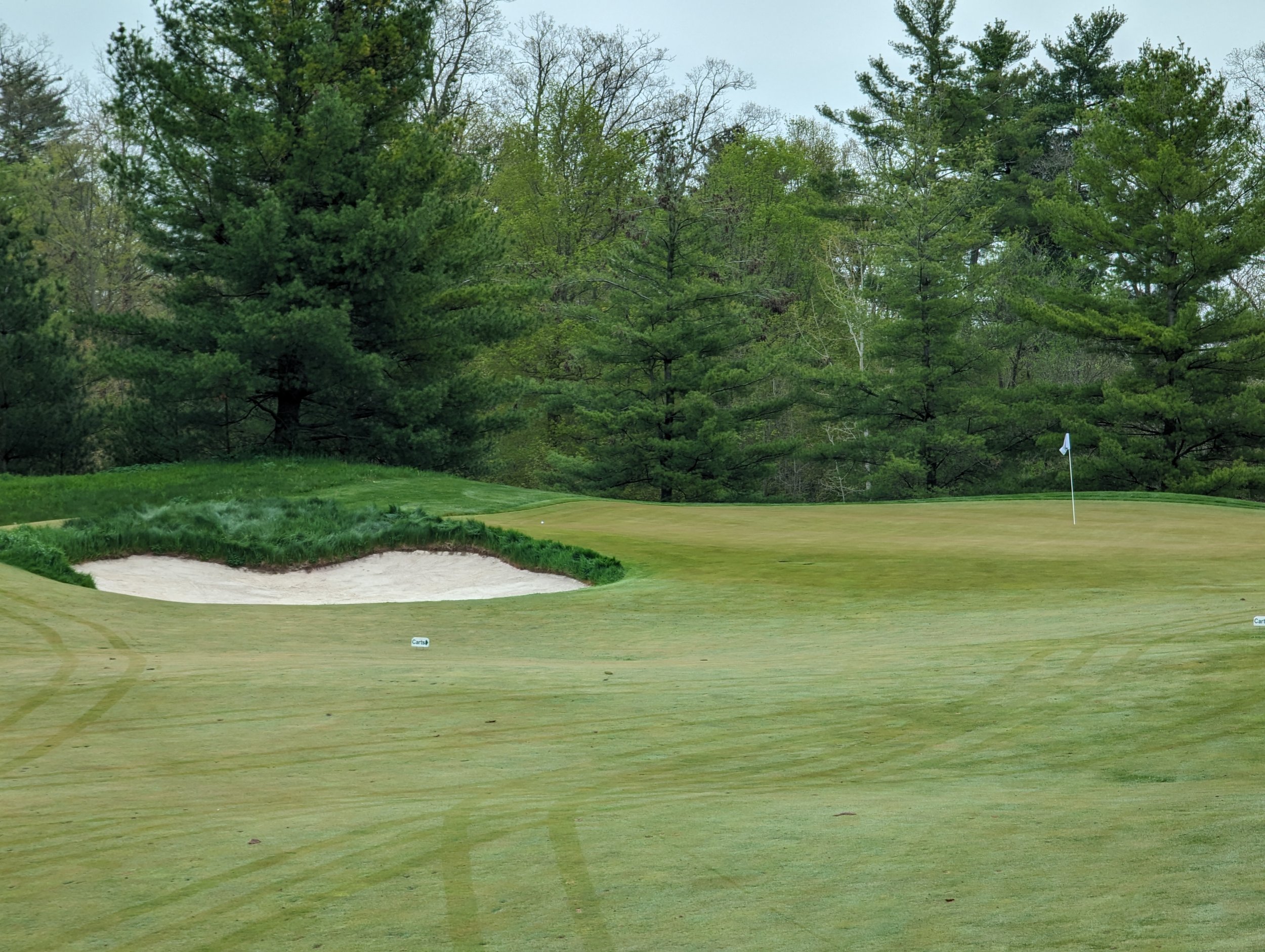
Hole 1 | Par 5 | 496 Yards: The first hole often provides a good introduction into the ethos of a golf course. Copetown’s “fun-first” experience opens with this short, gettable, par 5. Yet, it is not as easy as the scorecard first appears. The hole is situated up against the property boundary on the right, forcing players towards safety along the left of the hole where one finds, long fescue grasses, a grouping of trees which protect the approach and the central roadway that cuts through this part of the property. Originally a central bunker was placed in the middle of the fairway, over the years this was converted to a clump of long grass, which can swallow shots hit here. With plenty of room, navigating these hazards is not an exacting test, but it is an intimidating one. Closer towards the green one finds the surface perched up above the surrounds. Its narrow orientation objectively prefers shots hit from the left half of the fairway, with players taking caution with misses short potentially finding a bunker, misses right ejecting off the short grass surround and funnelling away, and misses left or long finding the rough. It’s a hole where one may have an easy look at eagle, or can struggle between making par or larger numbers upon finding the hazards.
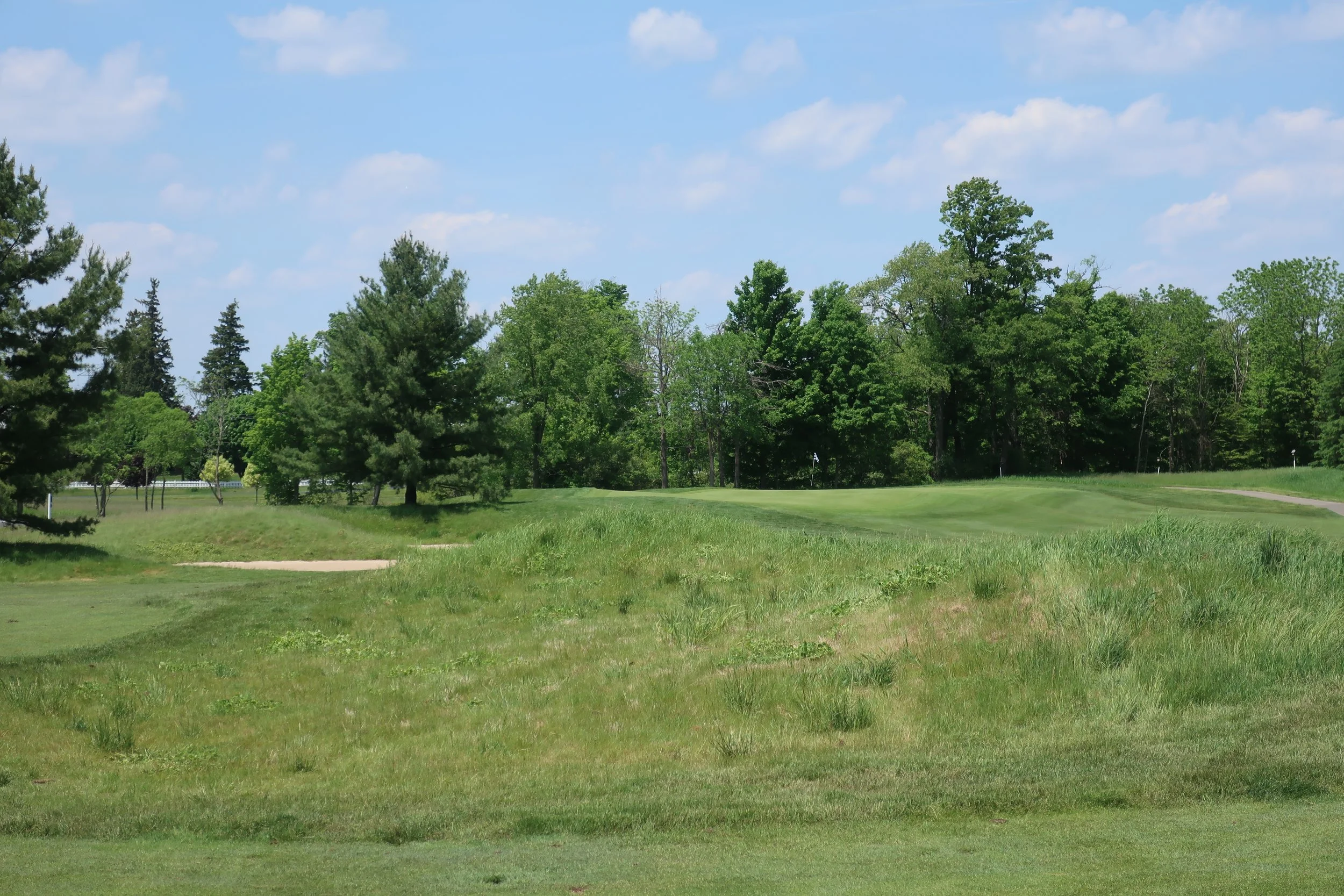
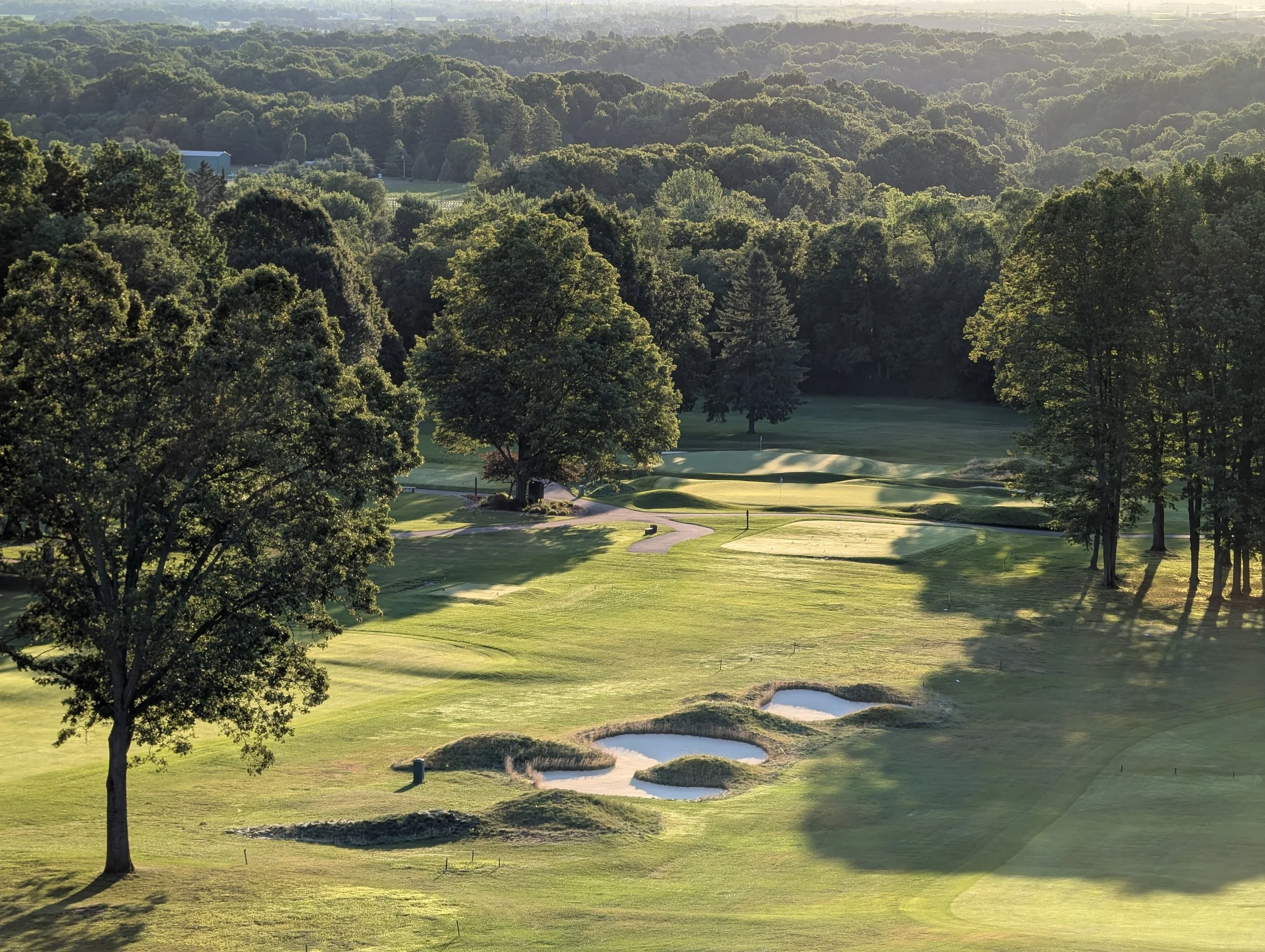
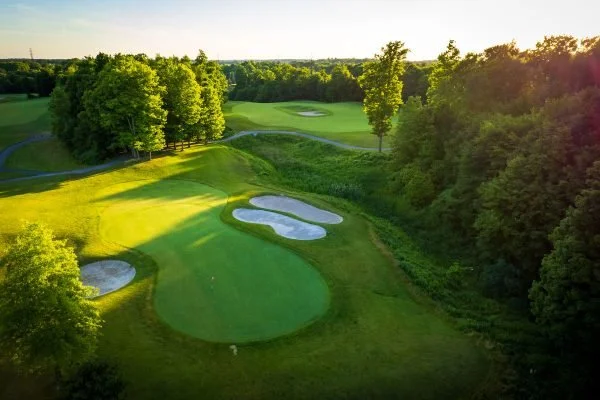
Hole 6 | Par 4 | 426 Yards: One of the key features at Copetown are the green surfaces. Some are more subtle than others, like that at the par 5 14th, while others like that of the par 4 sixth hole are more heavily contoured. The sixth is a mid-length two shot hole with an elevated tee shot, hit to an expansive fairway which is lined by large waste bunkers on either side. The green is angled such that the best position to play an approach from is up the left of this hole. At the green site the surface consists of two tiers, a large front portion and a smaller back portion which is bisected by a large hill. The crux of playing this hole rests on finding the appropriate tier, otherwise players are dealt with hitting shots up or down this steep obstacle.
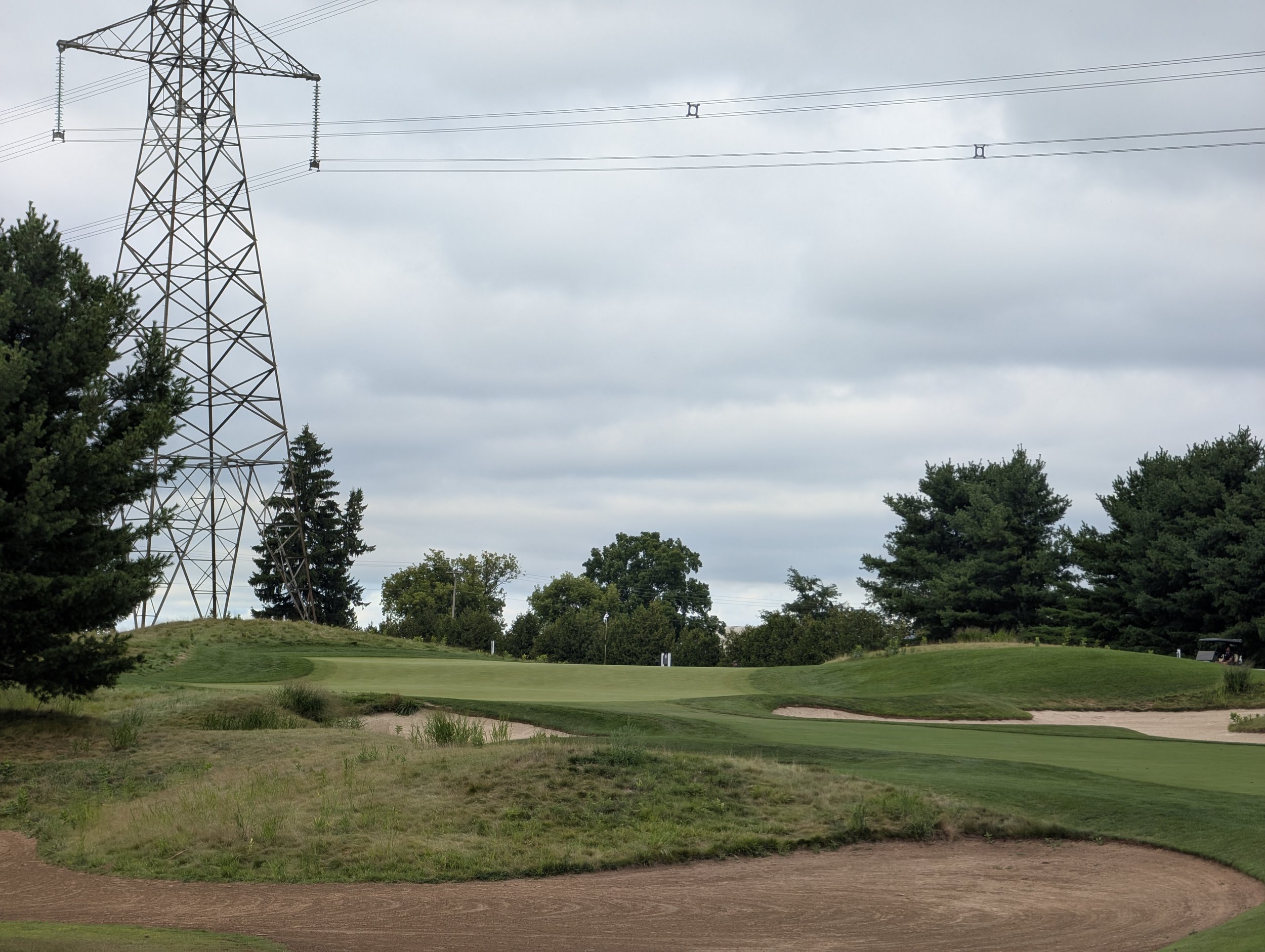
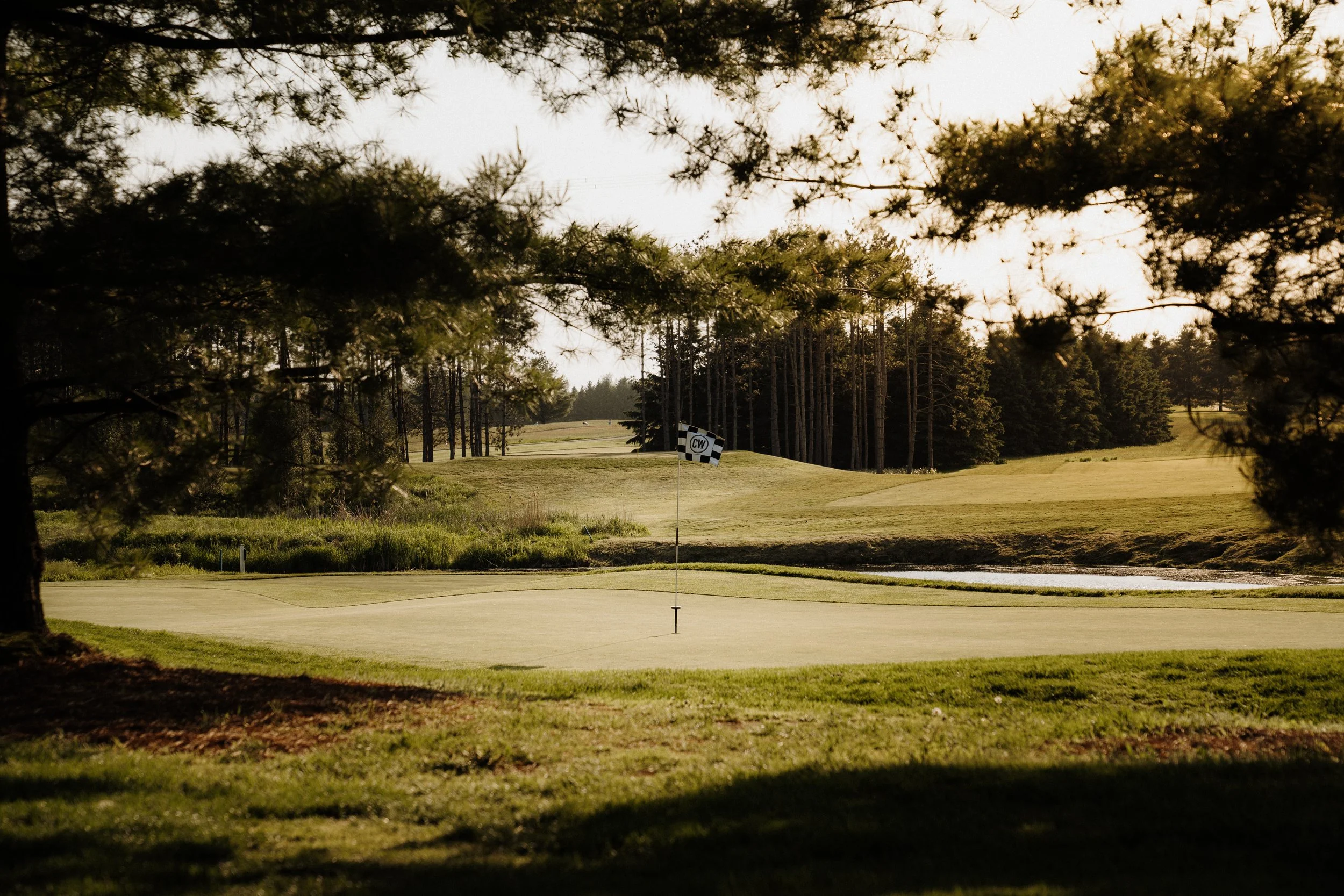
Hole 8 | Par 4 | 354 Yards: The eighth hole is a short par 4, which would be categorized as a drive and pitch hole for most players. Off the tee, the usual play is to hit less than driver and simply find a comfy spot in the fairway around the 110-150 yard distance, short of the creek that bisects the fairway. The key for players is to position themselves up the right side, which opens up green surface that is angled towards the left in the rear. Like most of the holes at Copetown, it’s the green that attracts most of the attention, and this is surely the smallest and trickiest one on the property. The surface sits benched into a small hillock, with anything short coming to a rest below the surface, and anything long finding the hill in the rear. Internally there are two tiers, a larger front portion and a small rear portion, which is raised above the former by a good two feet or so. It’s an interesting short hole that demands players play to protect par, rather than take on demanding pin positions for a look at birdie.
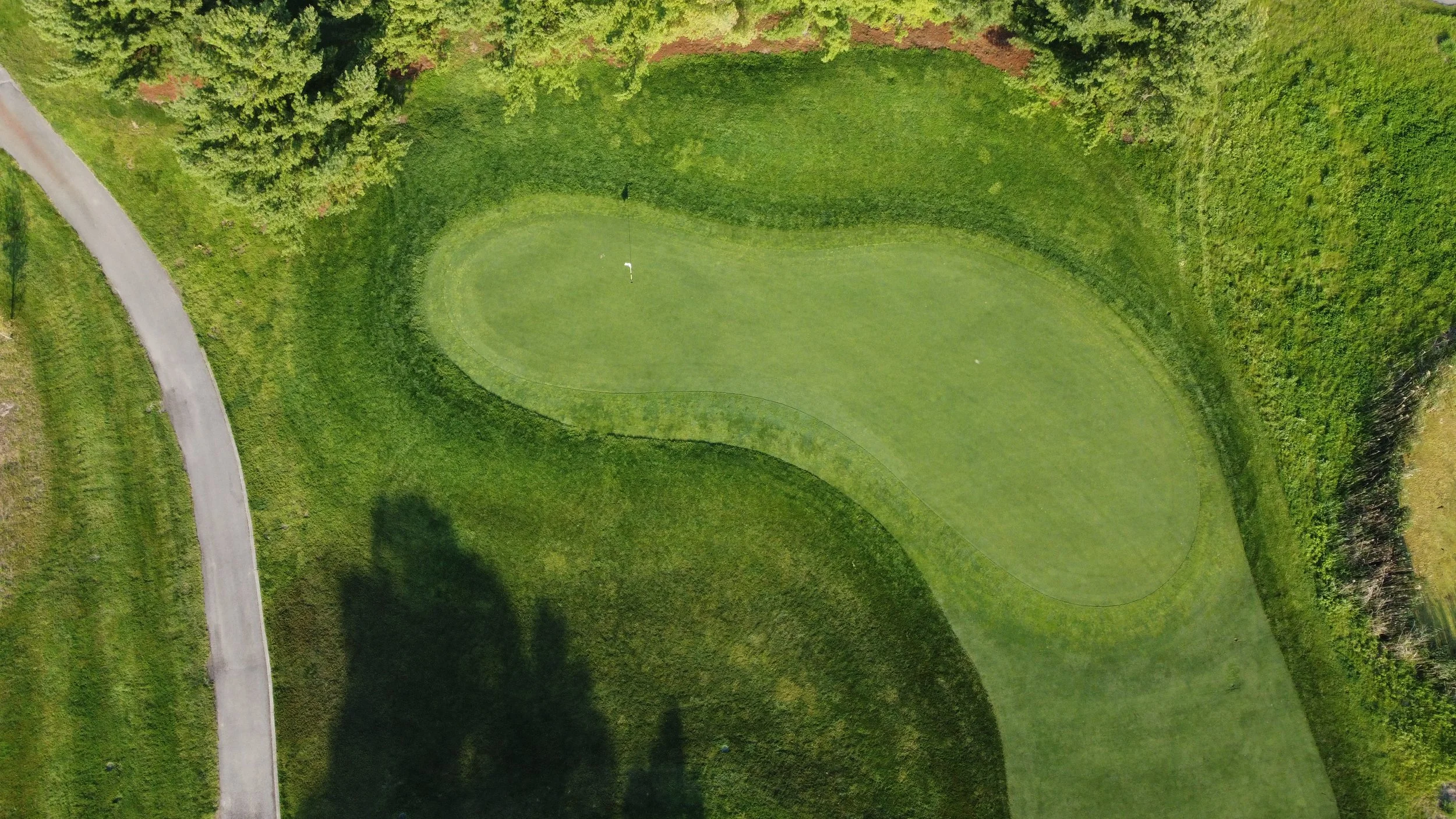
Hole 9 | Par 4 | 429 Yards: One of the longer par 4’s on the property, reaching 430 yards from the back tee, which is positioned on the opposing side of the driveway. The tee shot is hit to a wide fairway that rolls along the land gently, fescue grasses lining either side. The green is bisected by a central ridgeline, separating the rear bowl-like section from the front pad which is pitched from back-to-front and rolls back off the front edge. It’s not a complicated hole, but a rewarding one, where a long drive leaves just a short pitch to a green which is raised above the fairway.
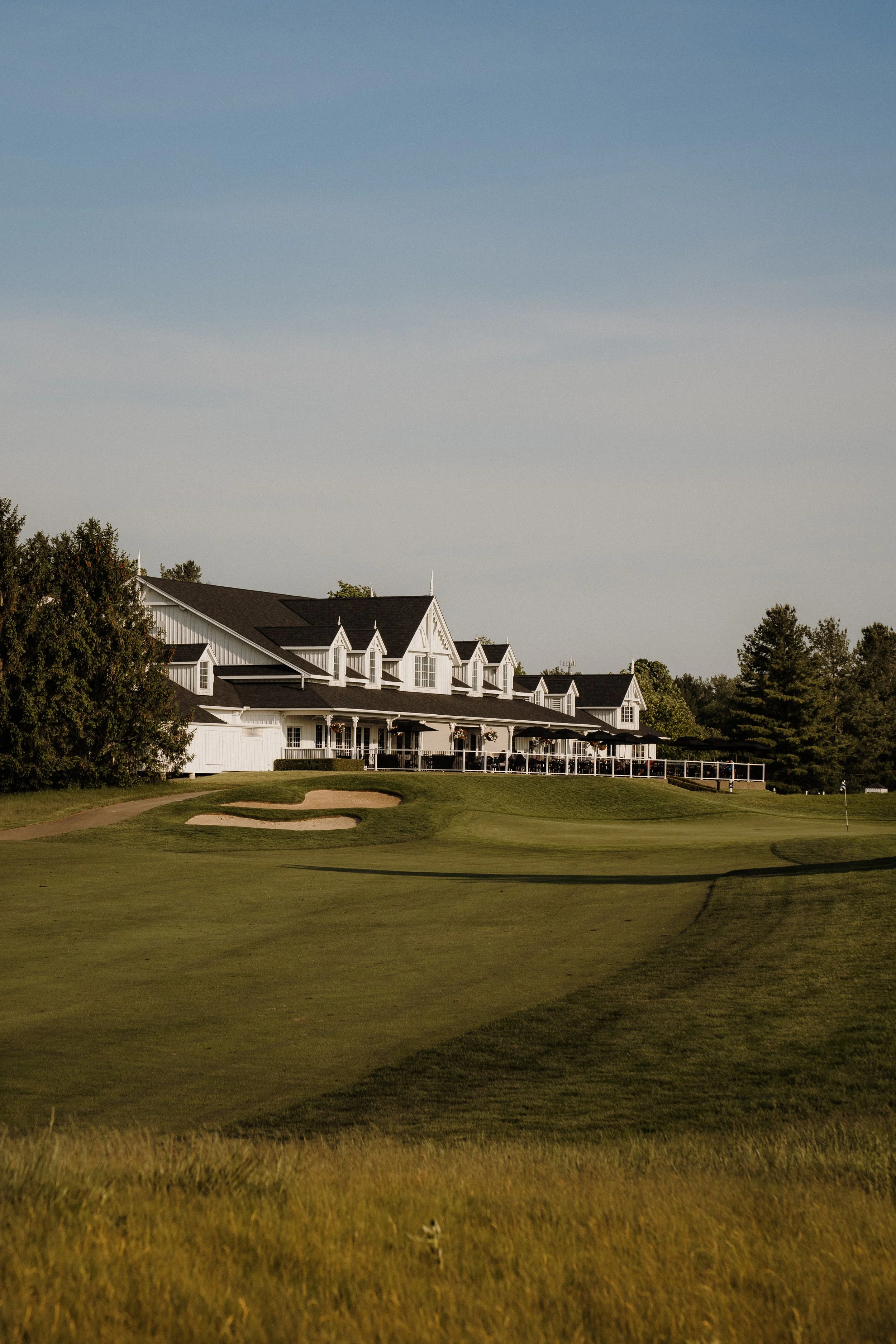
Hole 10 | Par 5 | 505 Yards: Like that of the first hole, the second nine opens with another risk/reward par 5. While the first contained OB along the right side of the hole, the tenth contains OB along the left side. The fairway snakes around the various waste bunkers up the right, and a hillock up the left, with the latter obstructing the view of the fairway where one would hit a lay up shot. Those fortunate enough to drive the ball well, can test their approach game and take on this green as a two-shot hole. But the cleverness in this hole’s defensive construction comes within the green itself which is narrow in orientation and tilted surface, which kicks shots hit from distance close to the property boundary, thus preferring shots hit from the approach area up the left. Holes like the tenth are central to Copetown’s fun-first ethos, which allows players to abundantly attempt risky shots, but not be out of luck should their attempt lack enthusiasm of great ball striking.
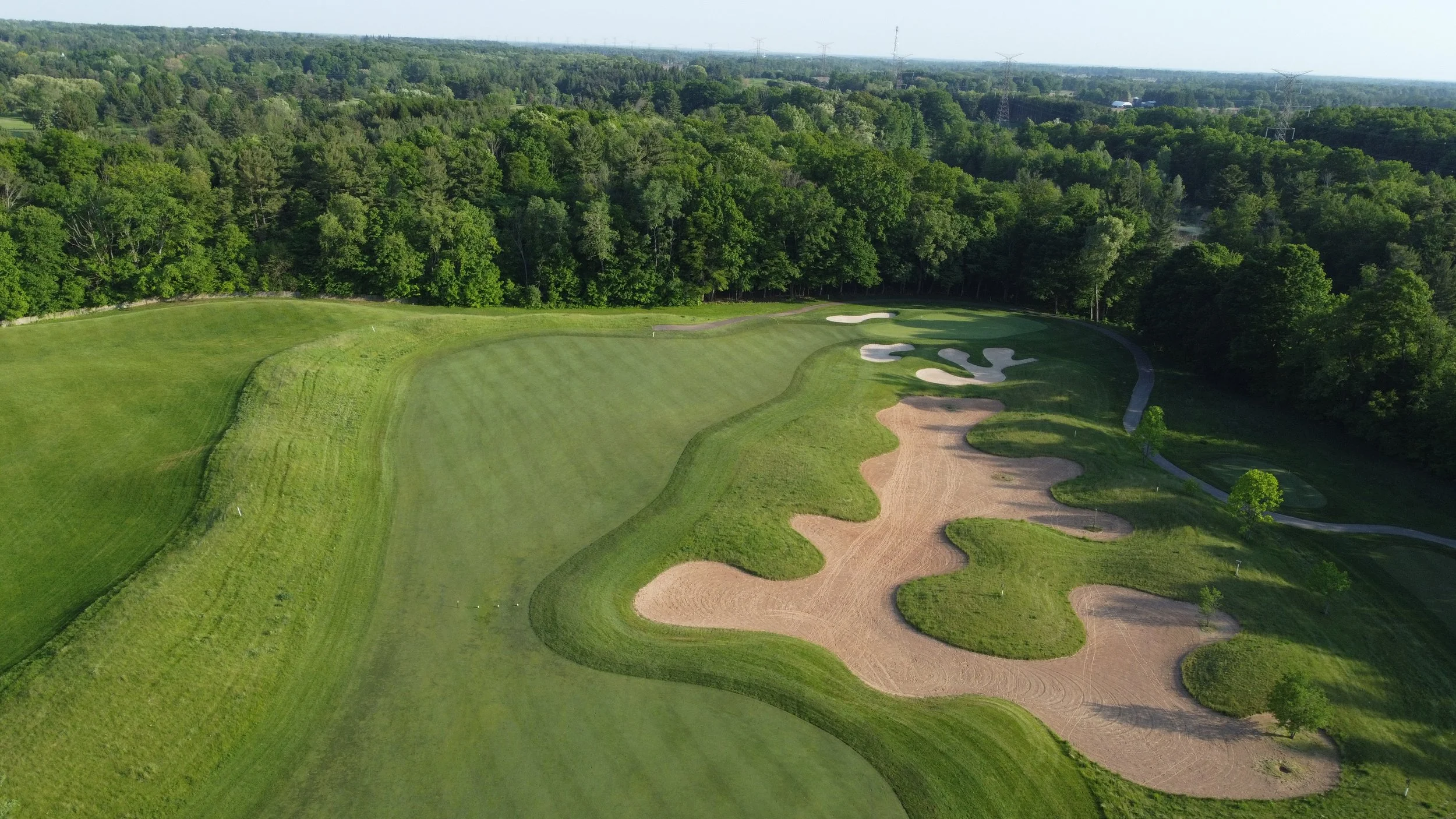
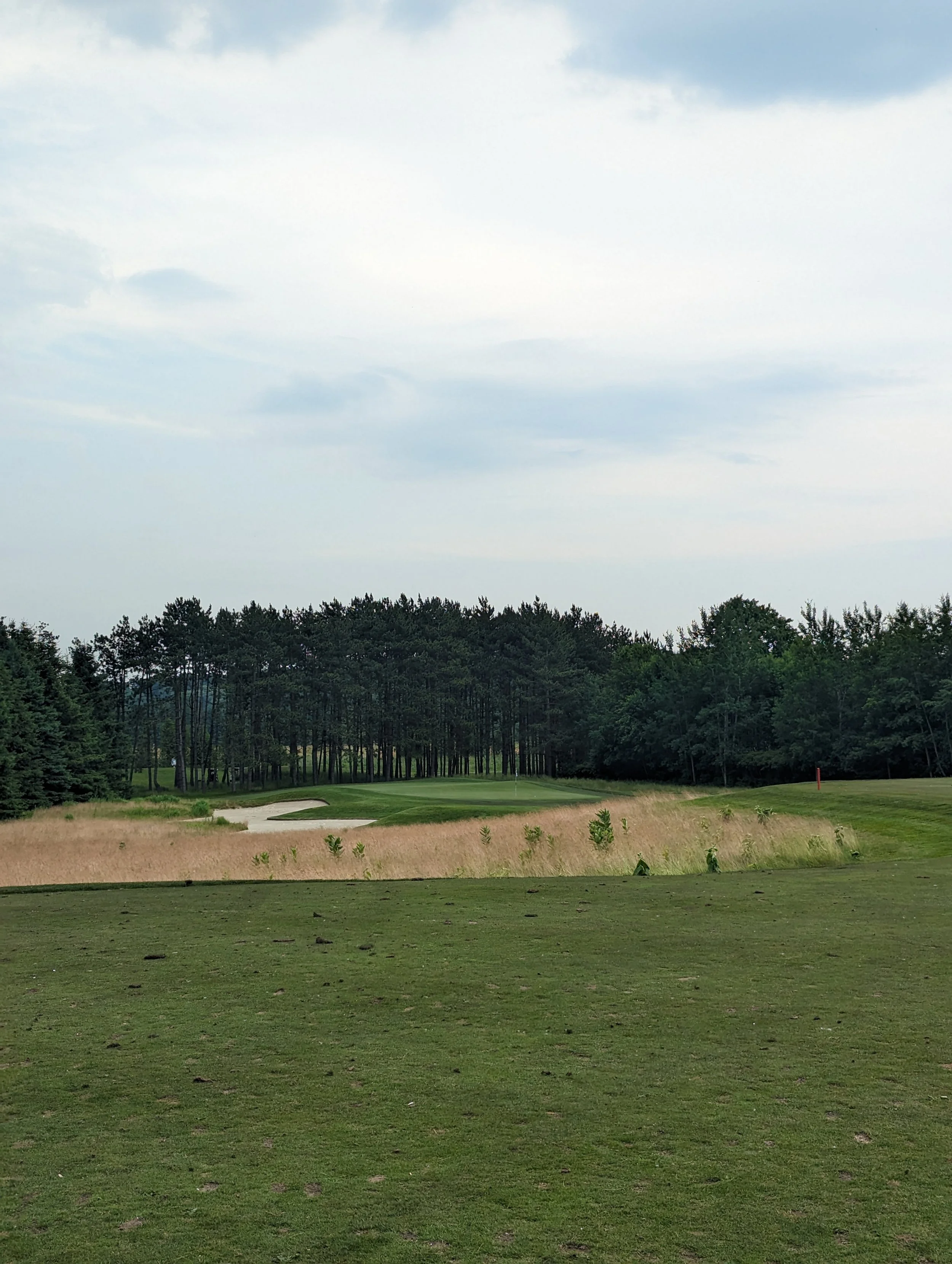
Hole 14 | Par 5 | 525 Yards: Copetown’s ability to showcase ample variety of design elements from hole to hole is another strong trait. While much of the course plays along the north-south corridor, the holes along this corridor vary strongly in lengths, green designs, and hazards as to keep one engaged from hole to hole. At the 14th the key features are all found within 50 yards of the green. Here a large bunker cuts across the straight away corridor between the players and the green site itself. The green is slightly elevated, this combined with the bunker short, causes the putting surface to be blind. This leaves the player with two options, try to navigate around the hazard and up the left of the hole, which carries other risks with OB and another bunker in this area, or hit the hero shot and try to carry the bunker. Closer to the green, one realizes that the bunker is actually positioned well short, some 20 or so yards. But that’s not the hole’s only defence, internally the green is shaped such that it repels shots hit with little spin — sort of like a turtle back — falling off on all sides with ample short grass surrounds to leave the player with plenty of recovery options.
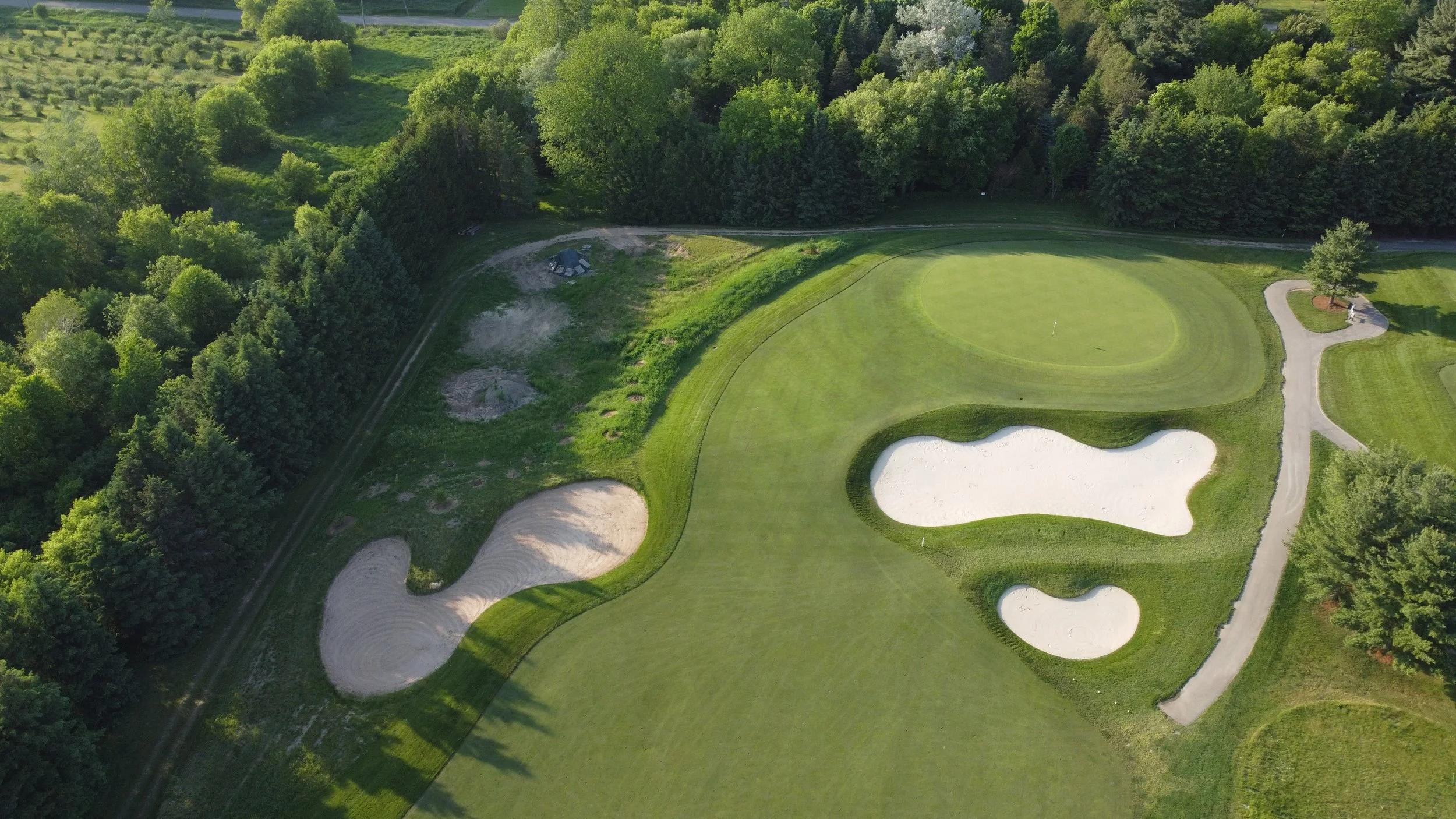
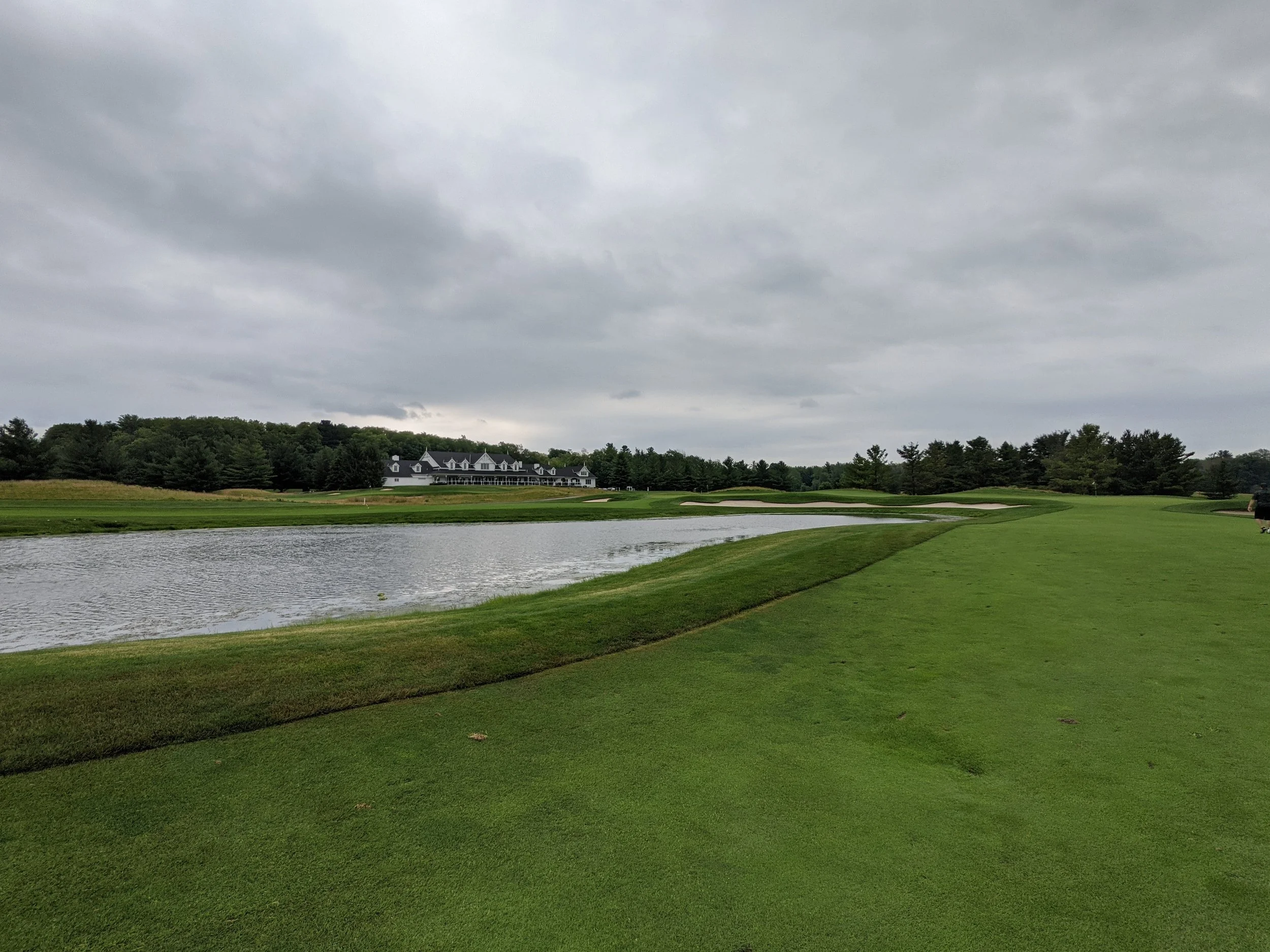
Hole 18 | Par 4 | 405 Yards: The round comes to a conclusion at one of the more difficult tests on the golf course. While not a long hole, the drive tests accuracy with the fairway narrowing just past the 150 yard marker, the pond in play along the left side, and a forested section along the right. Should the player find the fairway, the approach shot is not any easier. The 18th has a shared double green with the second. In practice, the double green is a little neat feature, but in reality it serves little purpose other than gimmick as neither hole location is placed in close proximity to the centre of the surface. This leaves the practical surface of the green much smaller, with most pins for the18th kept in the front to middle right section. Its a challenging end to a round that allows players to spray the ball, recover for par, and make birdies on the many scoreable holes.
You might also like..
-
Dragons Fire Golf Club
-
Mystic Golf Club
-
Otter Creek Golf Club