Kawartha
Overview
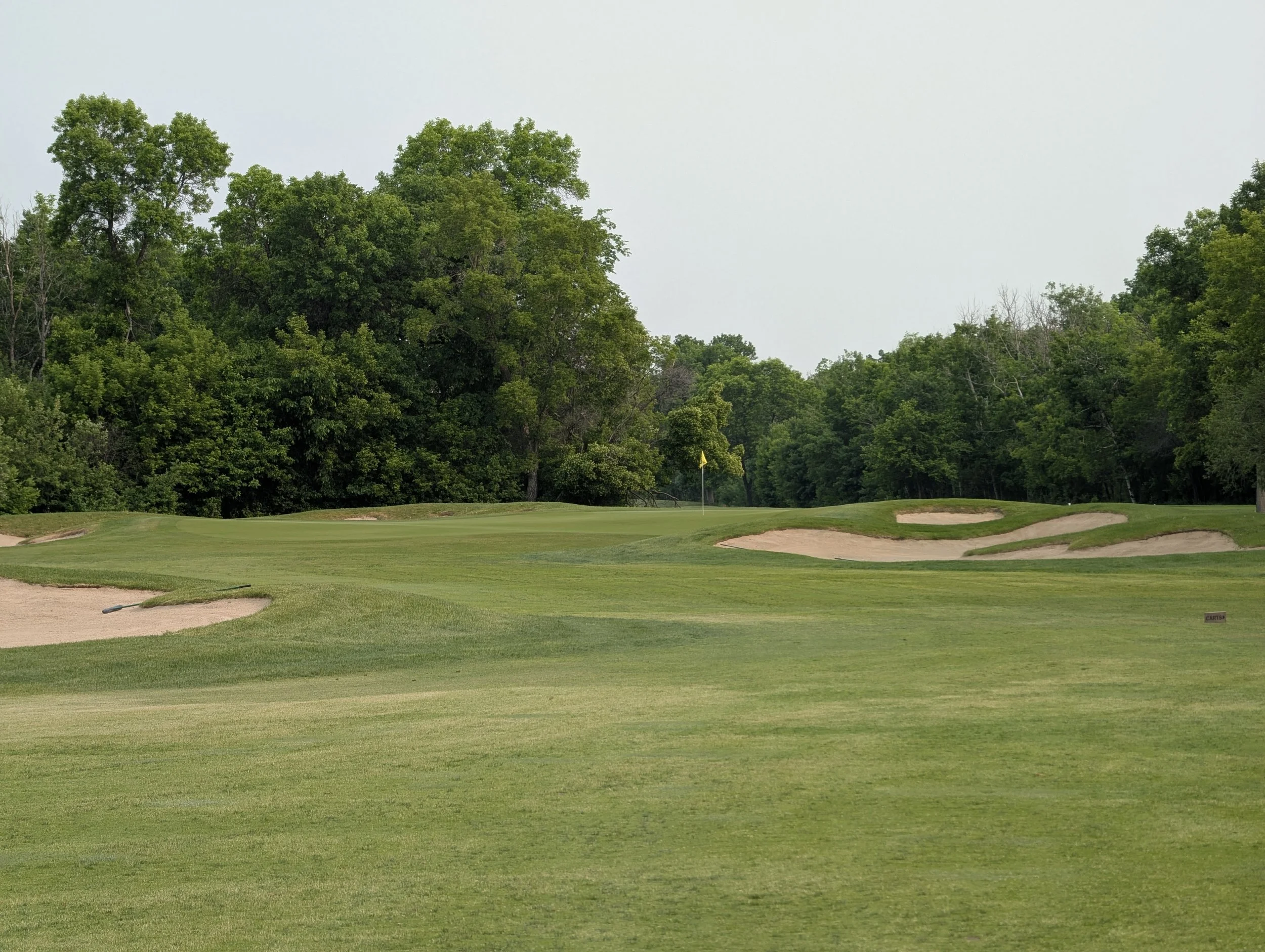
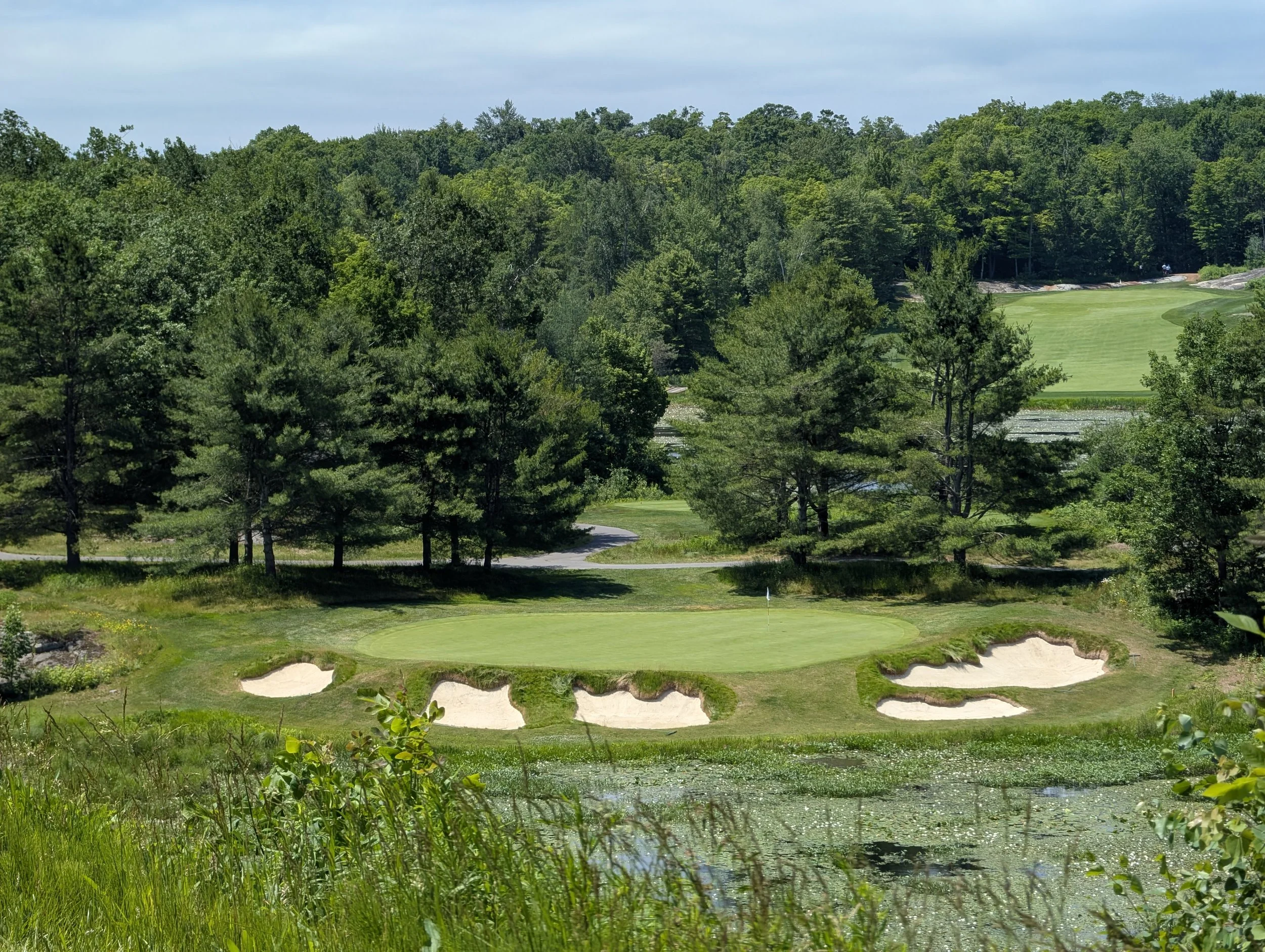
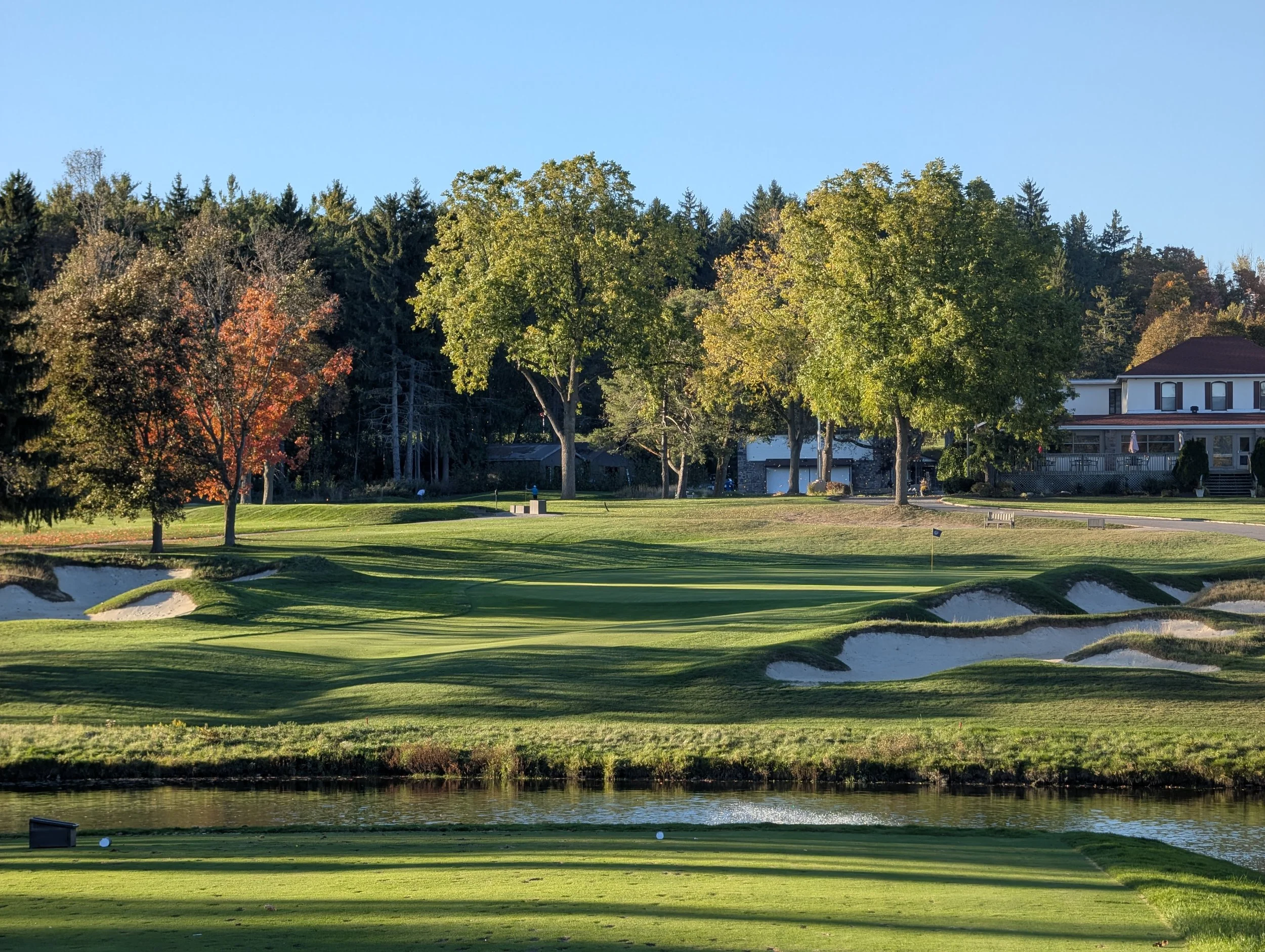
One of Stanley Thompson's most underrated works and perhaps the best preserved set of Thompson bunkers anywhere in Canada by way of restorative efforts of architect Ian Andrew. Kawartha maintains the grounds in a pleasurable and firm fashion, allowing the terrain to showcase the highly desirable qualities of proper golf. While private, the club allows limited public play on select dates.
AT A GLANCE
-
Stanley Thompson (1931/1938)
Renovation by Ian Andrew (2006)
-
-
Beyond The Contour 2024-2025 #46
Top 100 Golf Courses #46
SCOREGolf Top 100 2024 #93
-
Designed for Canadian General Electric Corporation and its employees. Opened in 1932 as nine holes, expanded to 18 in 1938.
Among the most underappreciated designs in Canada.
Ian Andrew's 2006 restoration of the bunkers stands as one of the most significant Thompson restorations.
Limited Public access ($105-$130)
-
None
About
A small bit of frustration appears for great things that go unnoticed, or at least fly under the radar more than they should. On the other hand, it is also particularly rewarding to keep great things secret. Avoiding the confluence of popularity and the inevitable cost that comes with it. In Peterborough, Ontario, Kawartha Golf Club feels like that great secret. Now, this is no revelation to those who know, nor is it particularly insightful given its Top 100 status - but for a publication like SCOREGolf to rank Kawartha as only the 93rd best golf course (as of 2024) in the country is a bit of a sore spot in these pages.
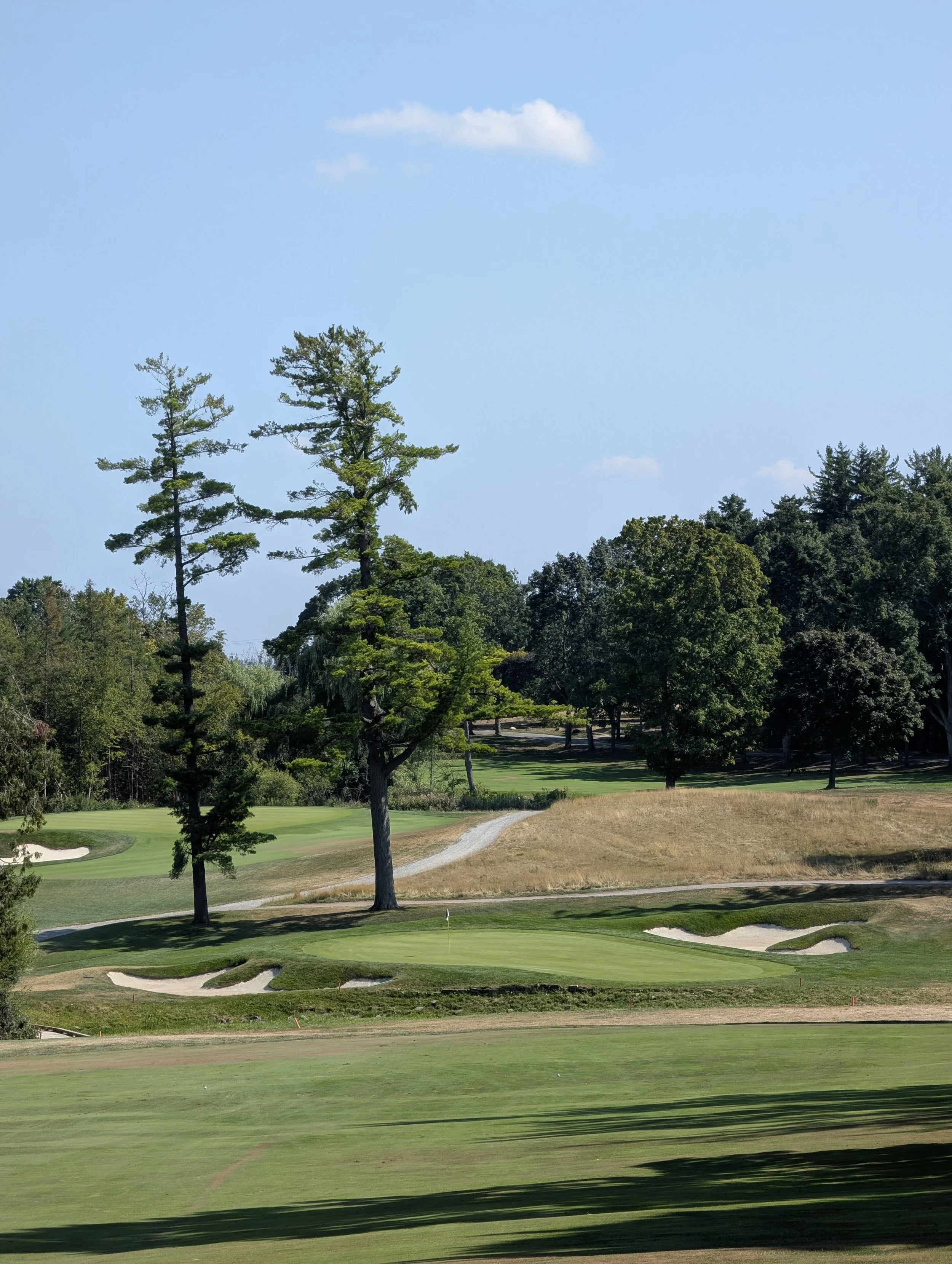
Tucked into a quiet residential neighbourhood, the club has operated for nearly a century without much fuss, and without the rankings attention its architecture plainly deserves. Kawartha is genuinely one of the finest golf courses in Canada, and arguably one of the better displayed Stanley Thompson designs still in form today - with very few questionable design changes by Thompson’s associates and disciples in the decades since the club’s founding. The way the course presents itself and plays is worthy of noting as well, with the contrasting brown and green hues in peak summer months indicating its firm conditions, while at other times the fall colours showcasing a beautiful setting in its own right. Simply lovely.
Thompson received the commission to build Kawartha in 1931 from Canadian General Electric, who leased the land for use by their employees and associates. Back then, these corporations commonly built recreation for their employees, with such similar circumstances coming about at places like Grand Mere and Kenogamisis to name a few. The original nine holes opened in 1932, and the second nine following in 1938. The routing that exists today — with two notable exceptions — reflects that original work.
What Thompson was given was not dramatic terrain by his standards. No mountain panoramas. No lakeside or oceanside vistas. Just a piece of quietly rolling Ontario farmland with enough movement in the ground to create something interesting. He routed the course to work gently across the terrain, moving players through valleys and over small crests, never forcing the land to do something unnatural or to make the walk undesirable for players. Holes like the sixth, 10th, and 15th steadily climb to high points while the seventh, 11th, and 18th gently cascade down to the low points of the property without feeling artificial or require excessive effort.
The greens, in particular, reward study. Thompson built them with careful tilt and subtle interior contour, designed to receive the ball from specific angles and punish the wrong approach window. This is the hallmark of Thompson’s strategic design philosophy - in which he very seldomly built much strategic interest off the tee into his golf courses, instead preferring to emphasize the green complexes as his input on strategic design. A good look at greens like the second, fourth, 10th, and 11th are evidence of this intent.
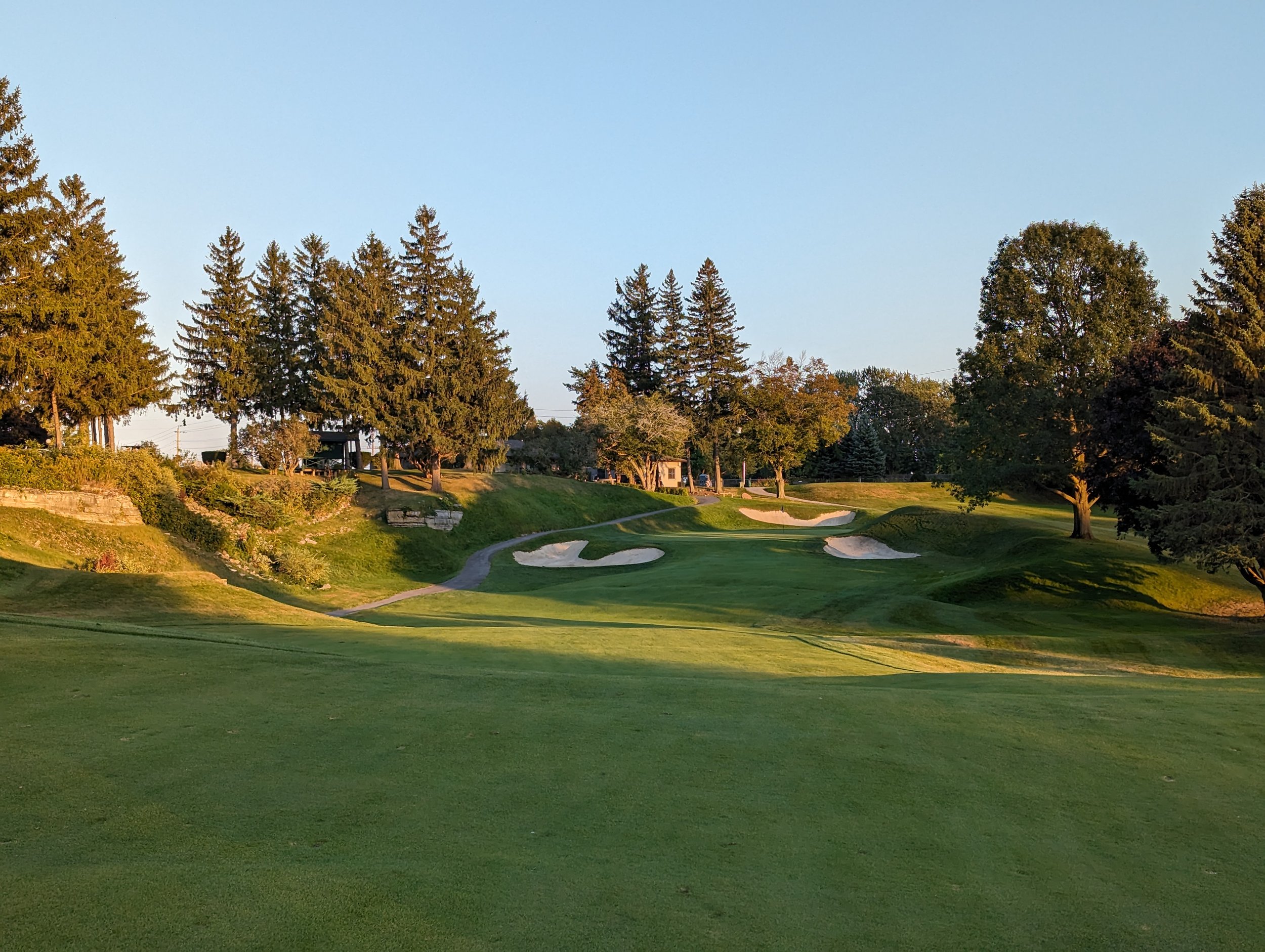
In 2006, architect Ian Andrew was commissioned to restore the numerous elements of the golf course to its original character. The work was meticulous and guided by historical photographs, field evidence, and the deep familiarity with Thompson's design language. Where photographs were unavailable, he used what he found in the ground as a reference. The cumulative effect was to restore light, width, and clarity to a layout that had slowly been buried under a century of growth. The result is the most authentic representation of Thompson's bunkering style currently on offer anywhere in Canada. Not Banff Springs. Not St. George’s or Jasper Park Lodge. Little old Kawartha Golf Club displaying the most impressive set of Thompson bunkers anywhere in Canada.
It’s no secret that along the way changes have occurred that have impacted Kawartha’s stature. Namely the financial trouble that forced the club to sell a plot of land along Clonsilla Avenue and the closure of two holes. This produced two negative side effects - a routing alteration and two new holes that don’t fit the profile of Kawartha as a whole. In a vacuum these changes were ultimately for the future of the club, allowing the it to remain operational. Yet, it is difficult not to note the significance of losing two fine golf holes and the ebb and flow of the routing they provided in comparison to what replaced.
Nevertheless, what you find at Kawartha is a course where the design still works as Thompson intended. The short but mighty routing showcasing his fine ability to lay the golf course atop such varied land without making it feel artificial. And where the contouring of the fairways and the green complexes remain as strategically important to the modern game as they did during its early development.
Featured Holes and Course Details
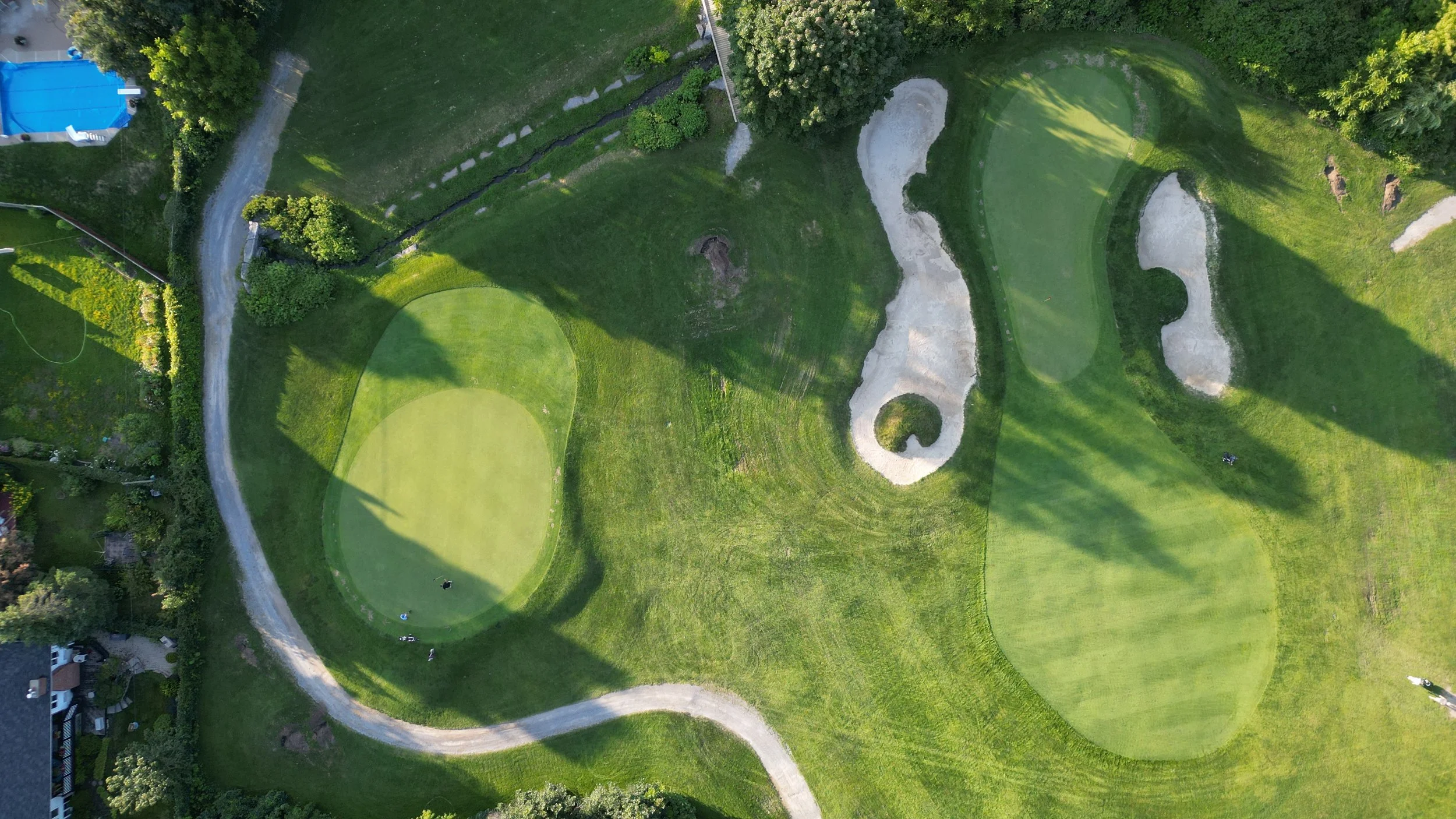
Hole 2 | Par 4 | 355 yards: The second is fundamentally about its green complex which sits diagonally from the direct line of play off the tee. With the hole set up with a gentle bend from right-to-left, the tee shot tempts golfers to challenge the left side and have the shortest approach. Yet, the optimal play is to the right, where the fairway's contours often guide the ball toward the centre and right side which opens a better angle in. The green itself is two-tiered, bisected by a pronounced ridge that makes cross-green putting exceptionally difficult. Bunkers left-short and right-long further emphasize the necessity to play from the right down the open front edge of the green. Shots over the left bunker feed into the narrow orientation, while those leaking into the right produce an incredibly tricky recovery with little room to work along the ground which feeds directly away from play. The strategic questions poised are a little nuanced and may be categorized closer to the penal school of design rather than a strategic one simply due to the narrowed angles of the fairway contours which could be improved by mowing more short grass closer to the fifth green. Nonetheless, it is a short hole that quickly earns respect.
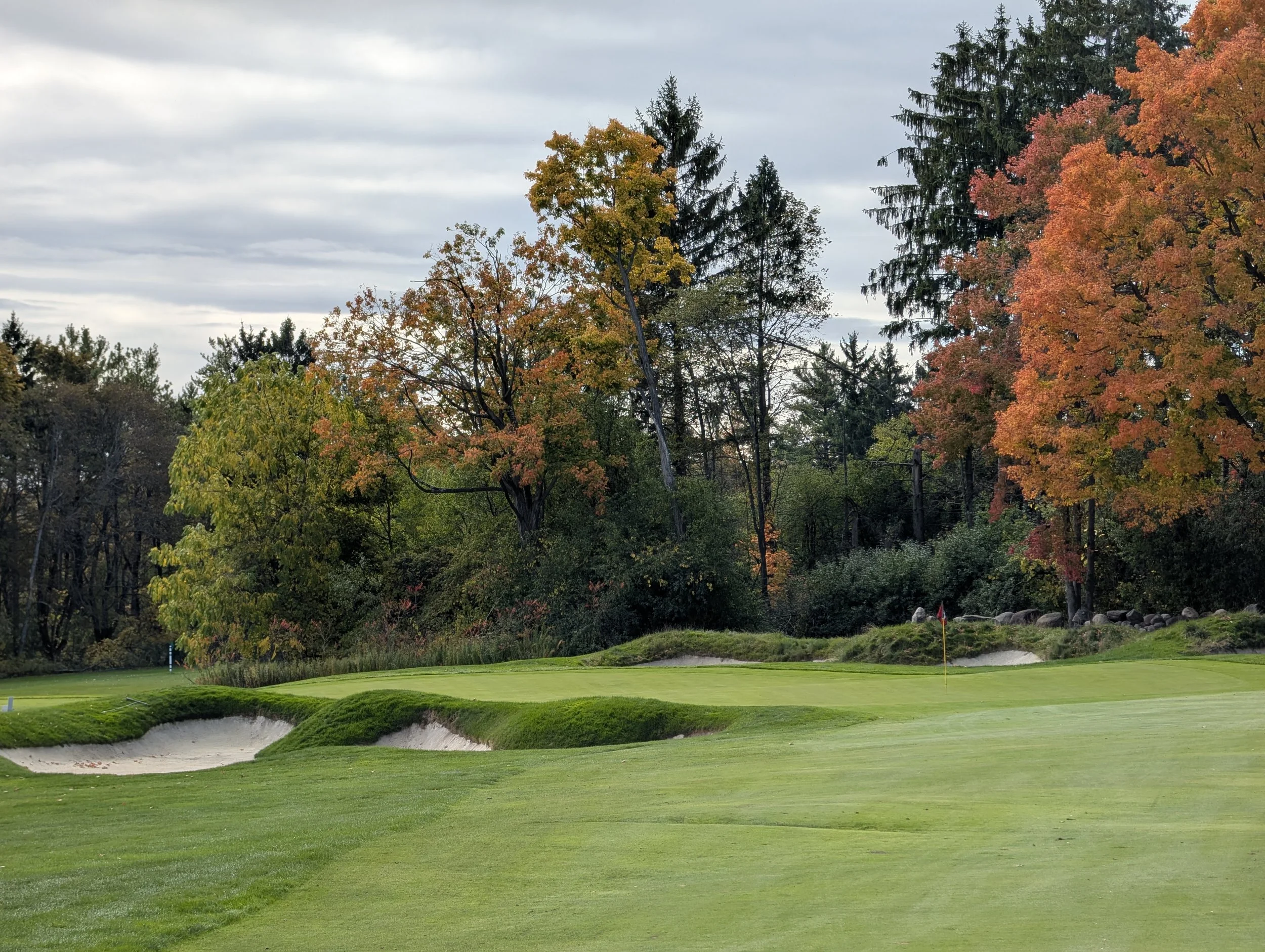
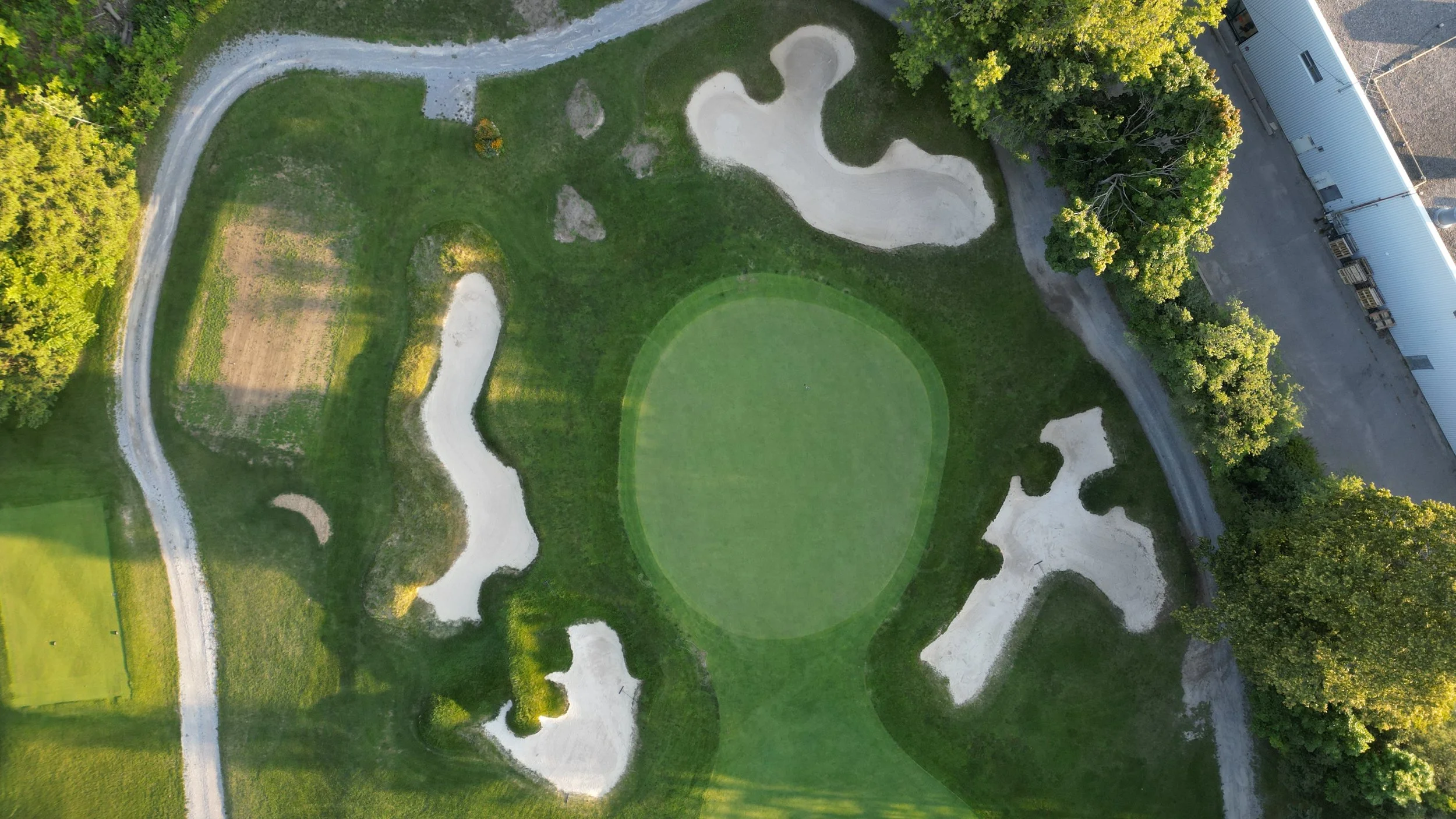
Hole 3 | Par 4 | 374 yards: The third is an interesting risk/reward par four that tempts players to take on the hazards of this hole for the optimal line into the green. This hole has been significantly altered by architect Ian Andrew to create something particularly inspiring for everyday play. By improving bunker concepts around the green and adding the fairway bunkers up the right, Ian was able to capture the spirit of Thompson’s architecture while adding strategic depth to this hole. Similar to the second, the green is situated horizontally to the line of play, with those who play up the right side closest to the bunkers and tree which rests on the edge of the dog leg, having the best angles in. This green looks relatively benign at first glance, but it is heavily tiled from back to front, with the hummocks, bunkers and long fescue grasses adding further complexity to the demands of shots into and around the green. It’s not uncommon for those on the high side of the hole to risk sending one off the front edge on a firm summers day.
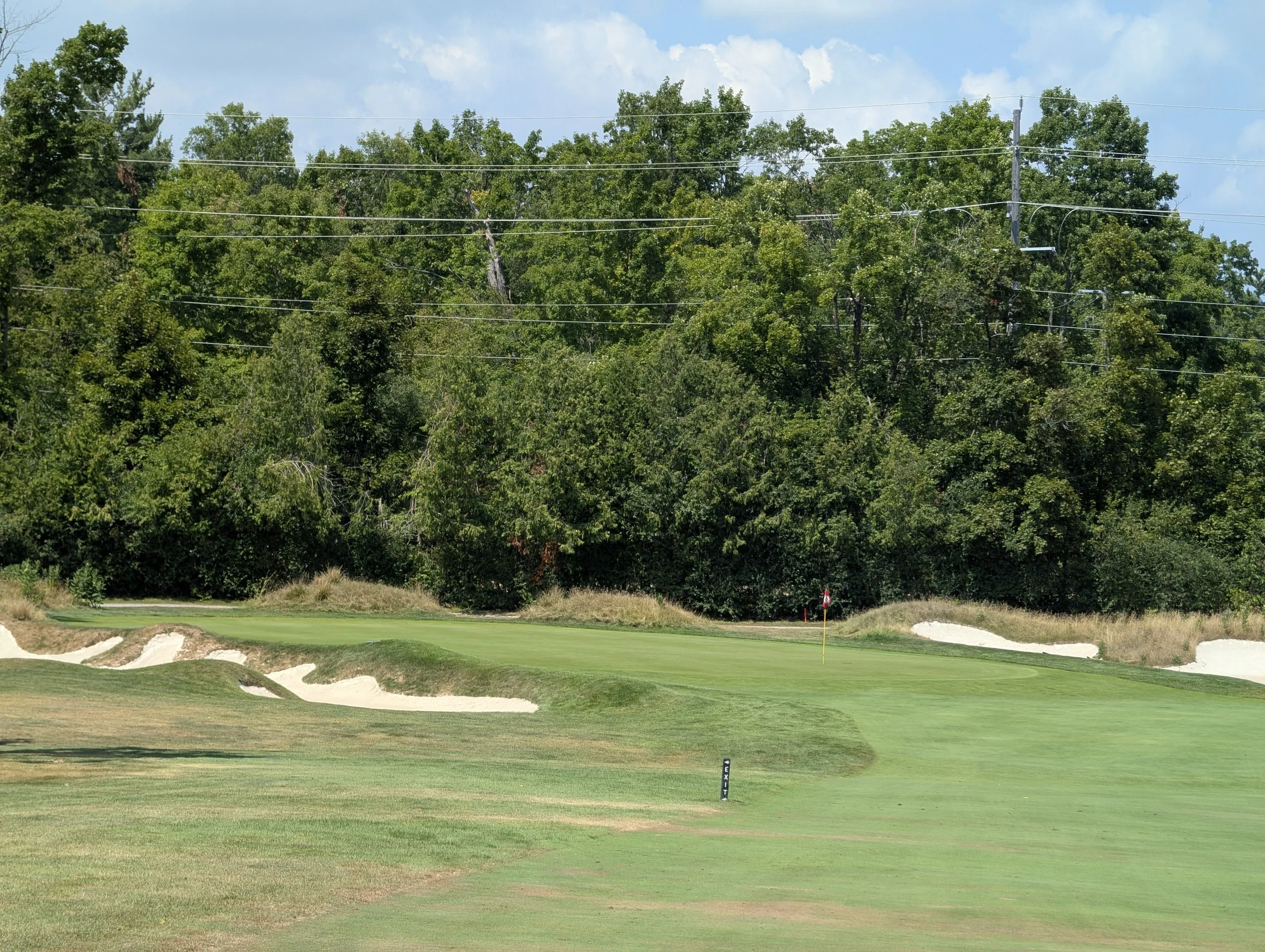
Hole 5 | Par 5 | 456 yards: The original par 5’s at Kawartha are not particularly lengthy tests for the modern game. Thankfully Mr. Thompson cleverly placed these holes in just the right places to take advantage of the natural topographical features at his disposal. At the fourth the hole banks from right to left, curving around a group of trees situated on the inside of the dogleg. As such the approach played to this green most often presents with the ball abruptly above or below ones feet. Upon navigating the complexities of the approach Thompson smartly crafted the green with further defences — namely by way of strongly canting the green from right to left up against a generous fall off, and using deceptive visual practices such as hiding the true depth of the green from view by way of bunkering and use small ridges in front.
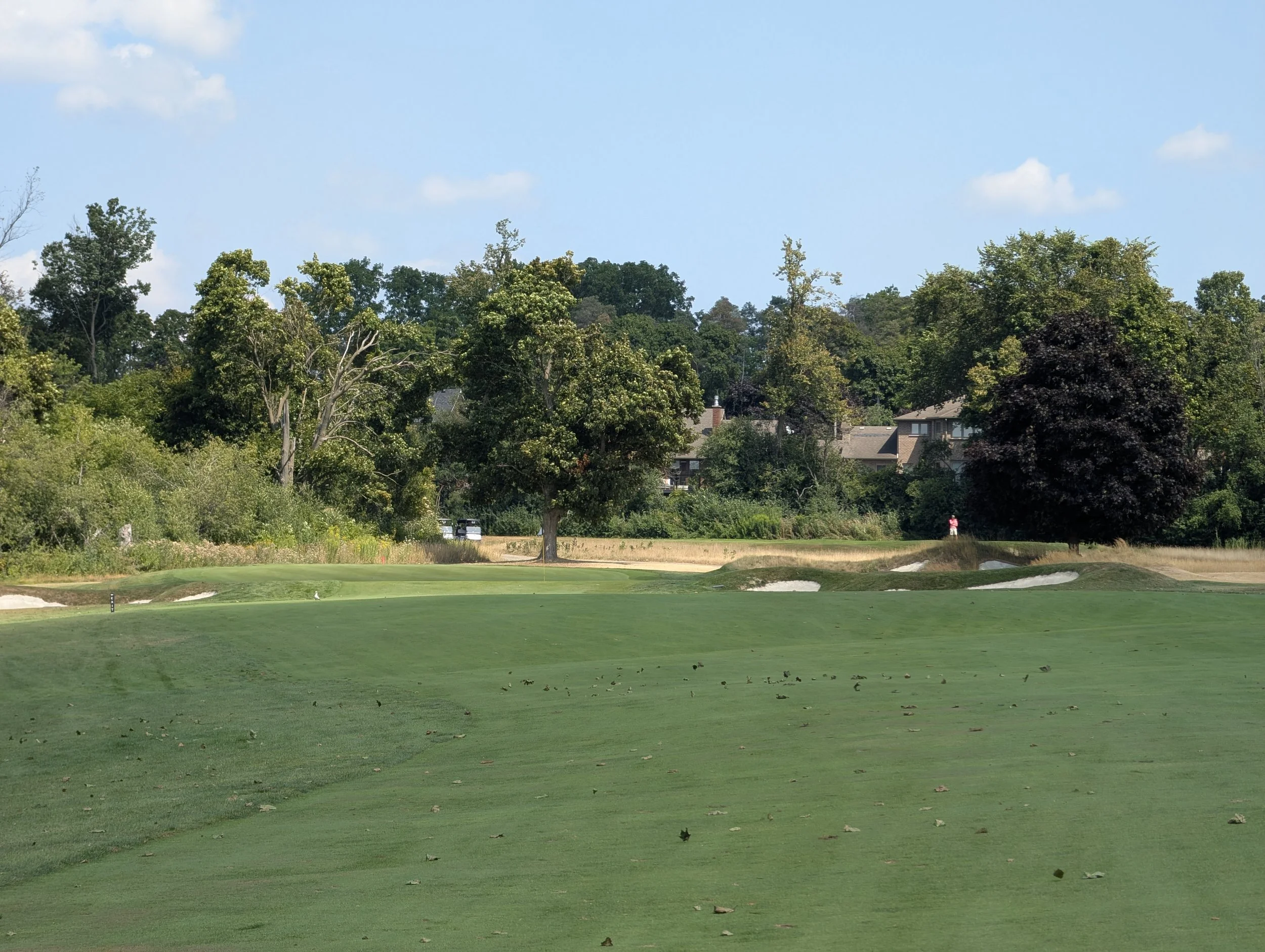
Hole 6 | Par 3 | 223 yards: The original set of par threes at Kawartha are rather exceptional as a set, and the sixth is one of such standout holes. As is often with Thompson designs, he often plots his way across the landscape with at least one lengthy one shotter, directly contrasted by a short one. This direct contrast comes at the sixth and eighth holes where the former blends the uphill nature of the land with a redan style green - diagonally stretched across a small knoll in the landscape. The green sits perched into this knoll, above its surrounds to the left, safely guarded by a bunker on either side. The effective carry distance is longer than the yardage suggests, representing a fine example of a long par 3 that tests the top end of the players bag. There is some room to run the ball on from the right side, but the margin is tight. It is a hole that defies the conventional logic of par three design, where long holes typically play downhill to compensate. Thompson ignored that convention here, and the result is one of the most demanding on property.
Hole 8 | Par 3 | 151 yards: On the front side, the eighth holes contrasts the lengthy sixth with its short dropshot par 3. The green is minuscule in size when directly compared to the surroundings which amplifies the visual deception of the hole itself. The green has naturally shrunk over many years, but the lively emotions of such a thrilling shot still remain.
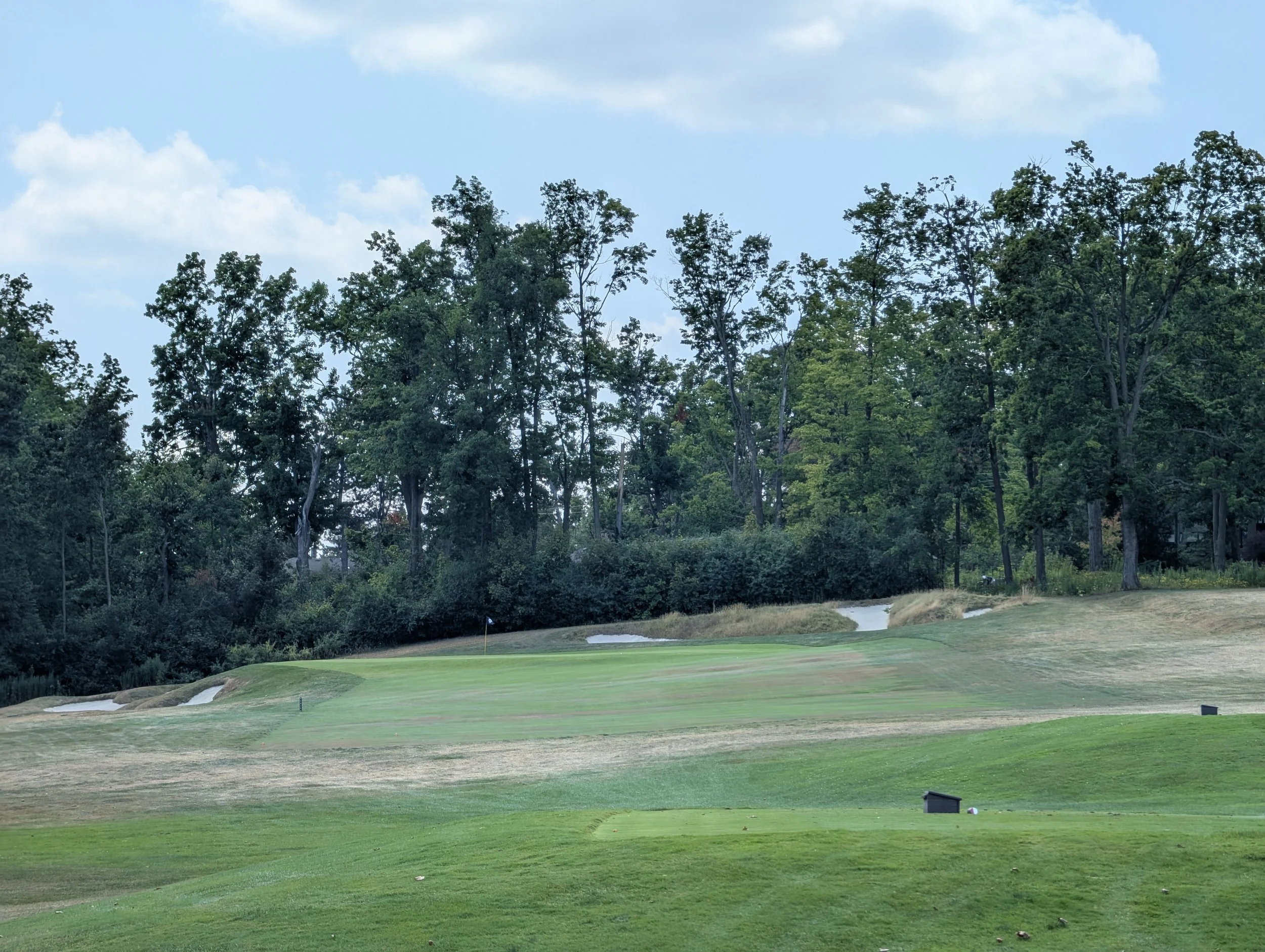
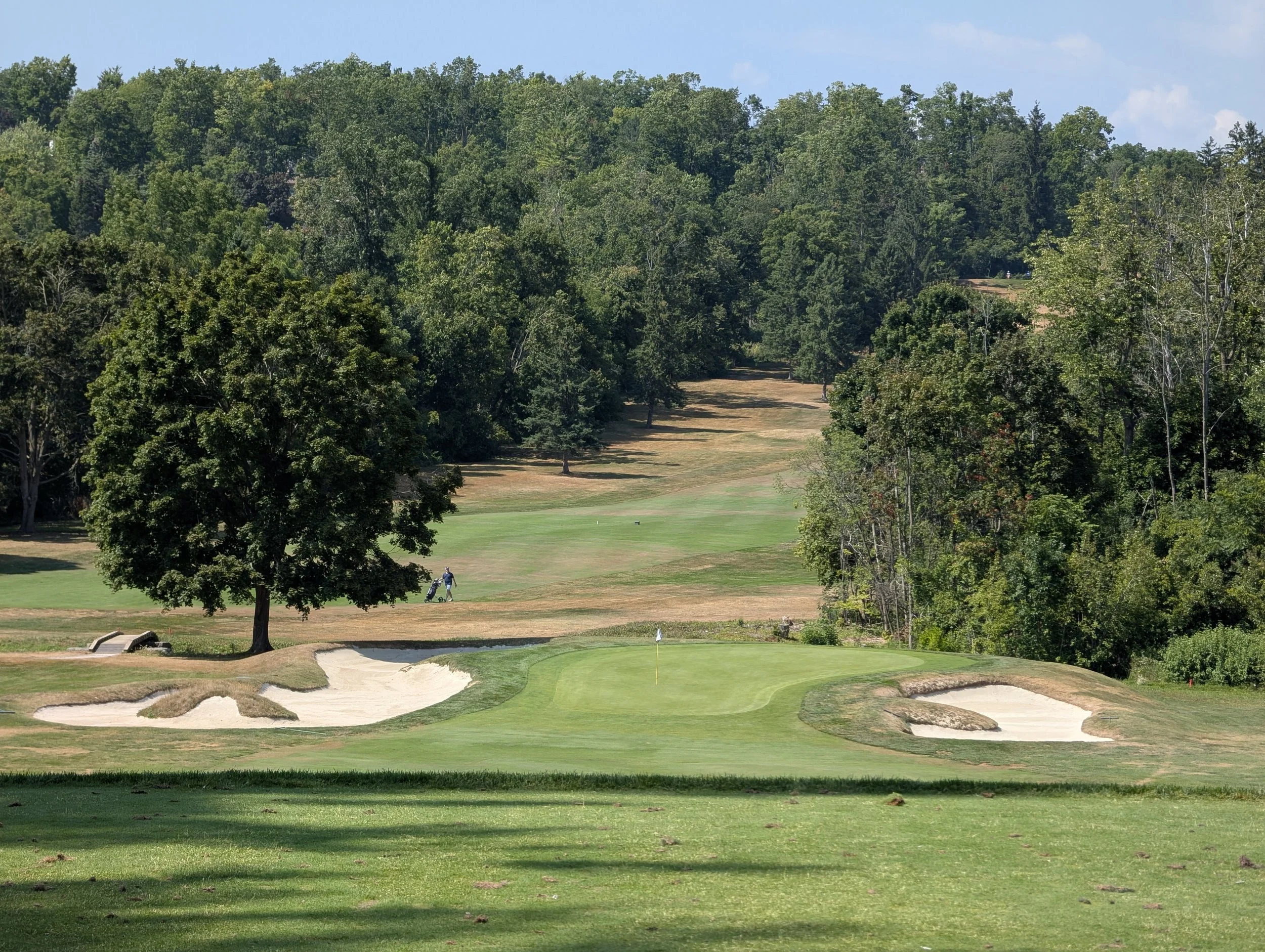
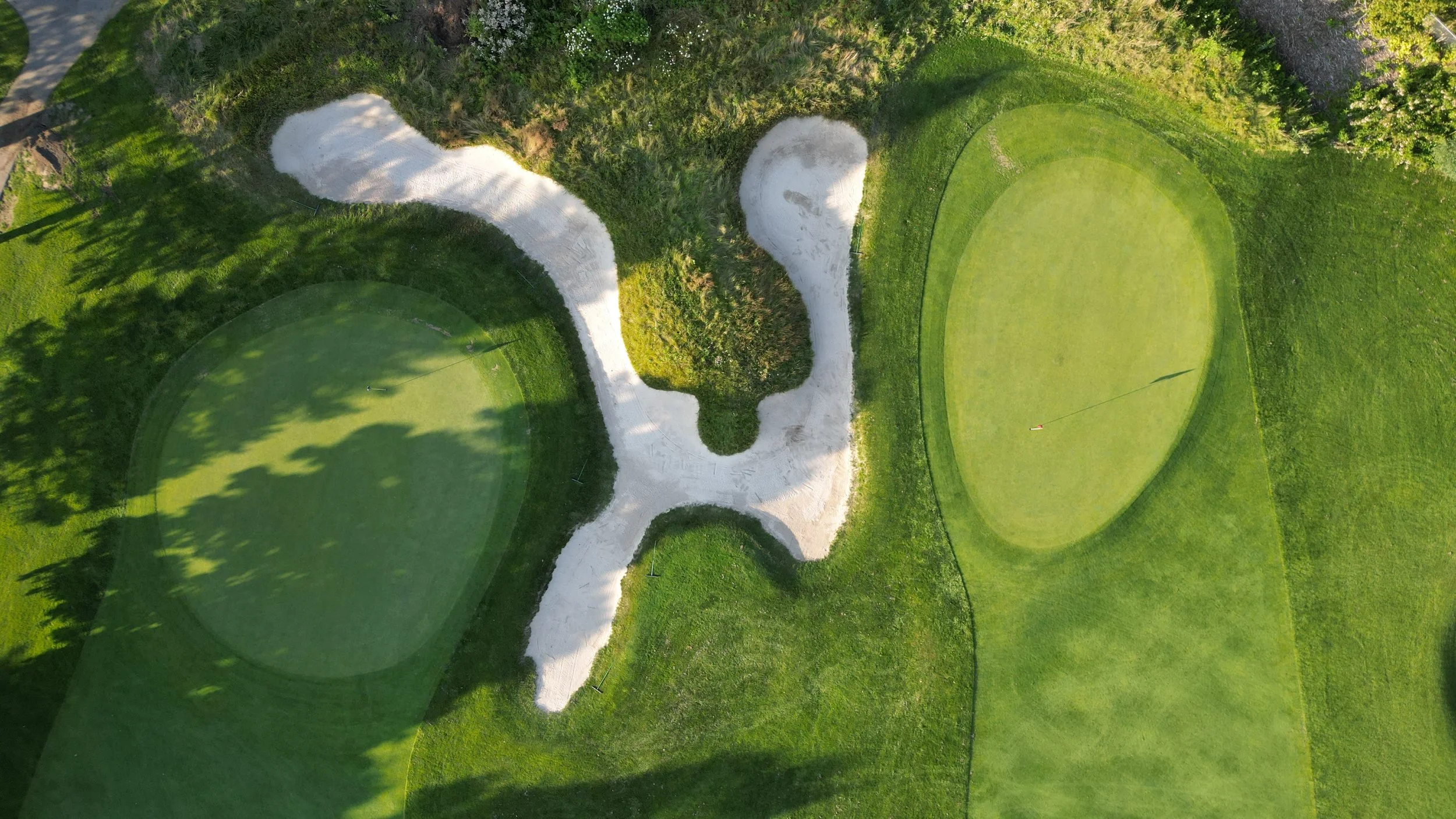
Hole 10 | Par 4 | 405 yards: The 10th hole has one of the most unique green complexes on property and surely to be noted as remarkable. The green itself is rather small and has a sharp fall off directly across the right side. Because players attack this hole against the contour of the land, which falls from left to right, the primary miss is along this side. The bunker complex is shared with the first hole and has numerous intricacies of its own, such as the middle plateau for which is mindblowingly difficult to make an up and down from - don’t ask how one knows this.
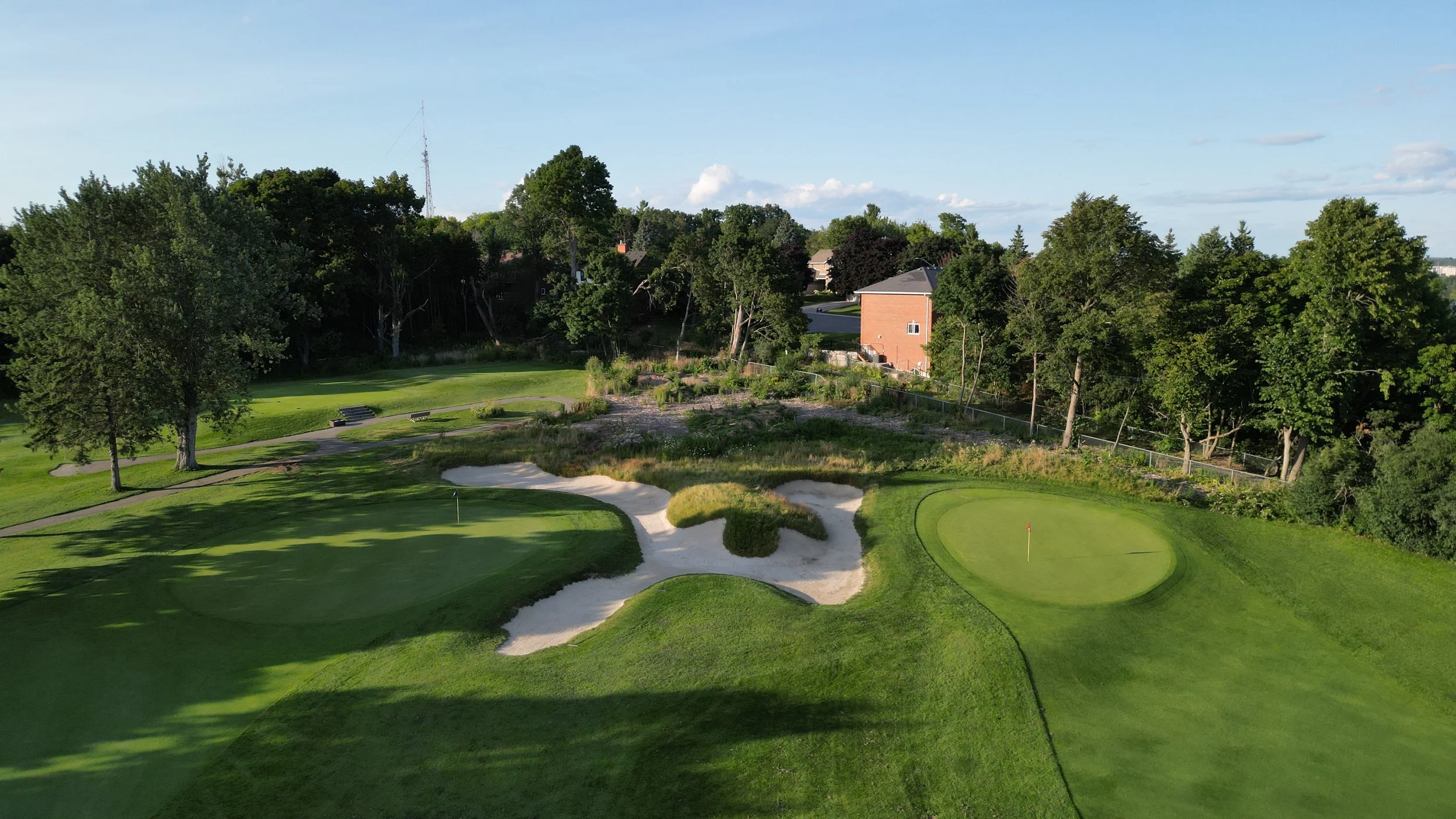
Hole 11 | Par 5 | 496 yards: Like at the fourth, the 11th is a short par 5, producing one of those moments that lodges in memory. The tee shot plays downhill which further defines this risk/reward opportunity. As the player crests the hill, the second shot opens up below, running all the way down to a green protected by a crossing stream and a set of deep flanking bunkers. The hole is a fair one for shorter hitters without removing the tension for anyone attempting a heroic shot at the green in two. Significant tree removal on holes like the 11th have opened captivating visuals that emphasize the rolling topography of the land well.
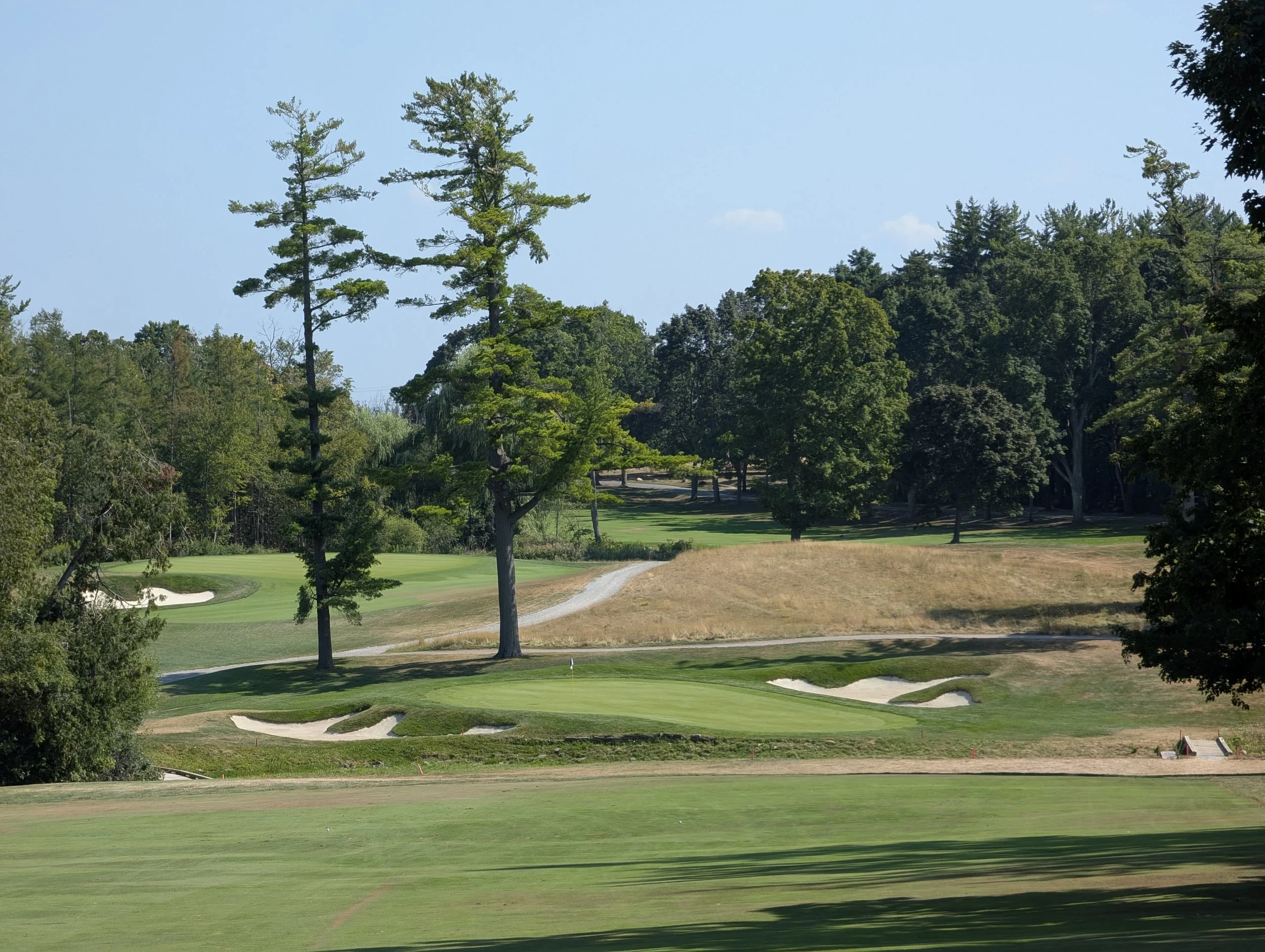
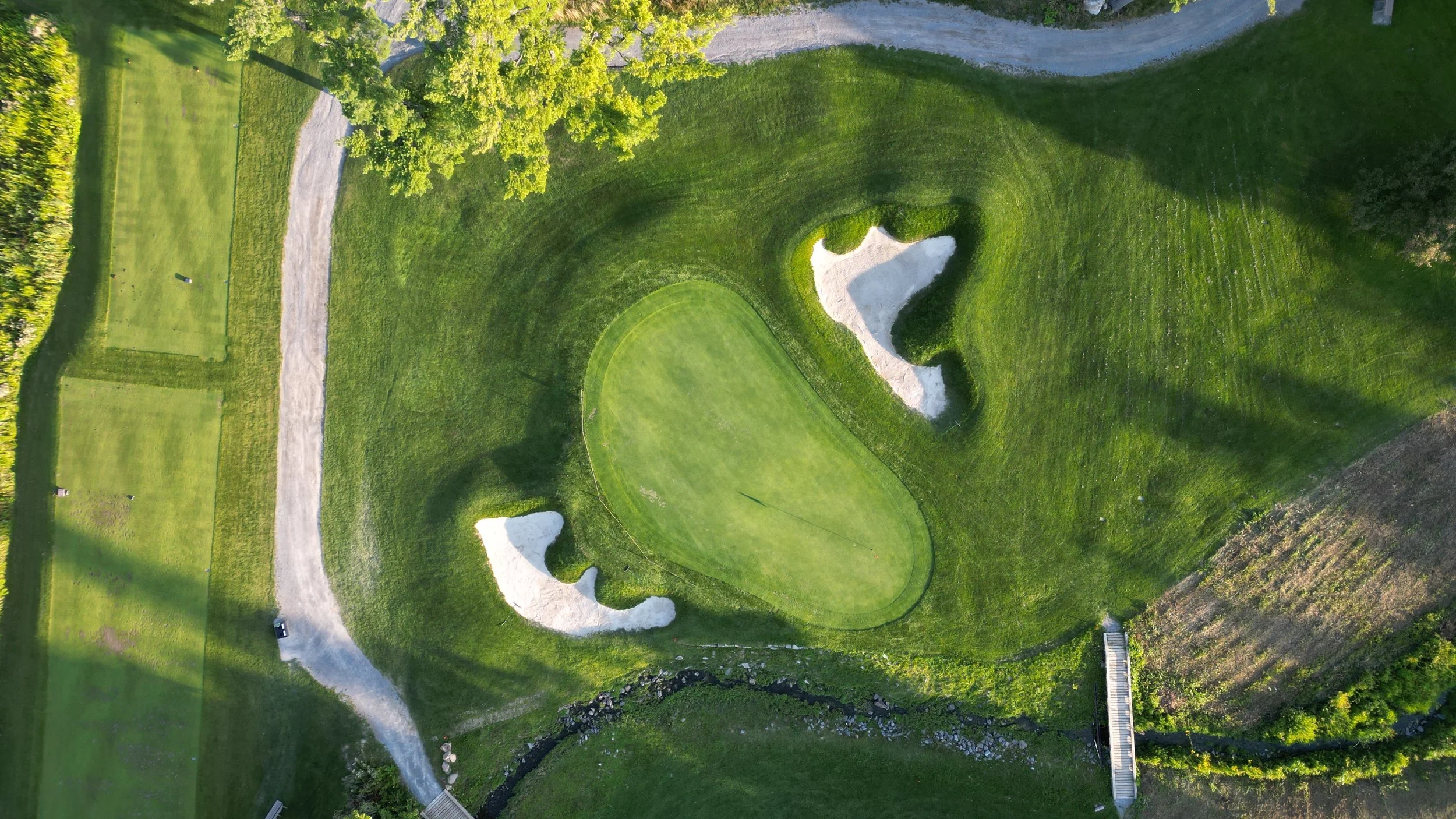
Hole 16 (formerly the 14th) | Par 4 | 422 yards: What is now the par 4 16th was originally Thompson's par 5 14th, which has been improved as a result of restructuring this hole to fit in the new 17th. The design change simply moved the back tee’s from a location near this new green to its more original forward tee placement. In doing so the hole retains all of the character without the noise of such a poor tee shot. The real interest in this hole, like many others at Kawartha, comes at the green site where a confluence of bunkers and hummocks surround the green itself. Thompson’s display of artful mounding and bunker shaping, faithfully restored by Ian Andrew is on point.
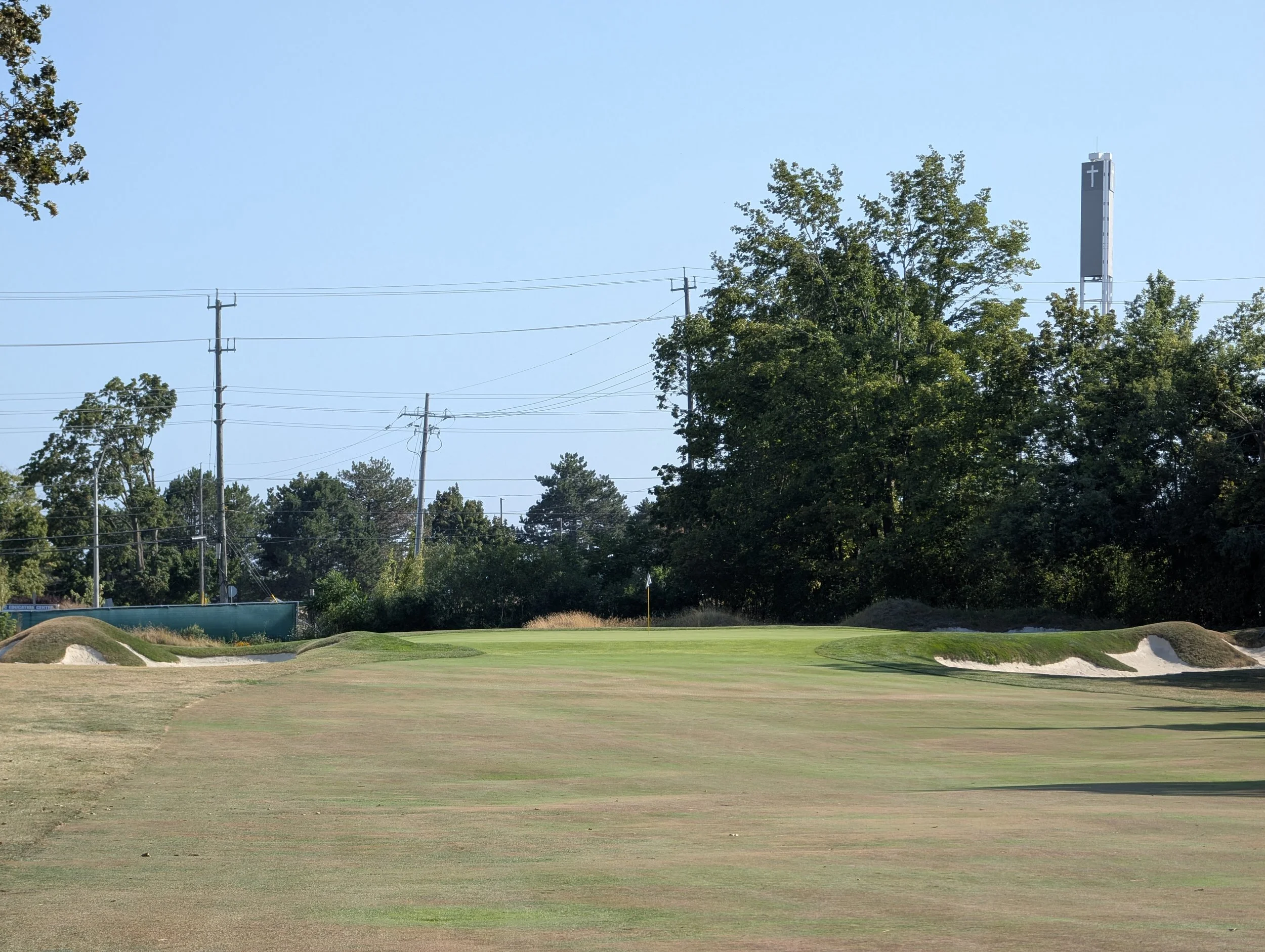
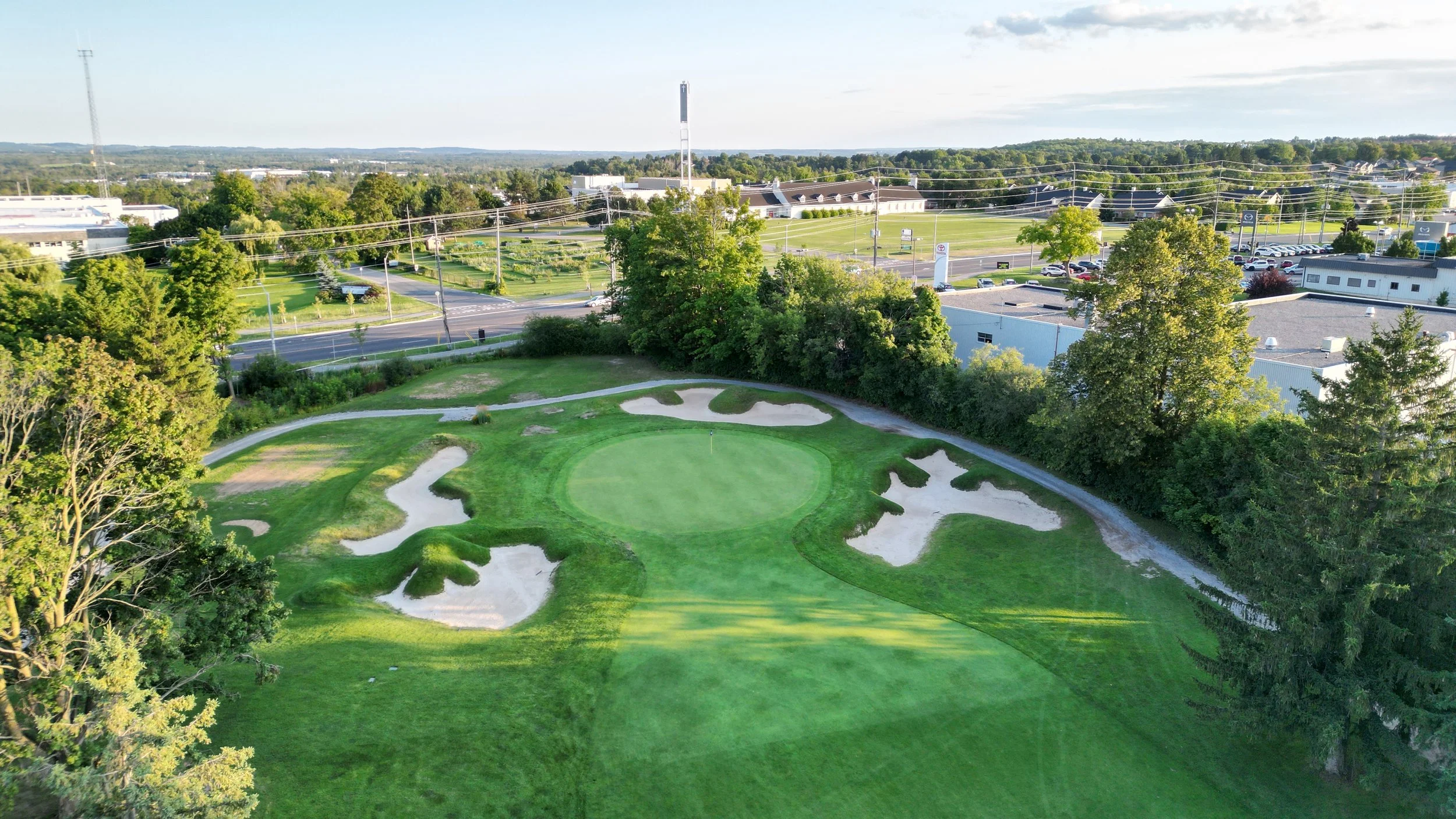
Hole 18 | Par 3 | 198 yards: Closing a golf course on a par three is rather unusual. Thompson's decision here is either an act of restraint or heroic provocation depending on your mood after 17 holes. The 18th plays nearly 200 yards to a well-bunkered two-tiered green, with the bunkering especially aggressive on the right side. From the back tees, a forced carry over the right bunkers is required to access the back sections, unless you can hit a low left to right running shot. The forward tee positions present a more direct route, allowing for a more ground focused option to run the ball onto the surface. Several of the more dramatic internal contours that will be found around Kawartha appear on this green. What makes it memorable is the pressure it generates in context. It’s a captivating closure to such a brilliant round of golf and one that deserves mention as one of the finest closing holes in the country.
You might also like..
-
Banff Springs
-
Cataraqui
-
Niakwa