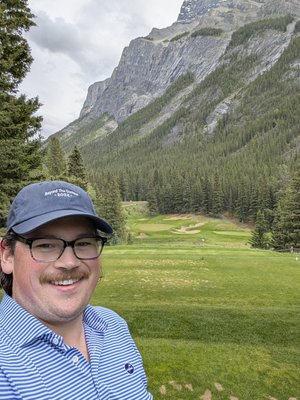
I recently got myself into some hot water over some comments I made about a golf course. I didn’t think I was overly harsh, I just stated my opinion on the architecture which I found to be rather brash and not at all the things I admire in golf course design. But it was tacky and undeserved.
We are often told that great golf comes when it’s full of glitz and glamour. When greens run fast and the conditions are absolutely perfect, and when the privilege of being there is what makes it feel grand. We’ve given into this desire to have our golf experiences be another luxury retreat, and every single blade of grass or grain of sand must be perfect. But I’d argue these factors often strip away one’s ability to digest the matter at hand. The architecture. As Tom Doak wrote in the Confidential Guide “Golf is part of Nature and Nature is fully of variety and randomness that we should embrace. Indeed, the uniform conditions presented at many modern courses are a turn-off“. I’m a firm believer in that.
The natural canvas golf often finds itself in is one of the many reasons I love this game. I’ve had this immense privilege of travelling near and far, to almost all reaches of Canada and while I certainly appreciate the finer things in life as often as the next guy I find myself deeply attracted to places like Tarandowah, Wolf Creek, and Waterton Lakes to name a few. Its these places, and many more detailed in these pages, that have distinct character of their own, and somehow, brilliantly capture the spirit of the game all at the same time without the frills and needlessly expensive flash of many places that will charge you a $200 or $300 greens fee ever could.
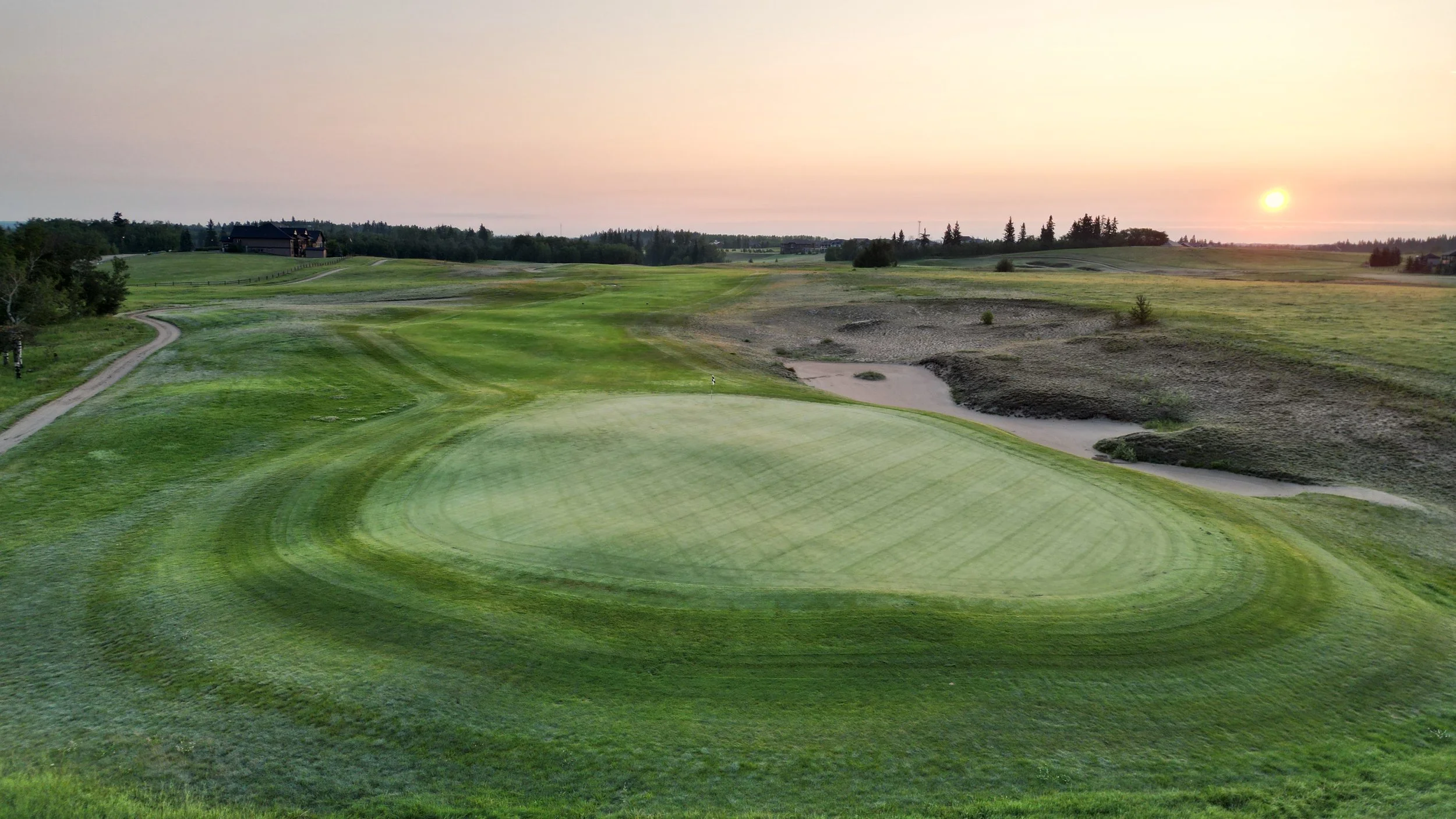
One of the many great greens at Wolf Creek Golf Resort in Ponoka, Alberta | 18th hole, Links course | Rod Whitman
Golf Course Architecture isn’t an art form, it is a craft. But it is possible to digest that a craftsman can, at times, elevate their work such that it may be considered art. In the remote town of Jasper, Alberta, in the heart of Jasper National Park, is surely the greatest piece of artwork the Canadian golf scene has ever laid eyes on. Not even the famed Banff Springs or the drama filled Cabot Cliffs could lay claim to the majesty of what Jasper delivers. The course is set in the valley, between the mountains, but unlike Banff it rises and falls with much more energizing splendour allowing the golfer to appreciate the topographical features from start to finish. And its this variety in topographical features that architect Stanley Thompson was able to efficiently make use of to build his finest work.
Jasper’s routing in particular has these focal points of triumph and a keen sense of ability to naturally pull you in at every single moment. Even at times when the setting may appear more muted, like that of the bunkerless 8th hole — my personal favourite at Jasper. Understanding how each individual golf hole is orientated and how it works together in harmony is a big part of that. Holes play in every direction, criss-crossing at times, allowing certain features line up and mimic the distant mountains, or that green sites rest on knolls, are tucked into hillsides, or lay along the ground, and the course reaches up into the mountain and back down to the lake, creating this master work of craft and art all at the same time.
Jasper occupies the rare space of greatness because of its features, its setting, the deep emotional arc of its routing, and as a sum of its parts. There is no other golf course quite like it in Canada.
In one word? Invigorating.
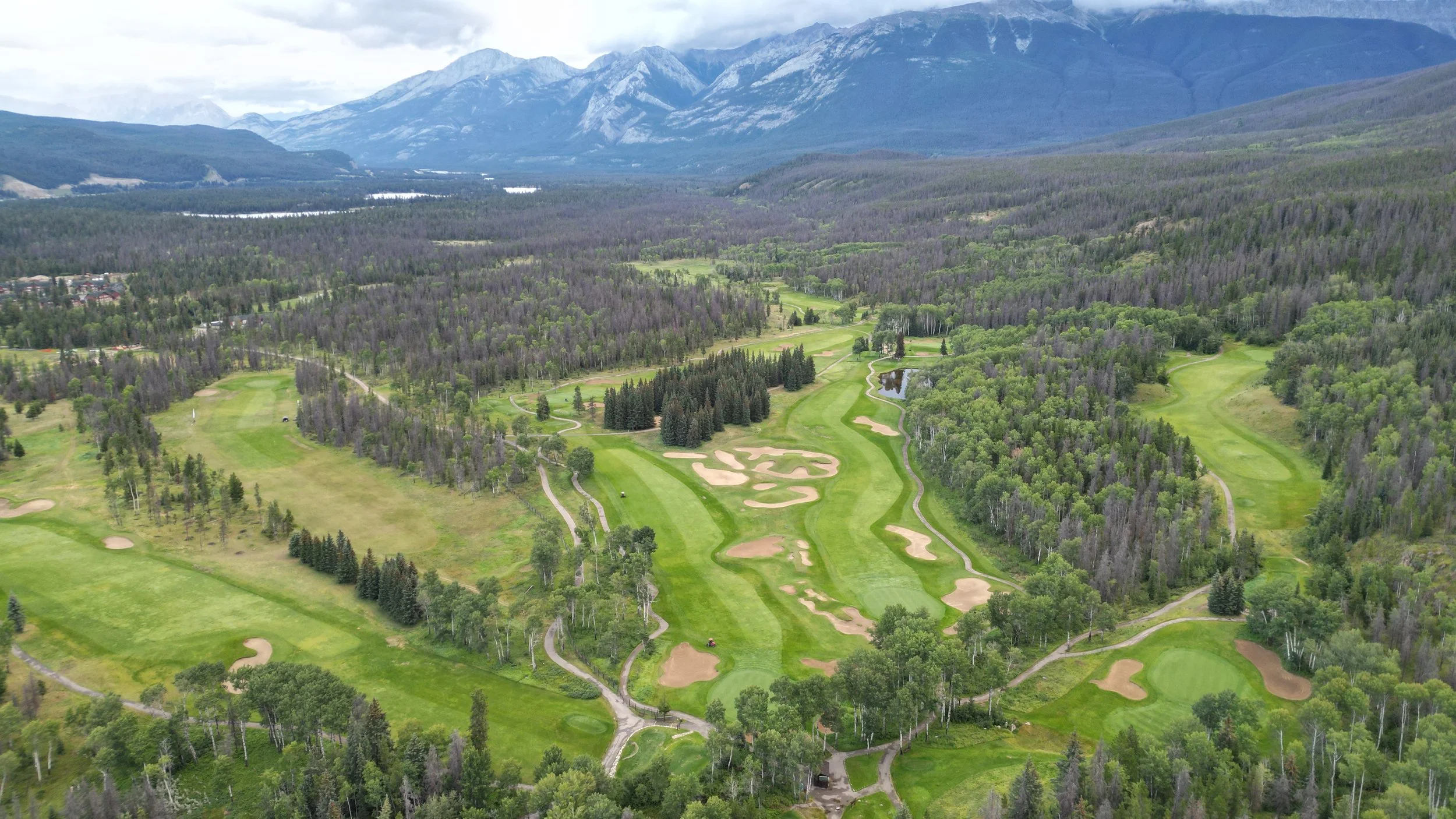
The fantastical Jasper Park Lodge - full of otherworldly splendour and a humble sense of place | Stanley Thompson
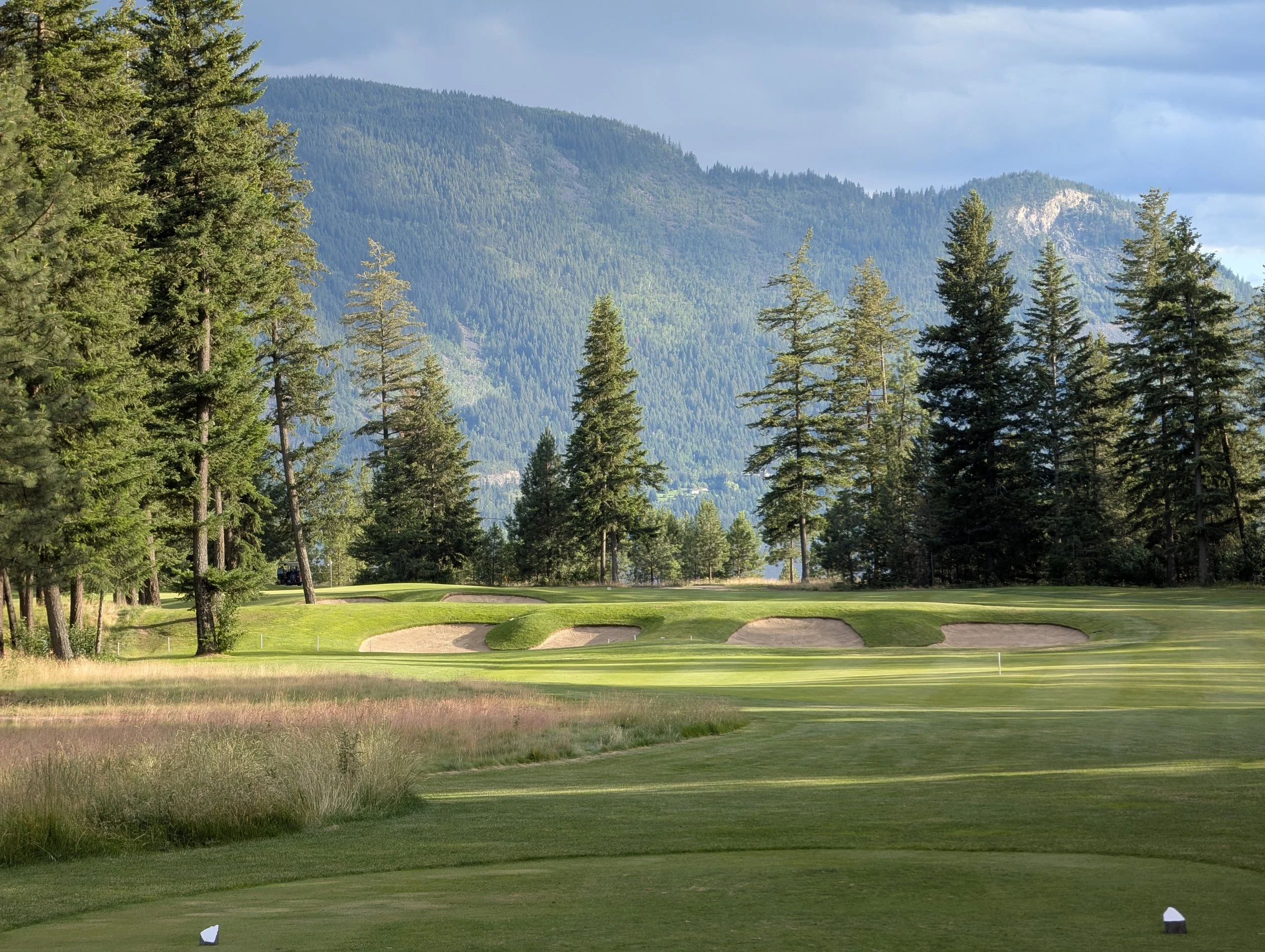
Now compare that with Talking Rock Golf Course in the Shuswap Valley of British Columbia. Another course routed between the mountains, among the meadows of the valley floor, and along the shore of Little Shuswap Lake. It is not like Jasper in much of any architectural sense. It is a nice golf course, which, at times, has good features and majestic backdrops. But, importantly, not every hole that is beautiful is great. There is style without substance but never substance without style. However, like Jasper, it is a course which has an immense sense of place. It finds a way to be meaningful beyond simply hitting a little white ball around. A gravitational pull that proclaims a level of greatness in a way the sum of its features never could.
Sense of Place or Genius loci is described as the “spirit of a place”. In Roman times, it was believed every location had a literal guardian deity or spirit assigned to it. It’s something that is difficult to fully describe. A thing you must experience for yourself. Where one might find something really compelling about playing golf, even if the golf course lacked an abundance of great features, it would hold itself among the best in the country or region for which it resided.
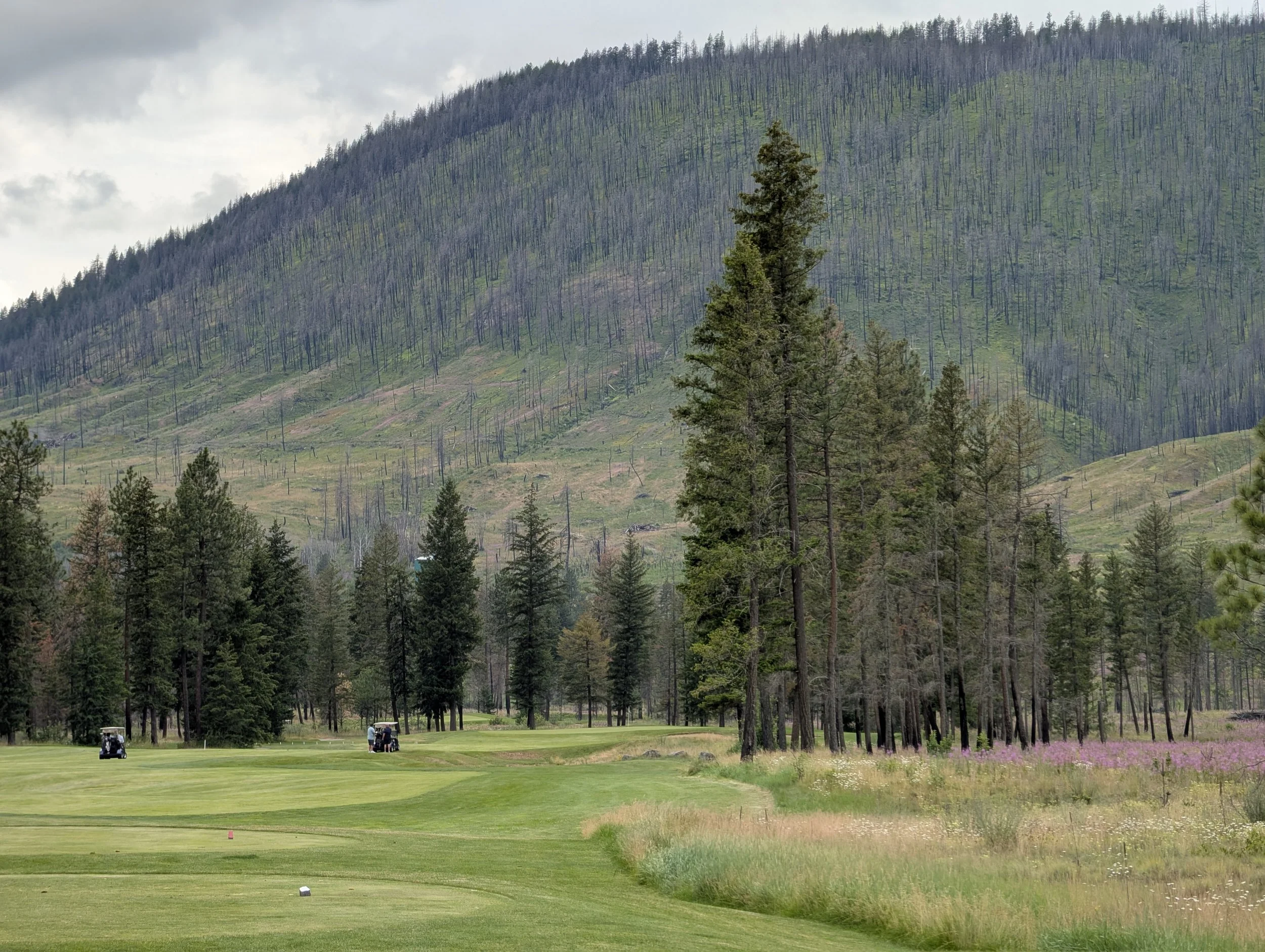
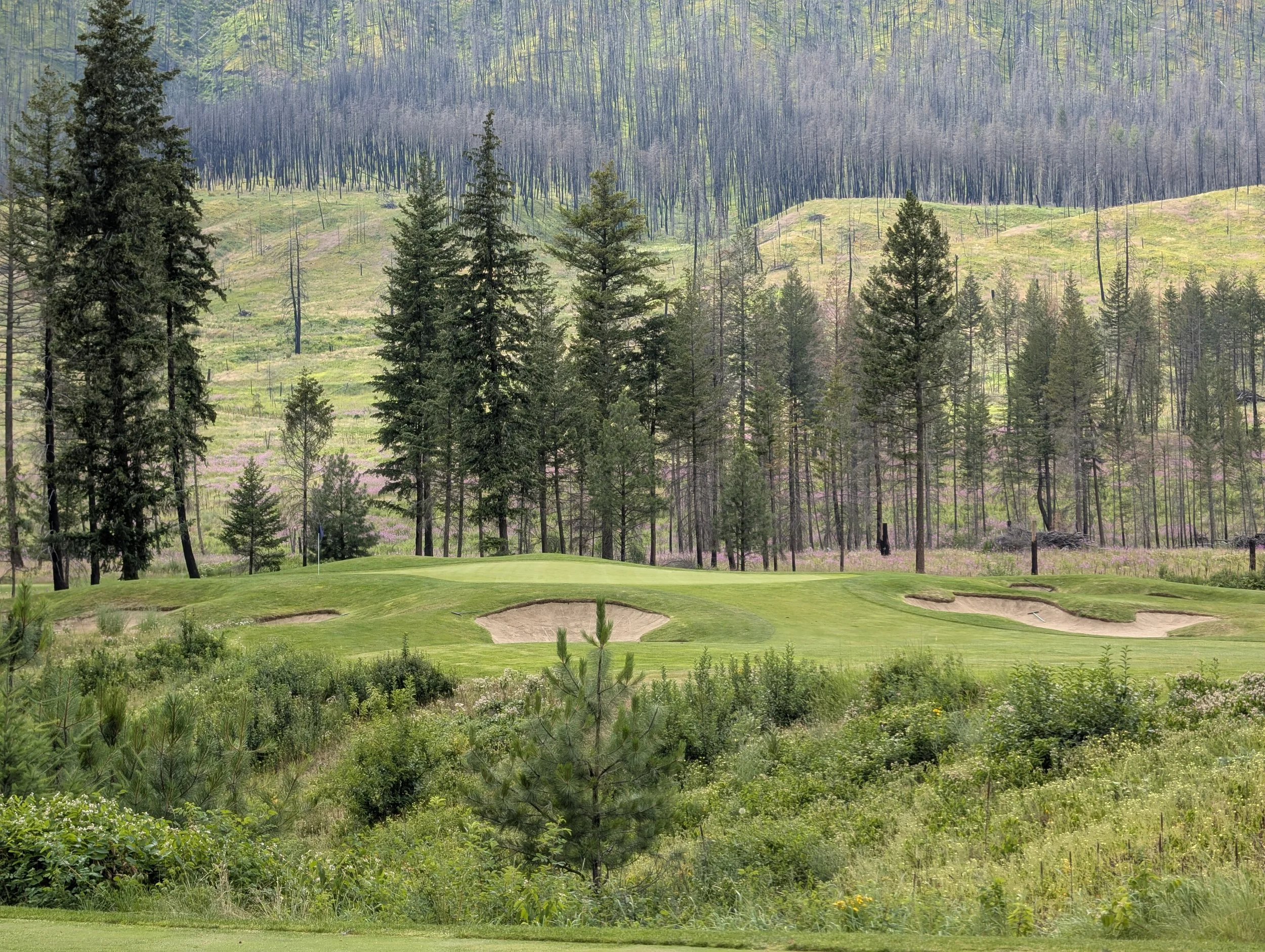
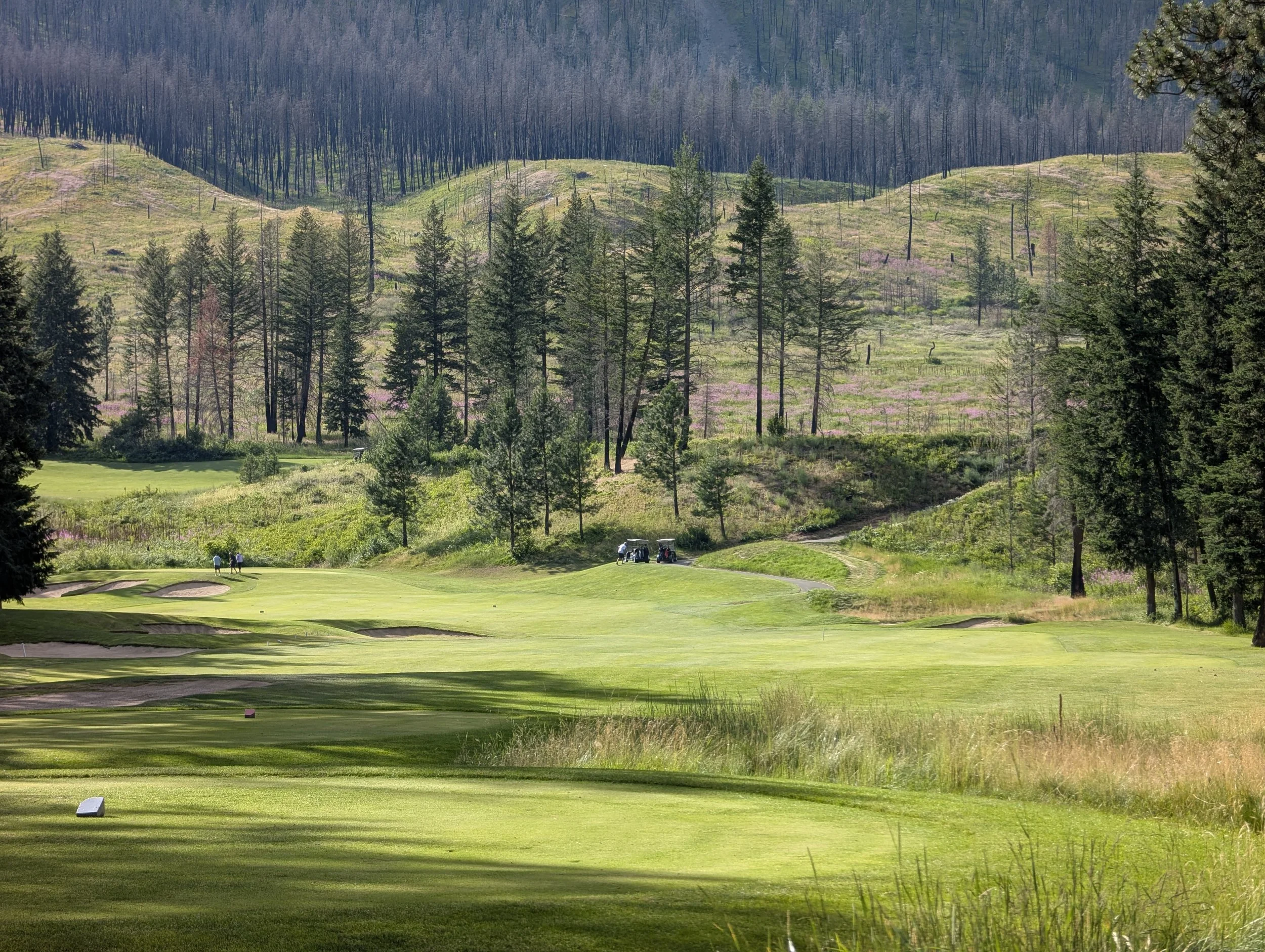
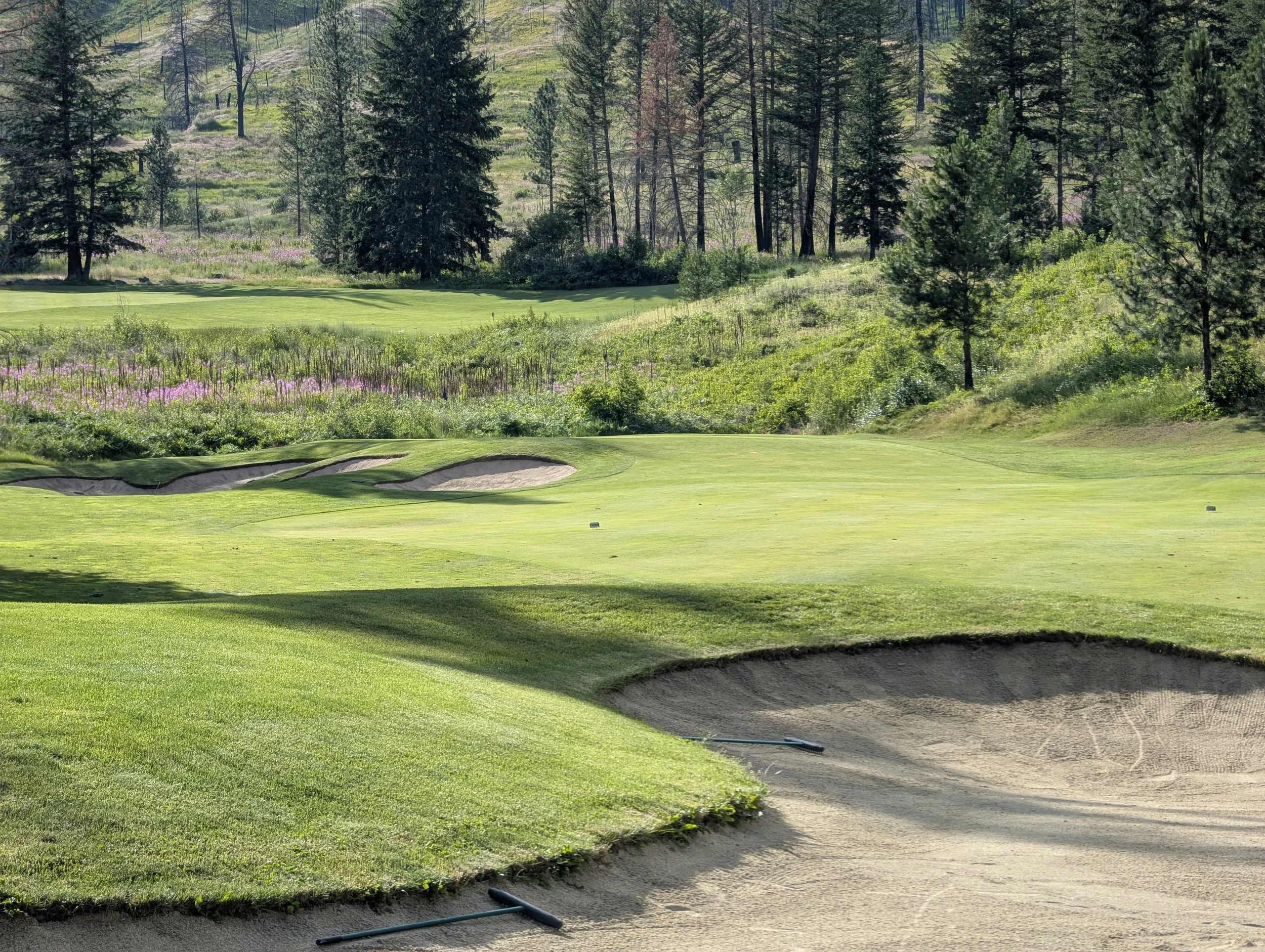
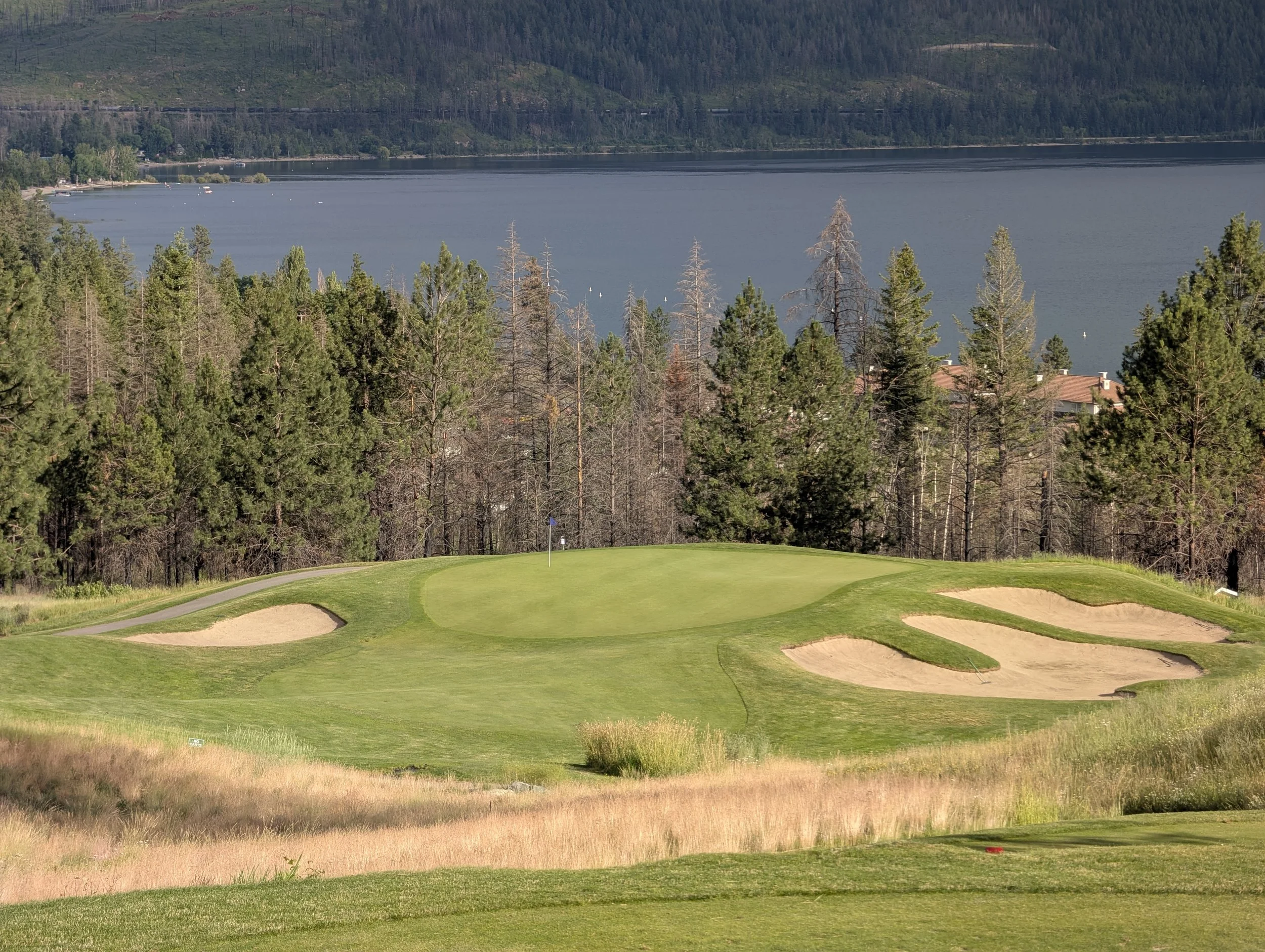
This sense of place is what makes enjoying a round at Talking Rock special. While it never quite reaches the heights of other notable golf courses found in the Rockies, architects Graham Cooke and Wayne Carleton, have combined the interesting character of the land with sensible architectural features. The course is draped across the valley, resting between the towering peaks, sprawling amongst fields of lavender and other flora, and towering pines dot the landscape. These once densely overgrown corridors are now excellently contrasted with fescue grasses and blooming meadows, a result of a devastating fire that occurred in 2023. While the destruction has impacted local communities greatly, the golf course has benefited by revealing the setting and further exposing the interesting character of the land. Holes like the par 3 sixth, par 4 12th, and par 5 16th contain a proper balance of elements like strategy, width, visual delight, and risk and reward. Architecture as a craft, not art.
Someone recently ask me to remark on Waskesiu, they were curious about it and hadn’t been. From the photos they saw the course didn’t fit the typical mould of courses inside Canada’s top 50. After all, there wasn’t an ocean or mountain backdrop easily justify its placement, and it’s certainly not a private club either. It wasn’t that they didn’t trust the process or the opinions of those who proclaimed its esteem, but rather that their opinion was clearly shaped around the social content we expose. The fact of the matter is, Waskesiu is a very difficult place to photograph and there is little written on the subject because well its in the middle of Saskatchewan — a place I have come to truly enjoy visiting for golf. The scale, verticality, and contours of the land really don’t pop through an image the same way they do in person. It just goes to show you that lived experience often matters more than just some social media content.
Waskesiu is the closest thing I’ve ever seen to the contours found at Cape Breton’s Highlands Links. It, like Jasper and Talking Rock, exudes a charm that can only be understood by its sense of place. As one walks the sprawling routing, up and down the hills, over each little hummock, hillock, and contour you begin to understand exactly what I mean. There is a strong emotional pull that falls over you right from the first tee staring at the Lobstick tree in the middle of the fairway, or when you crest the hill on the brilliant par 4 fifth, and again at holes like the par 4 11th to name a few.
Where Waskesiu begins to differentiate itself from Jasper and Talking Rock’s composition is its perfect imperfections. You see the course was simply carved out of the dense boreal forest. Architects J.H Atkinson and Albert Kam, with inputs from Stanley Thompson along the way, brilliantly constructed these links without moving much of any dirt. It's as natural as it gets. The wide corridors provide ample width from tee to green, and when you see the ball trundle around, or in many of cases don’t due to the nature of blind shots, you really come to appreciate the imperfections of nature that have spoiled this land. Furthermore the architects unabashedly threw aside most common conventions of golf architecture and fashioned many of the greens with front to back slopes. Crafting this immense variety while simply draping the golf across the landscape. These are the simple pleasures of the game.
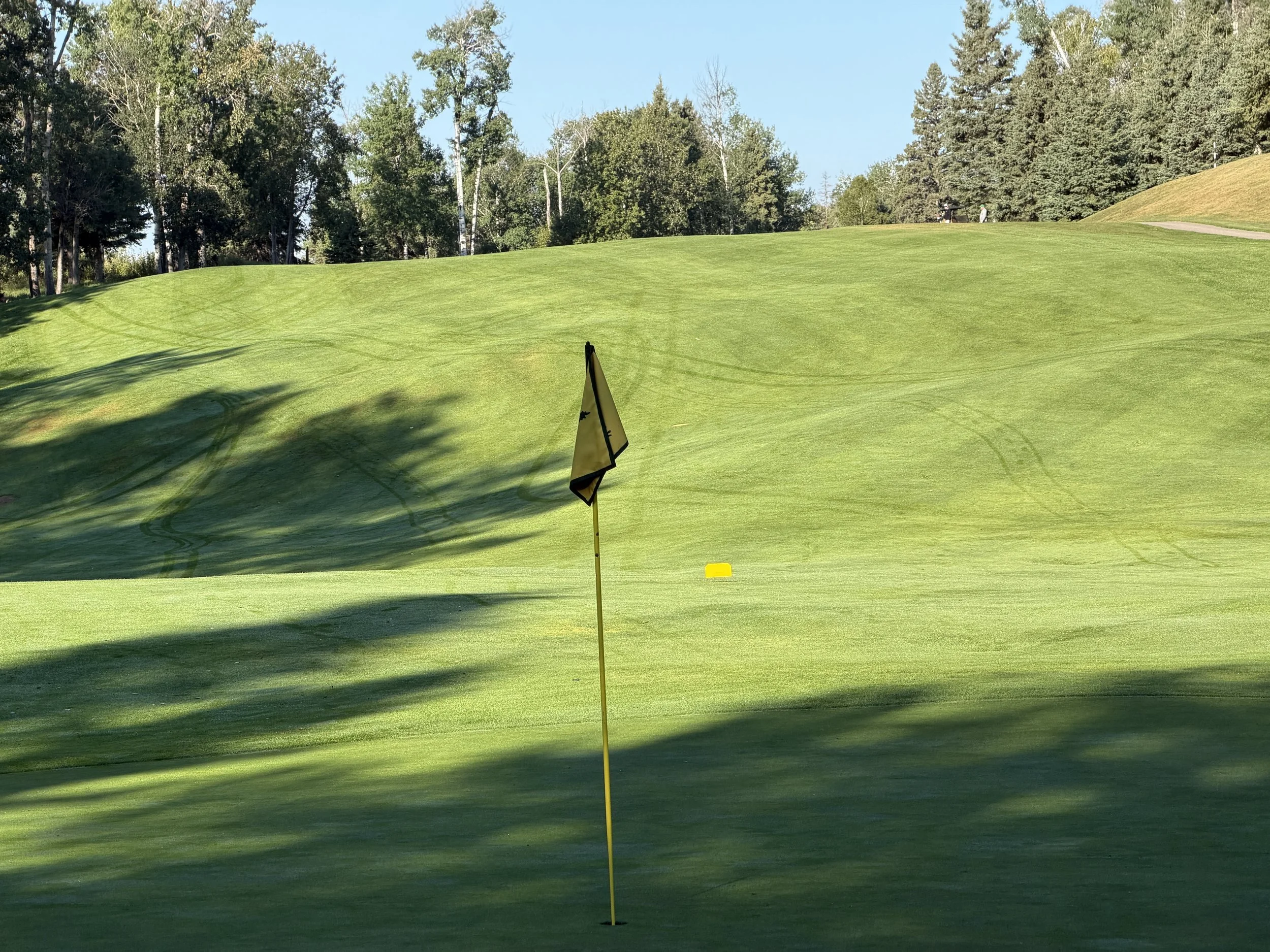
The topsy turvy contours of Waskesiu are unmatched in the West | Fifth hole | J.H Atkinson & Albert Kam with inputs from Stanley Thompson
Golf sometimes feels like the only industry where critics get in a bit of trouble when they speak their mind. It’s one of the main reasons we can’t label golf architecture as an art form. I suppose some of that comes with the luxury of playing these, often private, courses as a guest. Your opinion kept secret amongst the ratings. Yet, the business of ratings is what makes some of these places so inherently popular in the first place and challenging the status quo matters deeply. A circle of life that keeps things on even keel. Where the premise of expensive green fee is not the sole marker of great design. We must offer the ability to share opinions openly and understand differing perspectives on the matter if we are ever to achieve half of what is being done elsewhere.