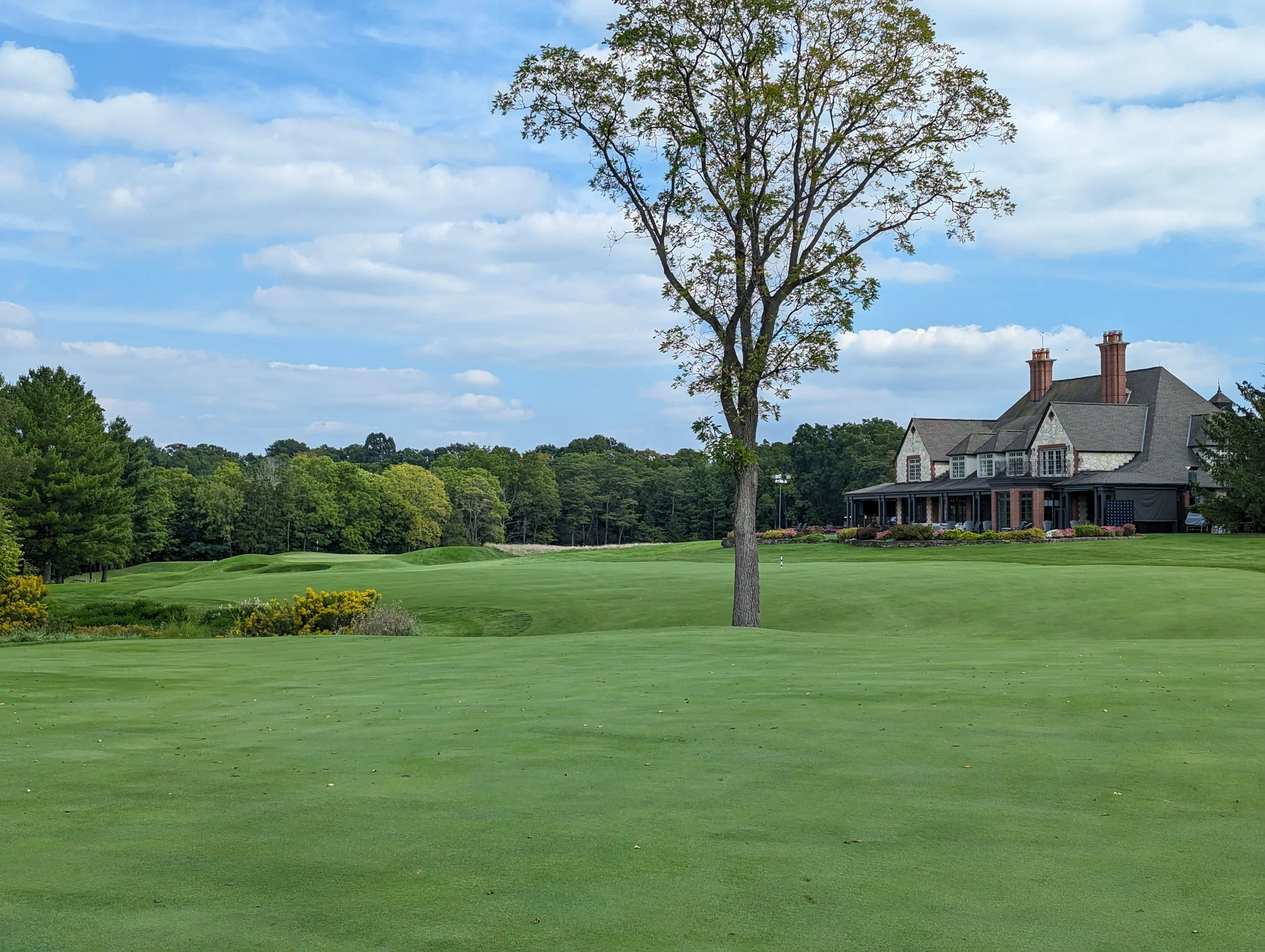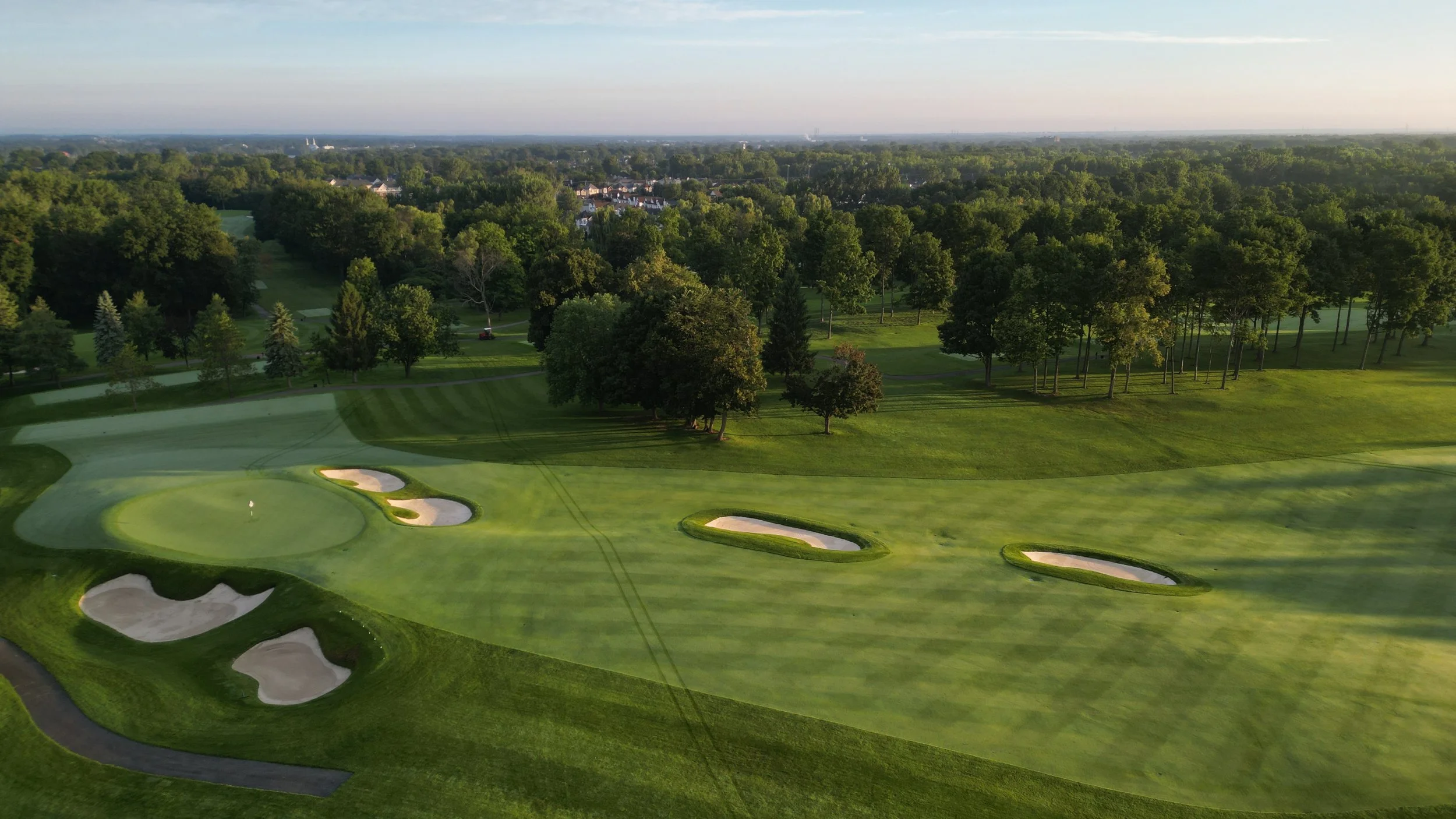
Laval-sur-le-Lac (Blue)
Overview
The reinvention of the Blue Course at Laval-sur-le-Lac stands as a rare departure from the conventions of modern designs in Canada. Ian Andrew and Mike Weir utilized deceptive width, ground focused concepts inspired by the likes of Royal Melbourne and Riviera, and sharp-edged bunkering to create a brilliant, second-shot golf course. Distinct within the Canadian landscape, it offers an elite, creative test that prioritizes architectural teeth and variety. A club of genuine architectural merit that deserves wider recognition beyond its region.
AT A GLANCE
-
Ian Andrew & Mike Weir (2011)
-
-
Beyond The Contour 2024-2025 #31
Top 100 Golf Courses #31
SCOREGolf Top 100 2024 #27
-
Exceptional variety and brilliant green complexes
An ideal Canadian Open host
One of the most important and distinctive renovations in Canada
Private
-
Laval-sur-le-Lac (Blue) - Golf Club Atlas
About
For nearly a century, Laval-sur-le-Lac was defined by its Green course, having the benefits of notable architect Willie Park Jr. at the helm and hosting the 1962 Canadian Open. Its younger sibling, and the focus of this profile, the Blue course, was a patchwork creation, born from nine holes by Howard Watson in 1968, and later, nine more by Graham Cooke in 1992. While functional, it lacked architectural cohesion and failed to utilize the properties potential.
In 2011, the club made the decision to overhaul the Blue course, hiring Canadian architect Ian Andrew alongside 2003 Masters Champion Mike Weir. The mandate was not a simple restoration or renovation; there was little classic architecture to restore, and so instead, the project was a reinvention. The duo stripped the course down, removing trees to improve turf health and sightlines, drastically altering hole corridors, and introducing a design philosophy rare in Canada.
The course was laid out with an expert sense of routing: flowing across the rolling terrain, its parkland characteristics provide a handful of topographical challenges, and in order to play well, you need to take on the architecture teeth. Each hole offering a strategic puzzle different from the last, delivering one of Canada’s most distinct second-shot golf courses. To the design team’s credit, variety seems to be a focus, with four par 3’s sprinkled throughout the round, ranging from a delicate short iron or wedge at the 14th, to the long, brutish sixth. Likewise, the three par 5’s tempt and tease, presenting distinct differences in the ideal approach to each hole. Finally, the par 4s range from short drive-and-pitch holes, to lengthy monsters requiring a long iron or metalwood approach.
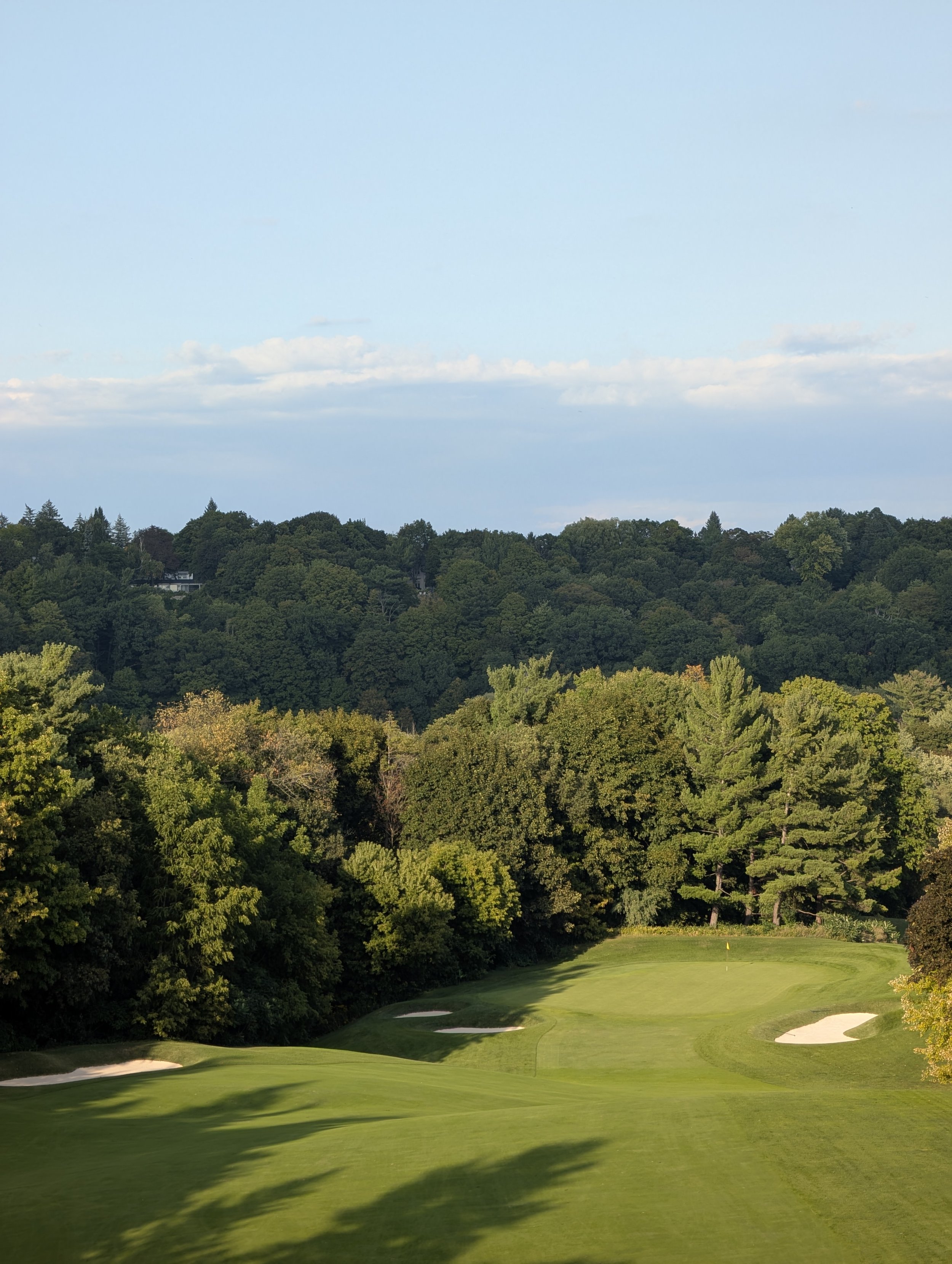
Off the tee, the course feels generous in most places. However, this width is deceiving. Typically, the pin positions dictate that only one side of the fairway offers a favorable approach to the flag. The “safe” drive away from the trouble often leaves difficult angles to hold such firm greens, forcing the golfer to flirt with disaster to score. Around the greens, Shinnecock Hills and Royal Melbourne played inspiration for the short grass surrounds, rejecting the idea that missed shots should be stopped by long, thick rough close to the surface. Instead, errant approach shots do not stop in the fringe; often, trickling 20 or 30 yards away from the hole, leaving a player with a terrifying variety of recovery options.
Hitting shots close to, or over bunkers off the tee, playing the angles, and having appropriate control is more important than ultimate distance here. Ultimately, part of why the Blue course is an interesting golf experience for all levels of play. Always possible to avoid the problems at hand that the scratch golfer is trying to solve. It’s a distinct design difference from anything else built in Canada in the same time period. And even today, its philosophy and concepts are still not widely accepted across the country.
Featured Holes and Course Details
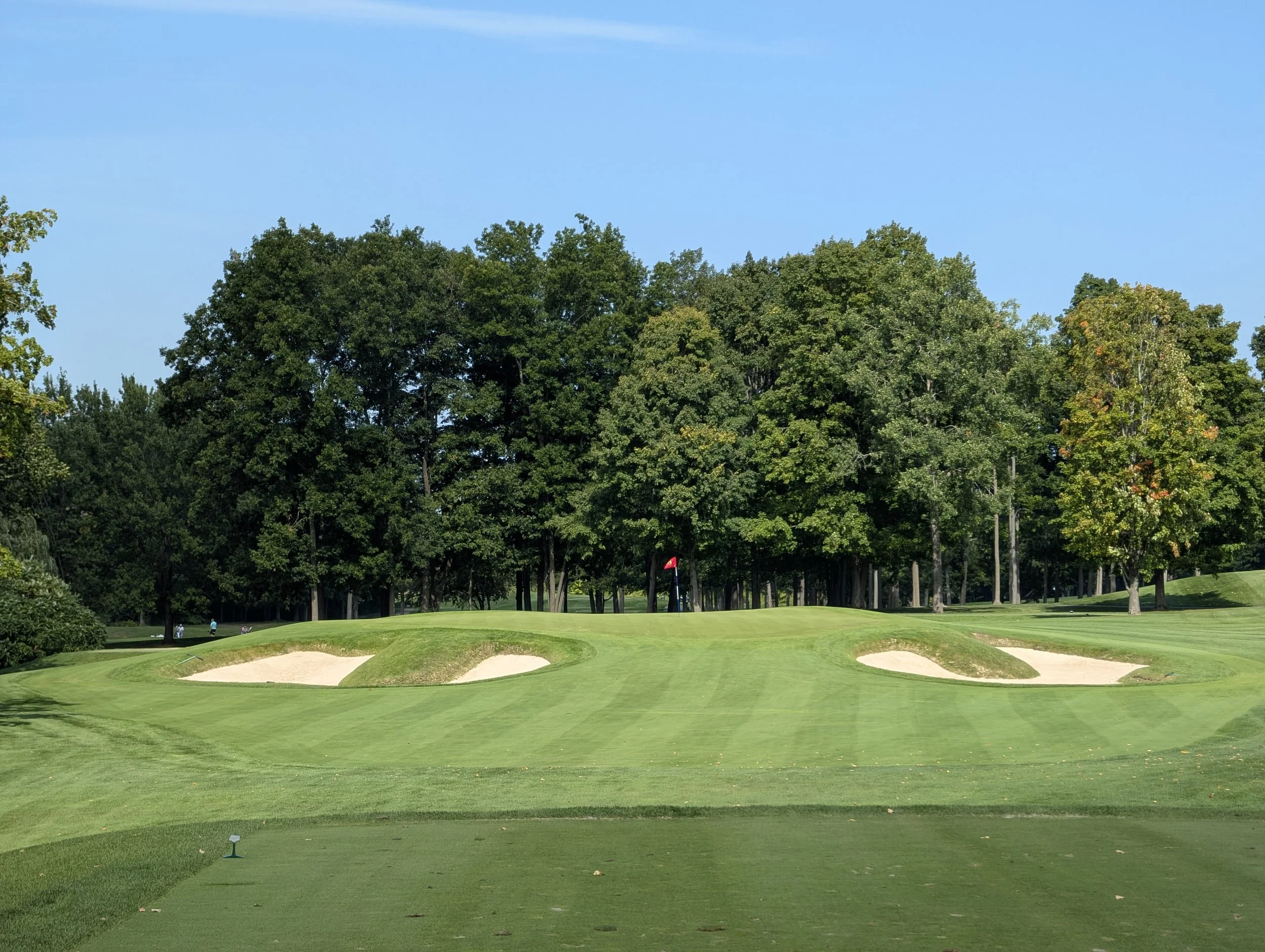
Third hole, 176 yards: If you hadn’t already learned the greens were devilishly crafted by the time you reached the third, don’t let the meager yardage of this hole fool you into thinking it was any easier. This green complex rises above the surroundings like a volcano—guarded closely by a steep false front sitting between a bunker on either side and matched by additional generous fall-offs encircling the putting surface. Because of these design characteristics, the surface’s full size is hardly evident from the tee, where a short iron must be hit with towering height to be hopeful of an advantageous chance at par.
Fifth hole, 438 yards: A robust par four that most appropriately signals the course’s strategic intentions. The tee shot asks the player to challenge a series of fairway bunkers on the inside corner of this dog leg. The carry is substantial for the aggressive line, but the reward is a significantly shorter iron or maybe even wedge into a green that repels indifferent shots.
The green complex here may remind the keen eye, of 14th at Augusta National, though it’s certainly no copy or rendition of it. Drawing from the source material is the major false edges, turning what looks like the middle of the green into portions that bleed away into collection areas. There are no greenside bunkers, and the green’s total surface area is rather large—it’s the simple visual intimidation factors that deceive the golfer’s eyes into thinking the shot is more complex than it actually is. Big numbers are inevitable for those who lack confidence.
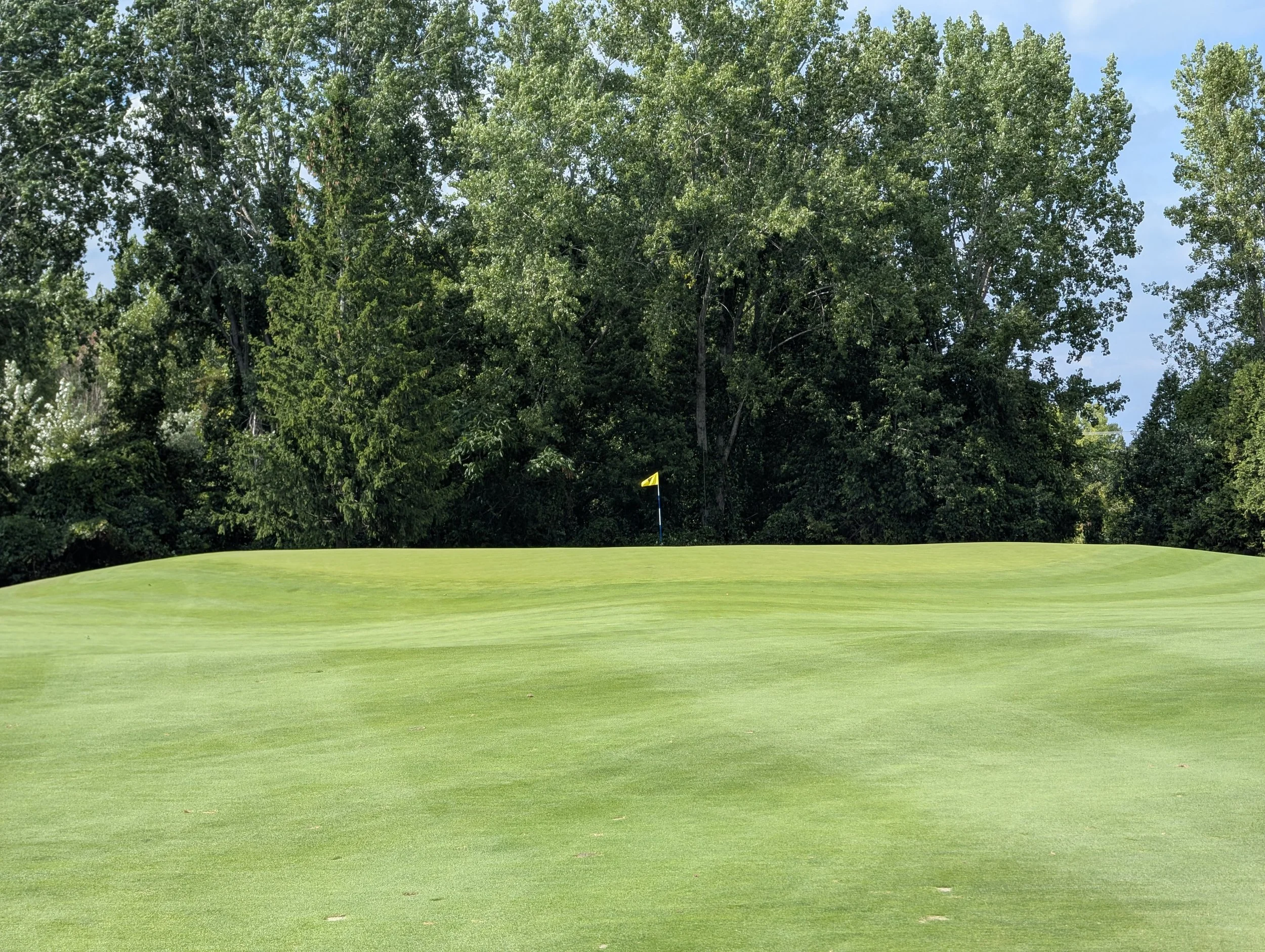
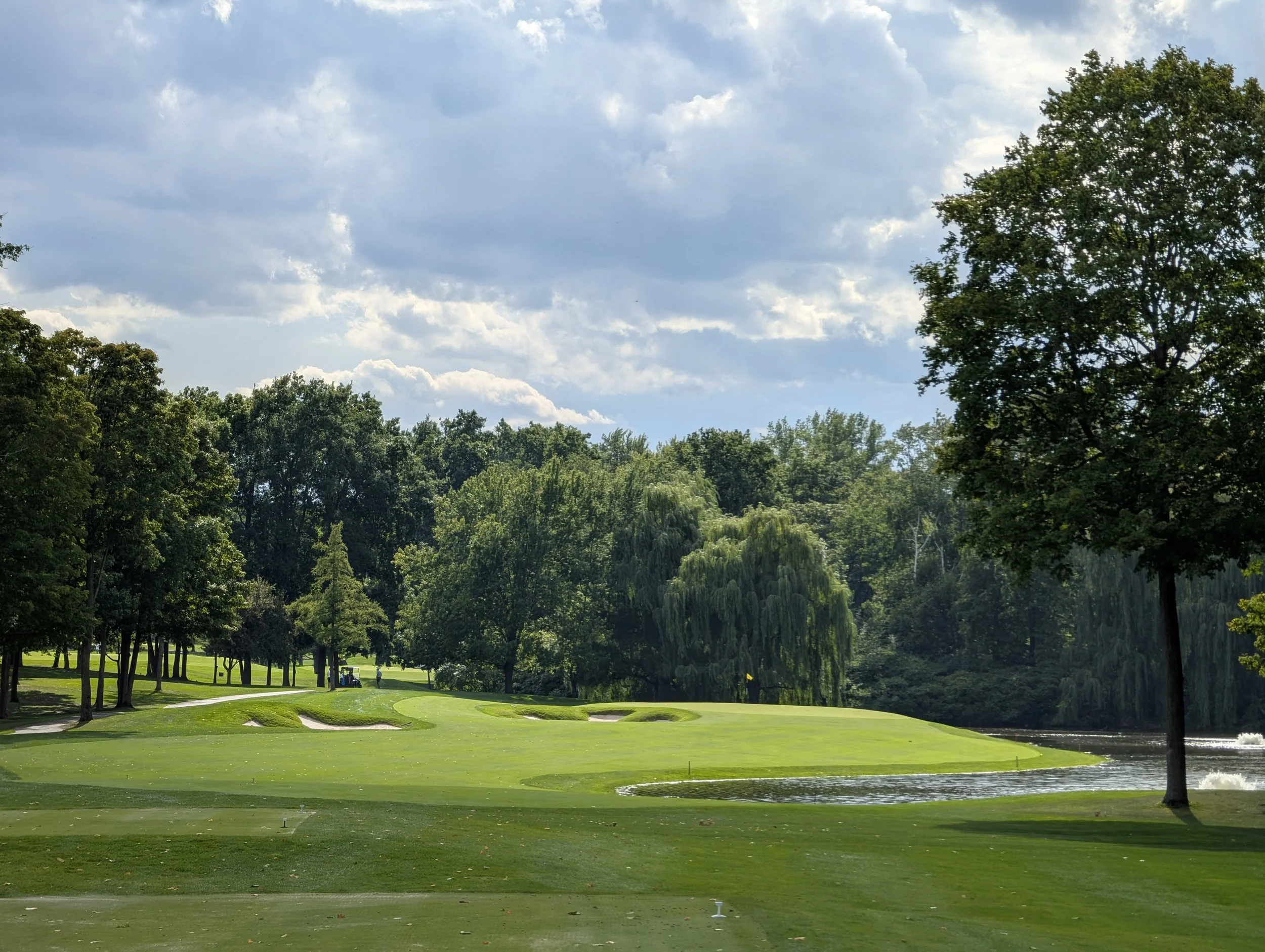
Sixth hole, 231 yards: Visually and physically, this is the most intimidating one-shotter on the property. The green sits tucked over the corner of a large water hazard on the left. A natural redan in presentation, it sits perched precariously with a severe back-to-front and right-to-left slope headed directly towards the water. Players with the ability to hit a long and high or running, right-to-left shot can take advantage of the natural slopes of the land to reach middle and back pin locations more easily. The architectural brilliance here lies in the bailout area: players who fear the water and hit shots to the safe side will find themselves left with a dangerous pitch shot back toward the water that is faster and more terrifying than the original tee shot itself. It’s a perfect example of the course’s ability to allow for passive and safe play at almost any moment while emphasizing the need to take on the features presented to score.
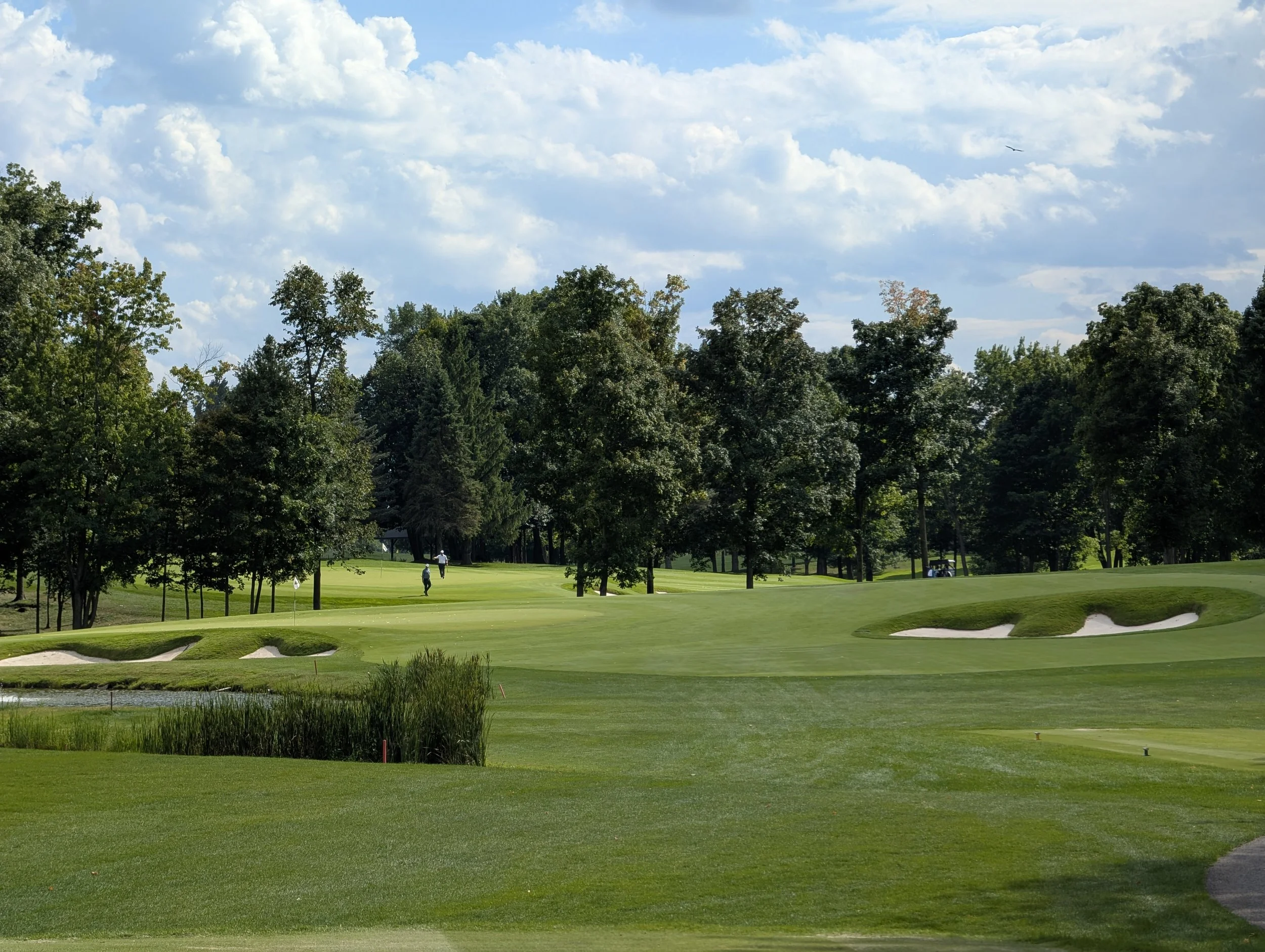
Seventh hole, 333 yards: It might be said that every great golf course must have a quintessential short par 4 that can deliver a masterclass in risk/reward. At Laval, the seventh hole is that drivable opportunity for the longest hitters. With the back tee at a modest 333 yards, most might play this hole from 300 or less and be left with a short pitch into the green. Yet, it’s not as easy as it might seem from the scorecard alone. Tee shots must navigate the pond sitting parallel to the line of play. A line of trees separates the seventh from the fourth up the left, while two bunkers short of the green further protects the safety zones. From the tee players are forced to pick their preferred line, with those who lay up left pitching directly towards the water, while aggressive tee shots up the right have the benefit of a preferred angle but are riskier plays. The green is situated directly along the right side of the hole, narrowing and pitched away from the golfer towards the water.
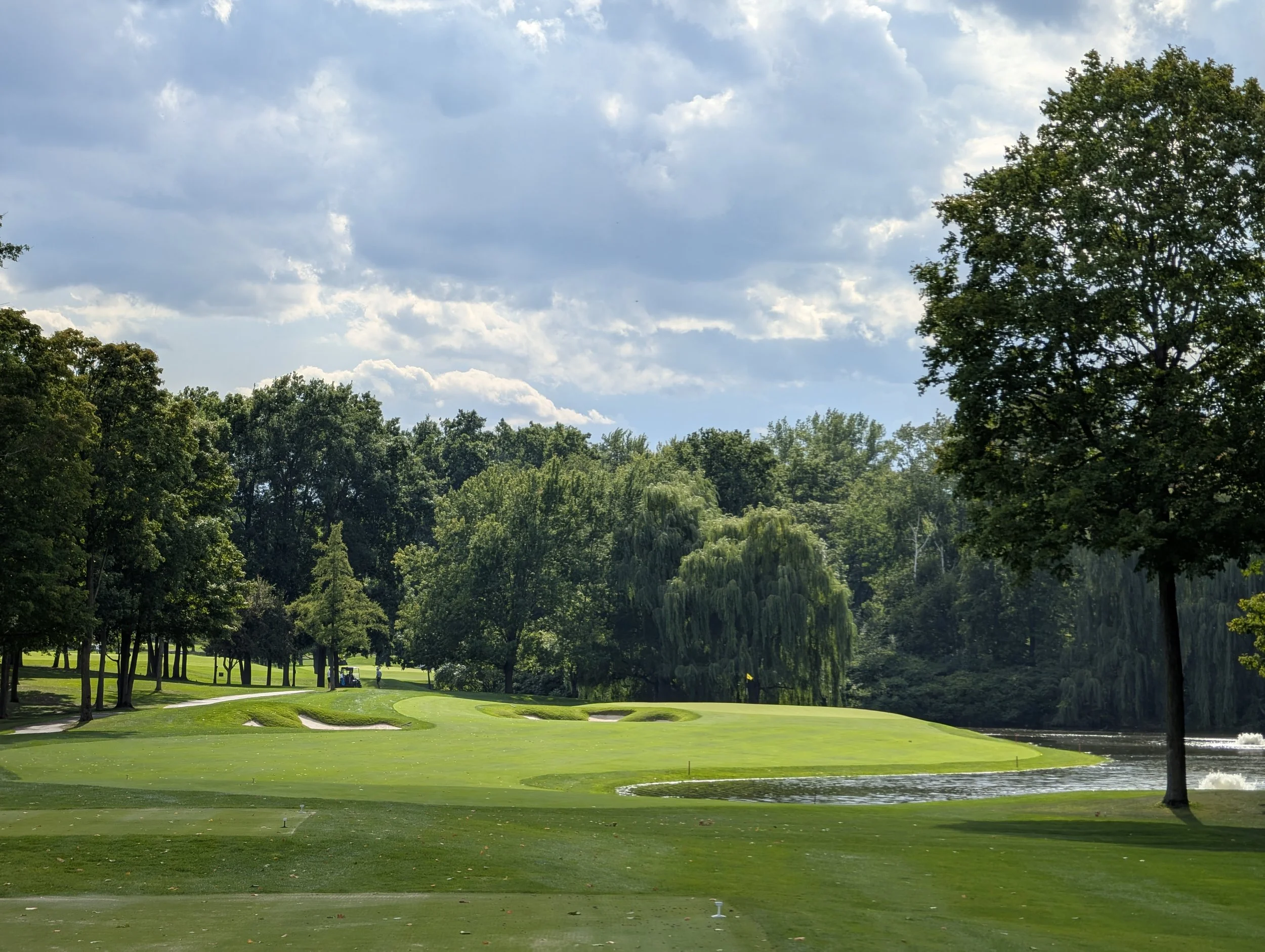
Eleventh hole, 456 yards: The 11th is a striking hole—both visually and to play. The tee shot here looks far more challenging than it is, with two bunkers eating into the fairway—one on either side—with the inside bunker on the right hiding the amount of room available. Similar to the ethos of the golf course, the tee shot isn’t the main focal point of the design; that lies in the approach. Beyond the bunkers, the terrain dips into a small shallow valley before quickly rising some 20 or so feet to the green. While there is ample green space to work with, the devious false front, coupled with two fronting bunkers and the rounded corners at the rear, are among the key tools used to perplex golfers. It’s a hole that you could pluck from the golf course and stick at some of the finest parkland courses in the World and it wouldn’t look out of place, including drawing some similarities to the approach at the 11th at Oakland Hills (South).
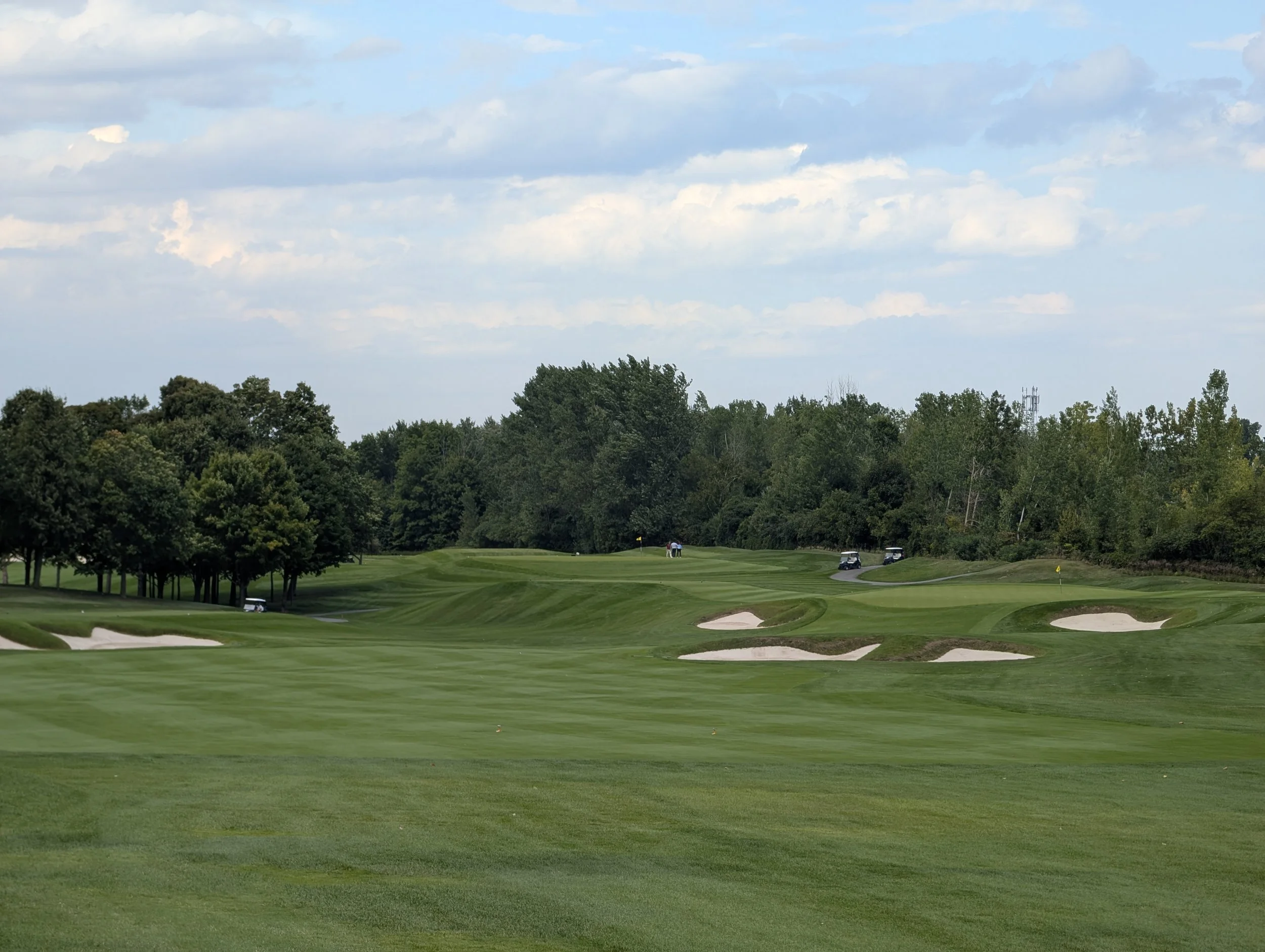
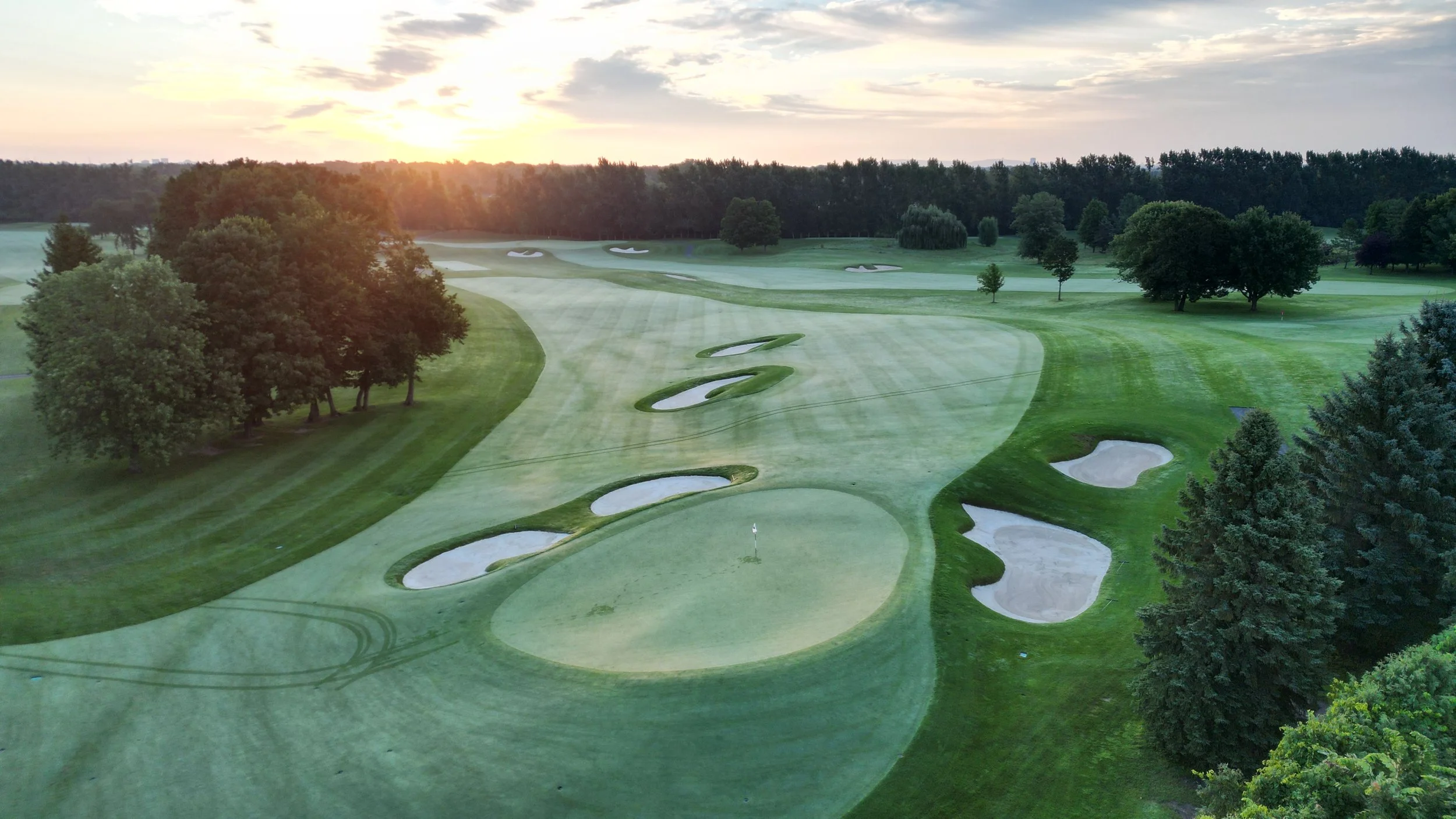
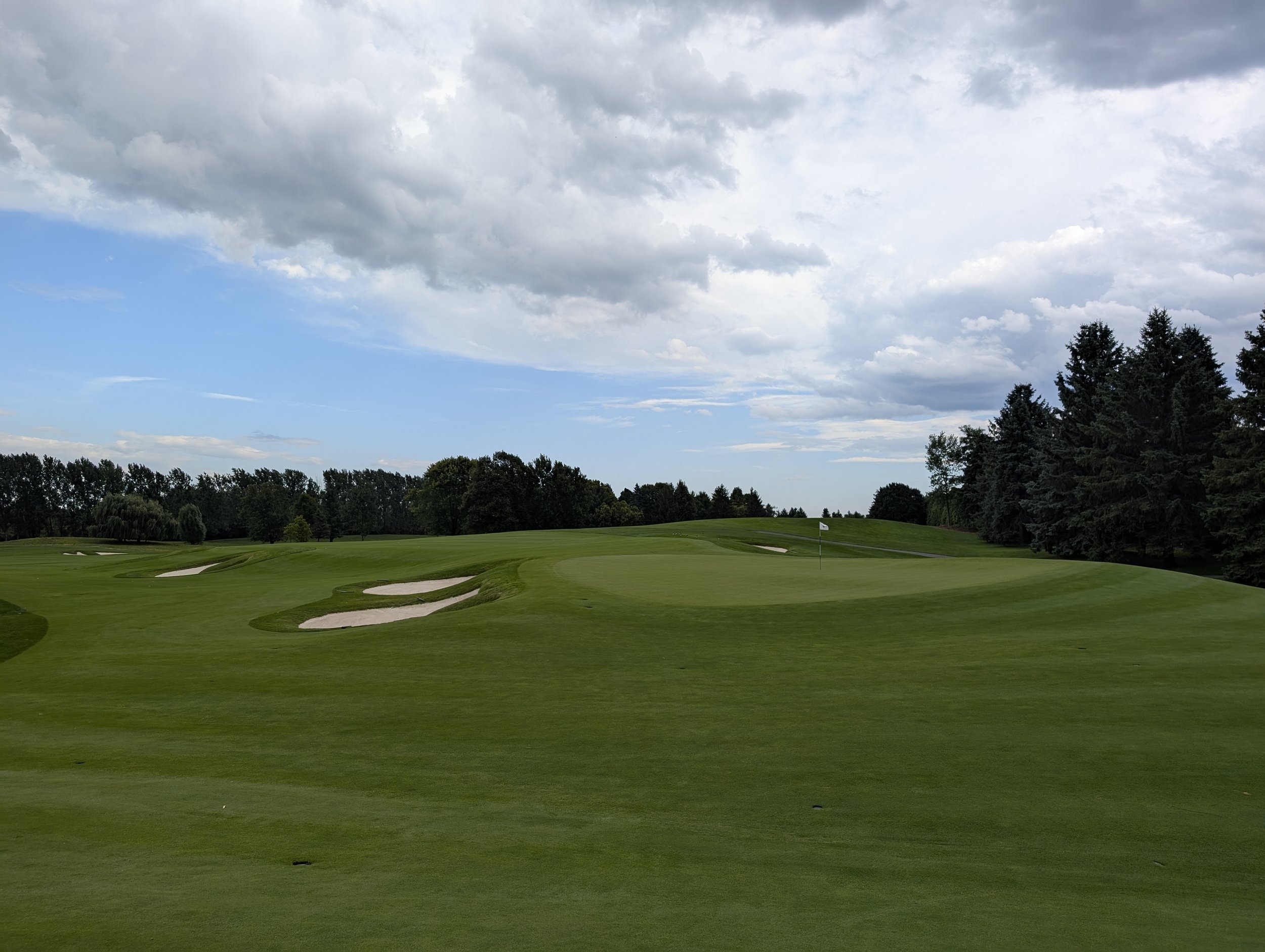
12th hole, 366 yards: Often cited as one of the best and visually inspiring holes from the renovation, this mid-length par four utilizes the rolling topography beautifully by lacing a string of bunkers down the middle, dividing the fairway into an upper (left) and lower (right). Due to the topography at hand, the two bunkers in the fairway look connected to the third and fourth bunker as they all sit into the hillside, yet ample room exists between the two couples. A short or mid-length iron must elevate the ball to a green which is strongly pitched away from the golfer—particularly from those who play the left side. It’s a hole with two distinctive strategic pathways that players can execute depending on their preference and skills.
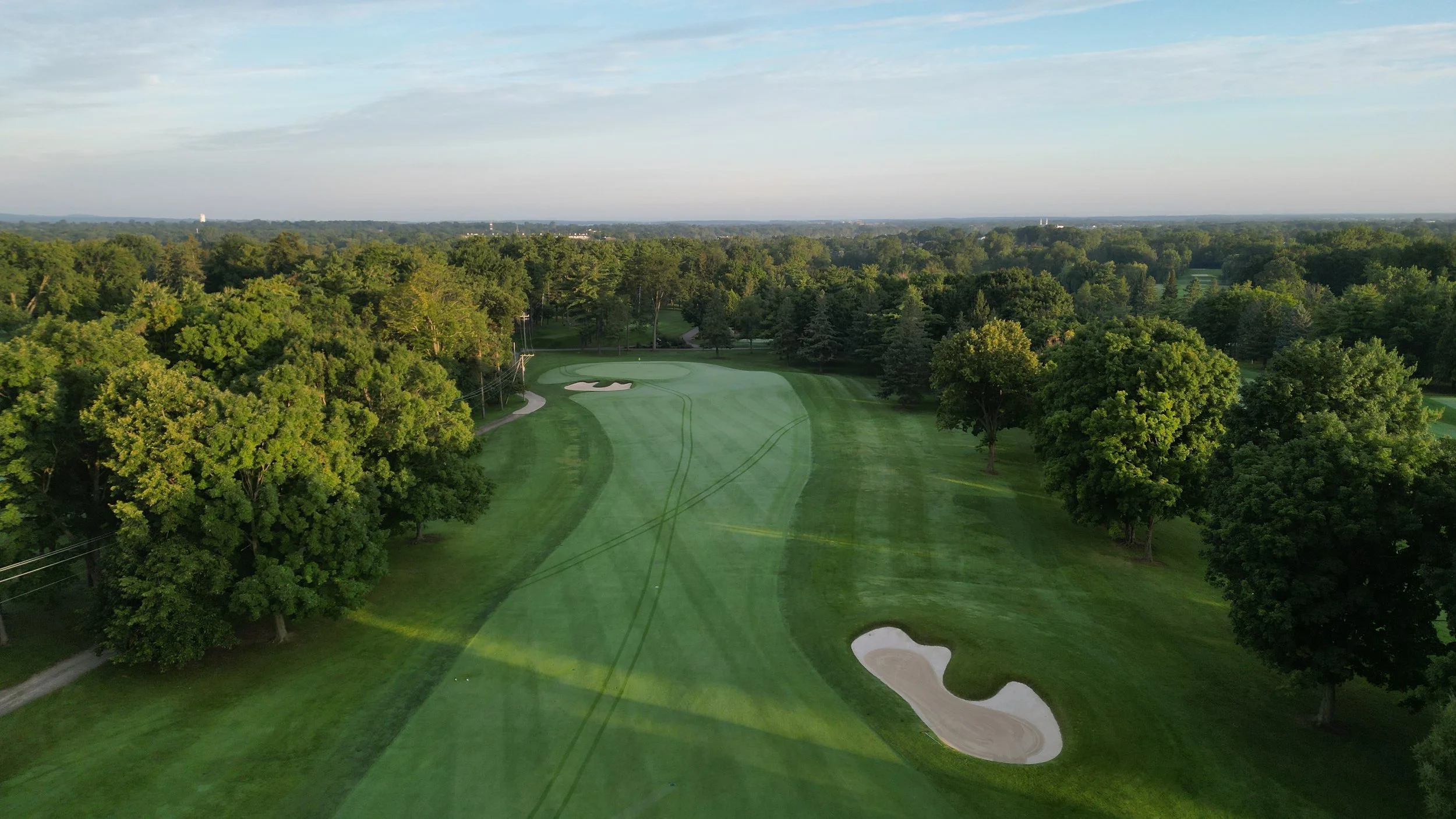
18th hole, 478 yards: If the Blue was a Canadian Open host, this would be a fitting conclusion to such a test of golf. Long and demanding, the tee shot turns ever so slightly to the left. A bunker on the outside narrows the landing zone, such that players who lay up or miss short face a significantly long and difficult shot in. The approach features a green complex that seems to reject anything but the most well struck shots. Its putting surface perched above its surroundings which includes a lonesome bunker front left protecting the largest portion from running shots. It is an apt end to a round that requires constant mental engagement.
Though Ian Andrew’s body of work has mostly consisted of restoration and renovation work, the design profile of the Blue Course at Laval-sur-le-Lac is authentically his and collaborator Mike Weir’s own. There isn’t anything similar to compare it with in Canada. It serves as a compelling case study for modern renovations. By moving away from the target golf motif that dominated the era the Blue was first conceived in, and embracing the firm and fast principles of its design inspirations and classic architecture, Ian Andrew and Mike Weir have created a course that is infinitely playable for the high handicapper—who can putt from everywhere—yet can be maddeningly difficult for the scratch player who tempts more risk and faces tough recovery shots. It is a sophisticated architectural statement that stands shoulder-to-shoulder with its historic neighbour.
You might also like..
-
Maple Downs
-
Rosedale
-
Redtail