Niagara on the Lake
Overview
Steeped in history and perched on the shores of Lake Ontario, Niagara-on-the-Lake Golf Club holds the prestigious title of North America’s oldest continuously operating course in a single location. Established in 1875, this nine-hole gem offers a rare bridge to the origins of the game on this continent, having hosted the North America’s first international tournament.
The course charms players with its simple yet effective architecture. From tiered, defensive greens to scenic lakeside views, NOTL proves that a shorter layout can still provide a sophisticated and enduring test for the modern game.
AT A GLANCE
-
Unknown
-
-
Not formally ranked
Among Canada’s best nine-hole golf courses.
-
Oldest continuously operating golf course in North America
Quirky, short, sophisticated architectural design
Nine holes
Public access ($45-100)
-
None
About
It is well documented that Royal Montreal, 1873, is North America’s oldest continuous golf club in existence today. But what you might not know, is the longest continuously operating golf course in a single location, in North America goes to Niagara-on-the-Lake Golf Club (NOTL) - a small but important distinction. NOTL, as some may refer to it, has been operating on its original site since 1875, there are no official plans for the golf course originally named the Mississauga Links. Nor is there an architect of record, with a gentleman named John Geale Dickson credited for bringing golf here in the 1870’s.
In 1895, what was known as Niagara Golf Club at the time, hosted the first international golf tournament in North America on this site. Nine holes constructed on the Fort Mississauga commons and nine holes constructed on the Fort George commons were used to host the tournament. With players being shuttled between the two courses during play. The Men’s tournament was won by a man named Charles Blair MacDonald of Chicago. Mr. MacDonald would later go on to be one of the most influential men in North American golf course architecture, creating such storied layouts as National Golf Links of America. One perhaps might wonder if he spotted anything particularly interesting on these links to further his interest in golf design. In subsequent years, up until the great war broke out, the tournament was held on the revised 18-hole course at the Fort George commons (NLE).
Set within the shadow of Fort Mississauga National Historic Site, just a cannon shot away from Fort Niagara across the Niagara River, and a few hundred meters from the charming downtown of its namesake. Niagara on the Lake is a semi-private club with a long and storied history of golf. The course is not blessed with a tremendous property or overly stunning built architectural features, but does well in its own right to charm the golfer. Rather it’s history that is the likely draw for the curiously discerning enthusiast.
In the early 1900’s part of the golf course was incorporated within the Fort itself, including the second green, a blind par 3, that was situated within the “moat”. As the years went on, numerous changes were made, including removal of this green. Regardless, its central appeal towards history still remains its core principle. Today Niagara on the Lake is amongst the best nine hole courses in Canada. And one that golf enthusiasts with a keen interest in history should play at least once. Not just because of such but also for its simple, yet effective and interesting architectural interest.
Featured Holes and Course Details
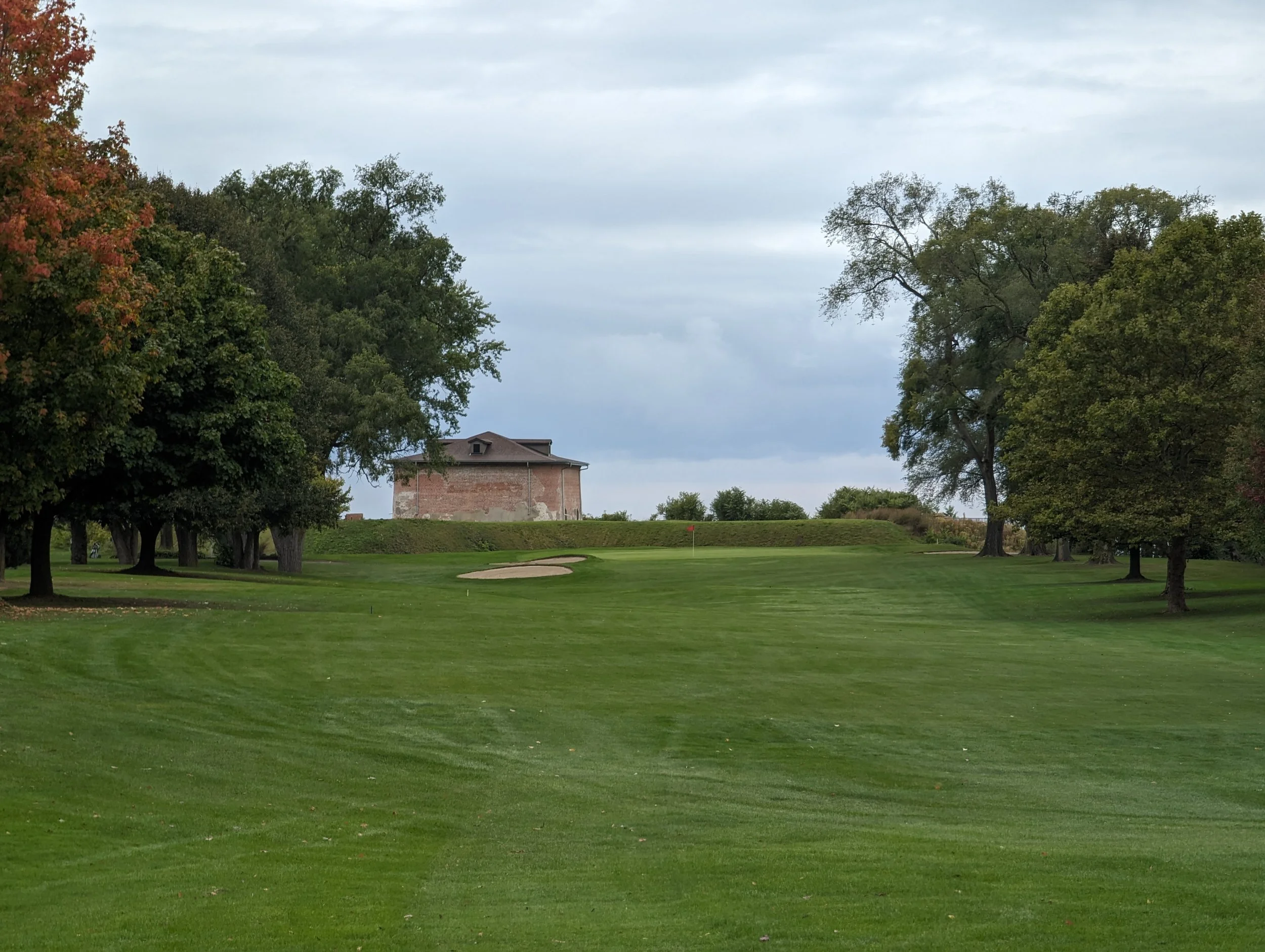
First hole, par 4: The first hole showcases the looming presence of Fort Mississauga, and Niagara River estuary as the backdrop. Golfers who are long of the green may find the “moat” - a steep artificial embankment guarding what remains of the historic Fort - an unmistakably unique hazard. The noticeable micro contouring throughout the first makes this a pleasant opening test.
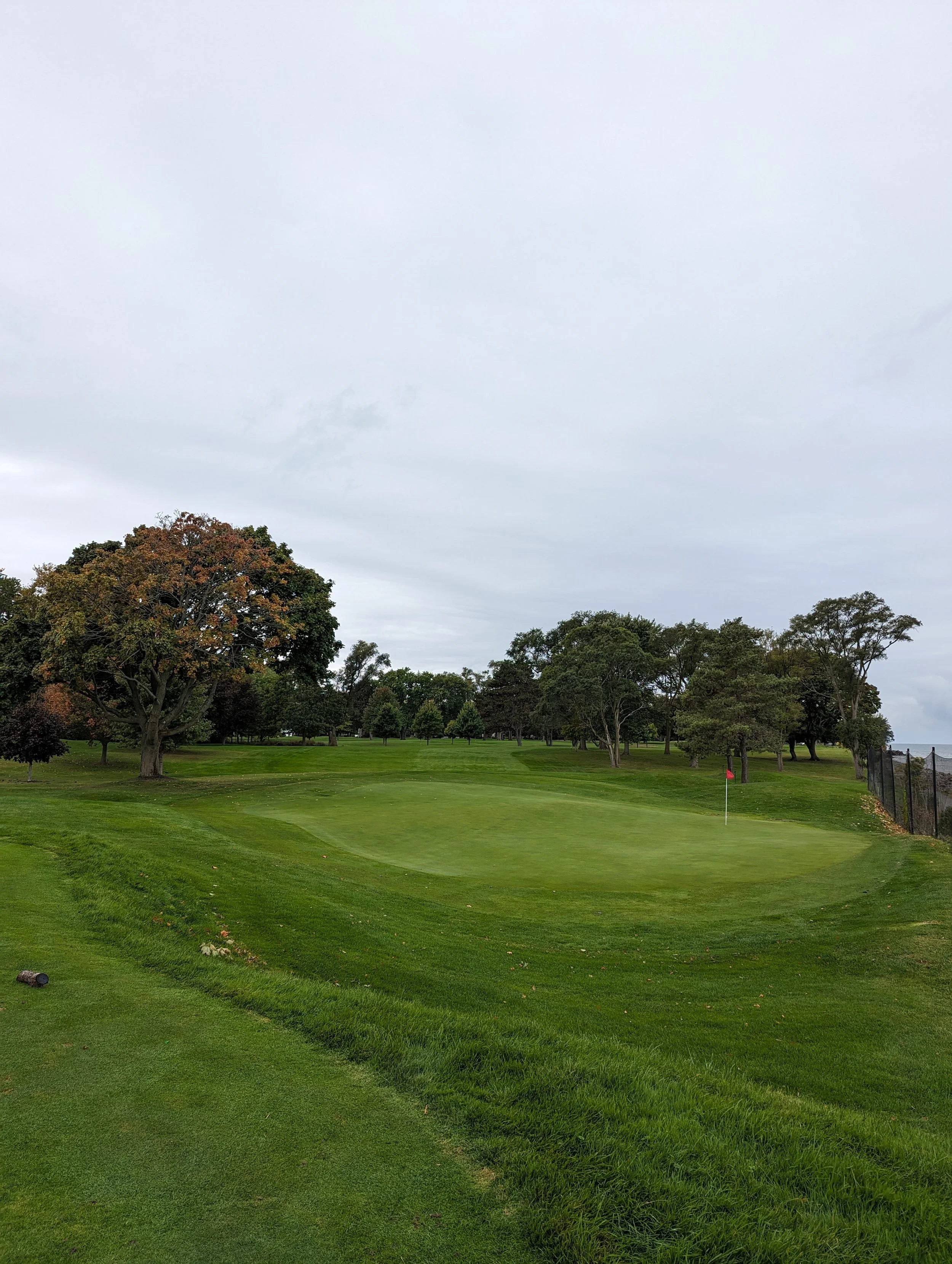
Third hole, par 5: The best features at NOTL are its greens. Boasting a strong variety throughout. This set, while not all original, are rather harmonious with the golf courses architectural principles. Showcasing a particularly quirky set of small surfaces against the compounded nature of the golf course itself. Most of these greens are tiered - with sections divided by upper and lower halves. At the par 5 3rd for example, the green is pushed up and has fall offs on all sides. Setting up an excellent defensive structure, when distance isn’t an option. Walking off the third it becomes clear that no two holes are immediately alike. Green complexes of varying designs and slopes from start to finish will befuddle the golfer creating a challenging test for the modern game and increasing the enjoyment for the player.
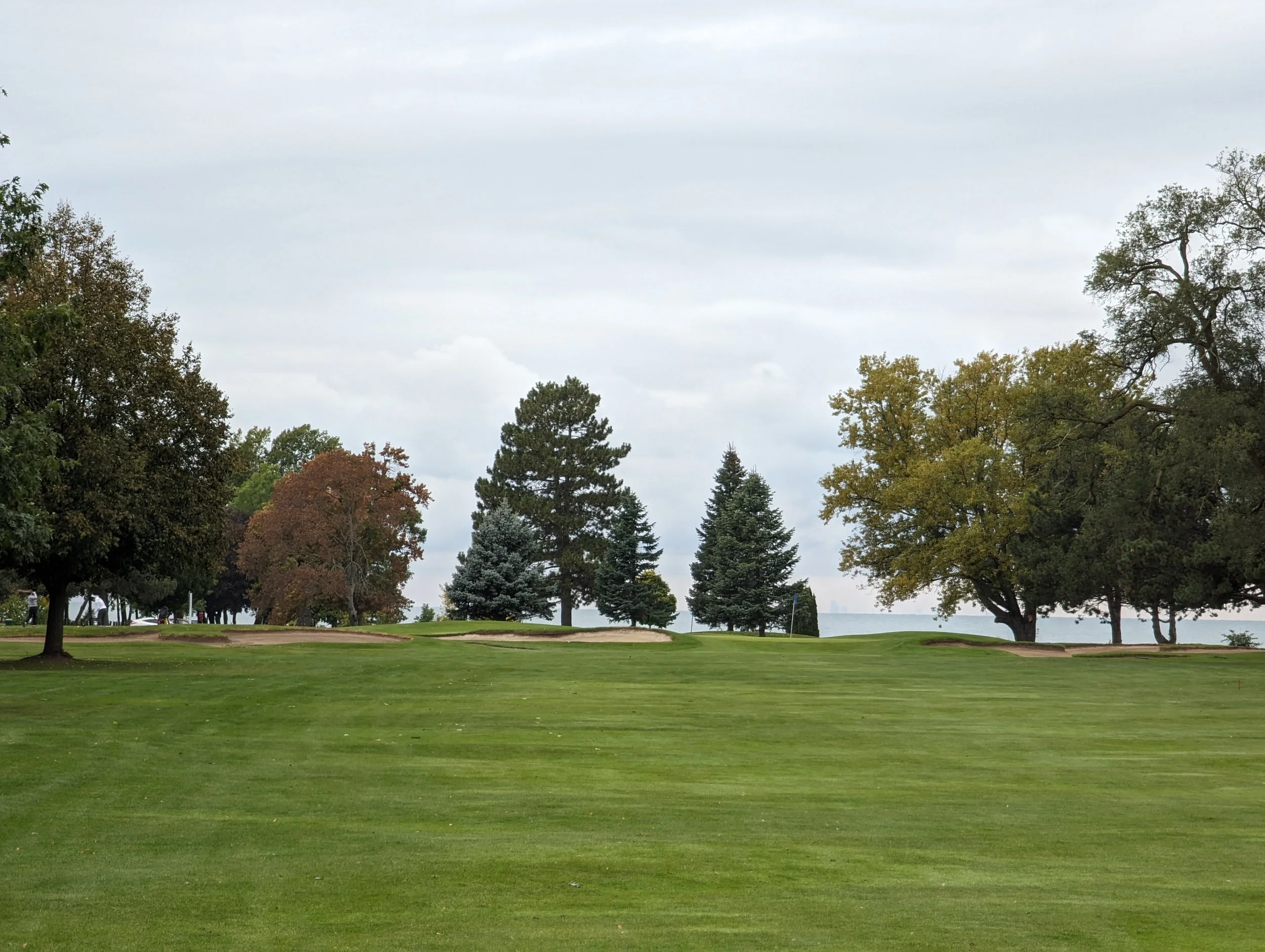
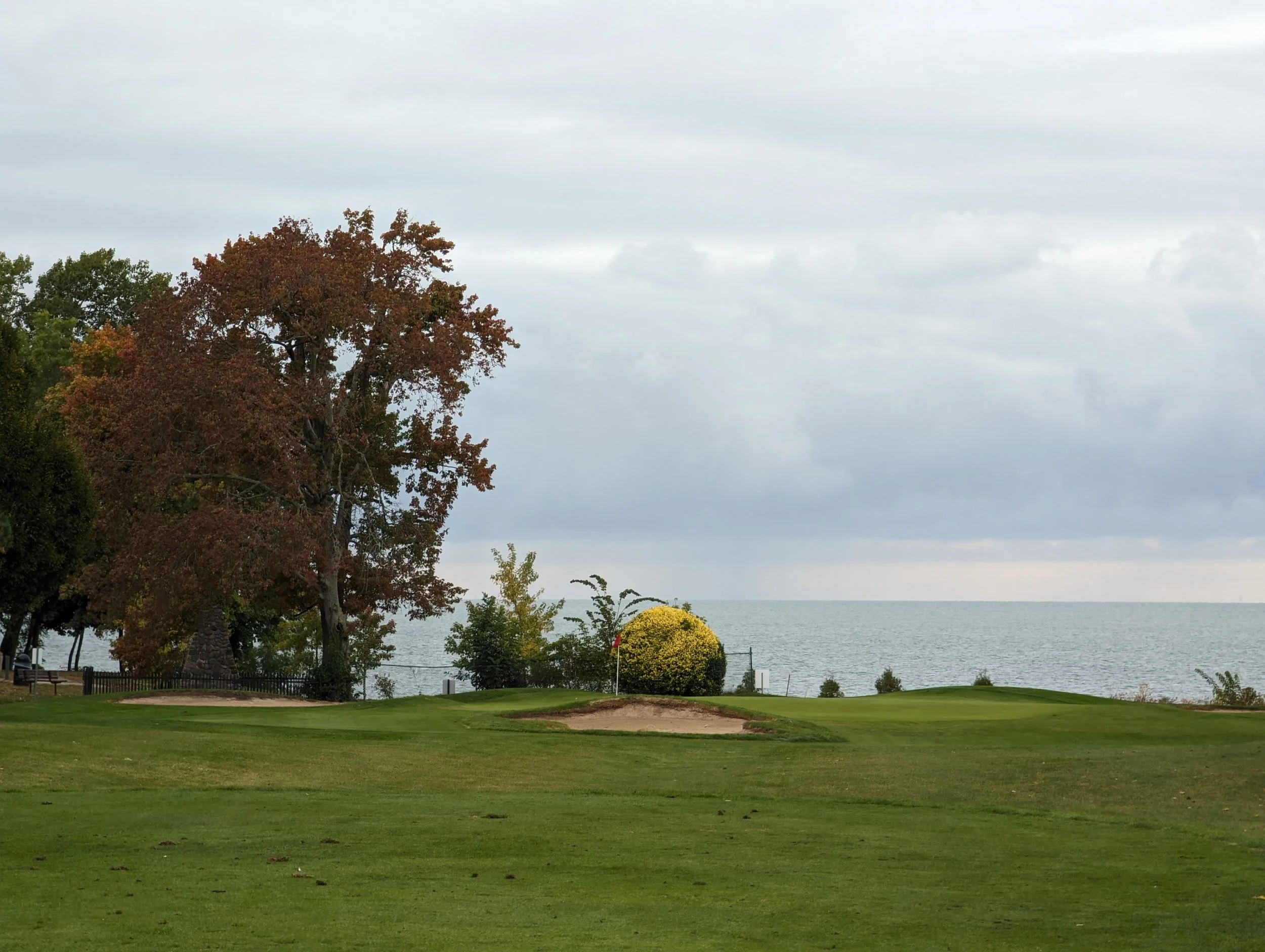
Fourth hole, par 3: Take one look at a course alongside a big body of water that's not blocked by a dense forest of trees and it's easy to see why people become so enamoured with that setting. Niagara on the Lake is one of the very few golf courses in Ontario to offer sweeping views of Lake Ontario from start to finish. Treating golfers to a lovely setting, accentuating the course's subtle architecture favourably. With Lake Ontario as its backdrop the short par 3 4th is unforgettable. A challenging two tiered green is partially obstructed from the tee by the central bunker. Further, it is guarded by flanking bunkers on either side of the small putting surface.
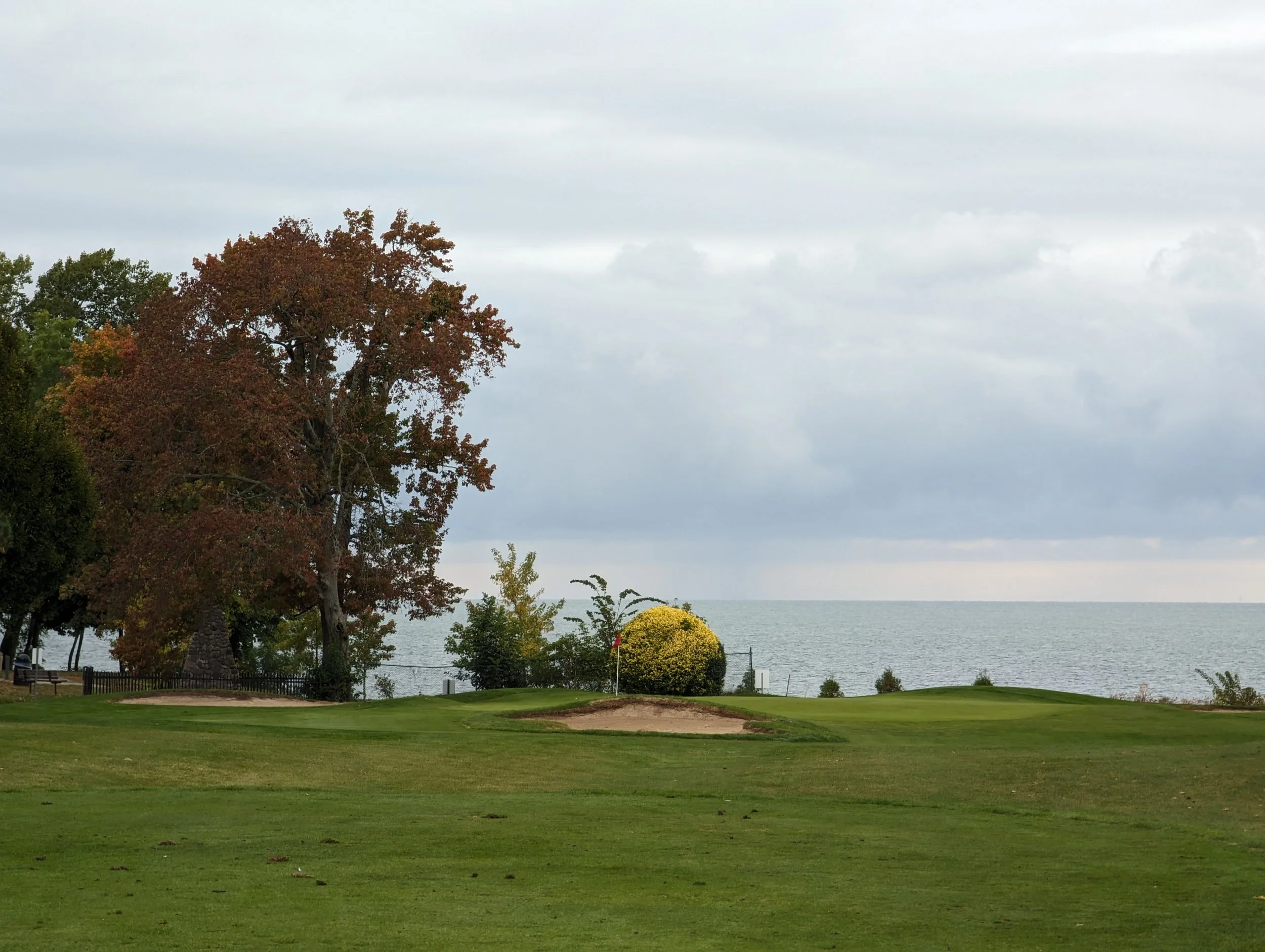
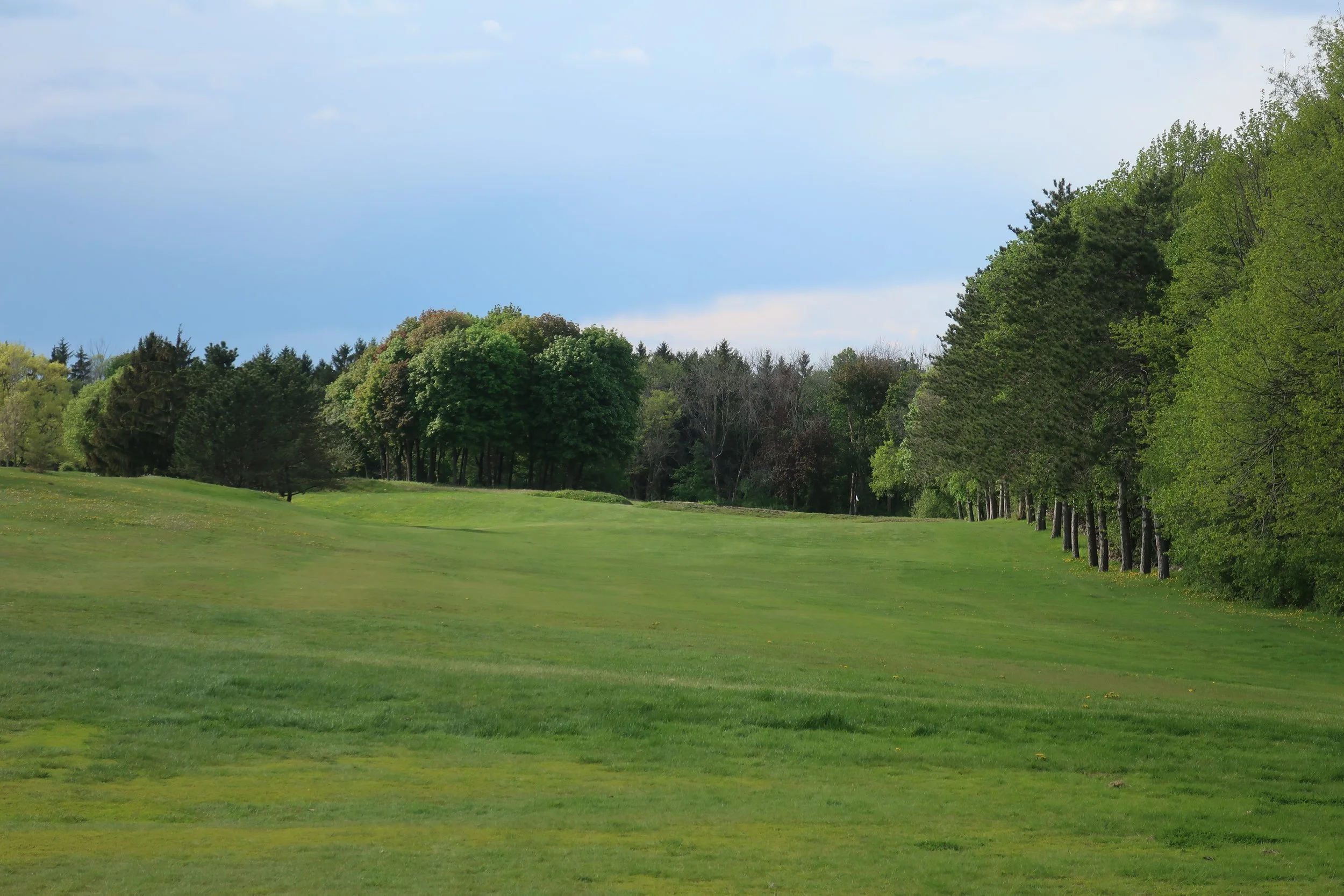
Fifth hole, par 4: As the golfer tees off from shoreline and heads back inland at the par 5 5th, they are greeted with a tricky narrow fairway from tee to green. Further increasing the complexity of this hole is another central bunker fronting the elongated green. Tight runoffs on either side provide shot options around greens further adding to its architectural value.
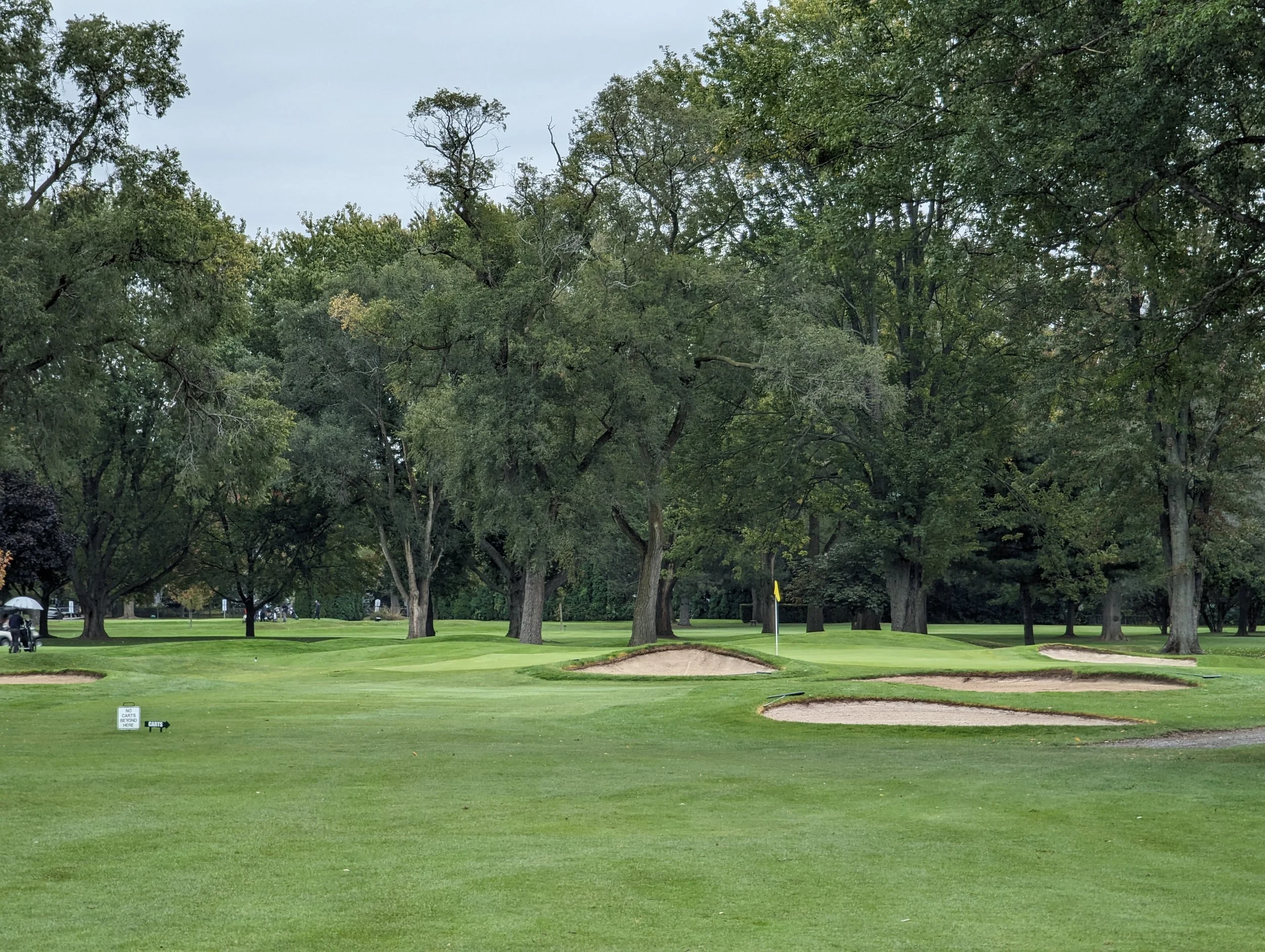
Seventh hole, par 4: Taking one look at the scorecard, one might assume the short par 4 7th is driveable. But the tall trees that guard the straight shot, combined with the out of bounds down the left create a big risk. One of the craziest greens on property further guards this deceiving par 4. A severely sloping bowl tucked into the hillside features a diagonal sloping ridge that separates the upper and lower portions. Distance control and precision is the name of the game at NOTL. It's not one which can be overpowered by today's modern golfer because one criticism of the golf course is that the large trees encroach too much on the playing lines.
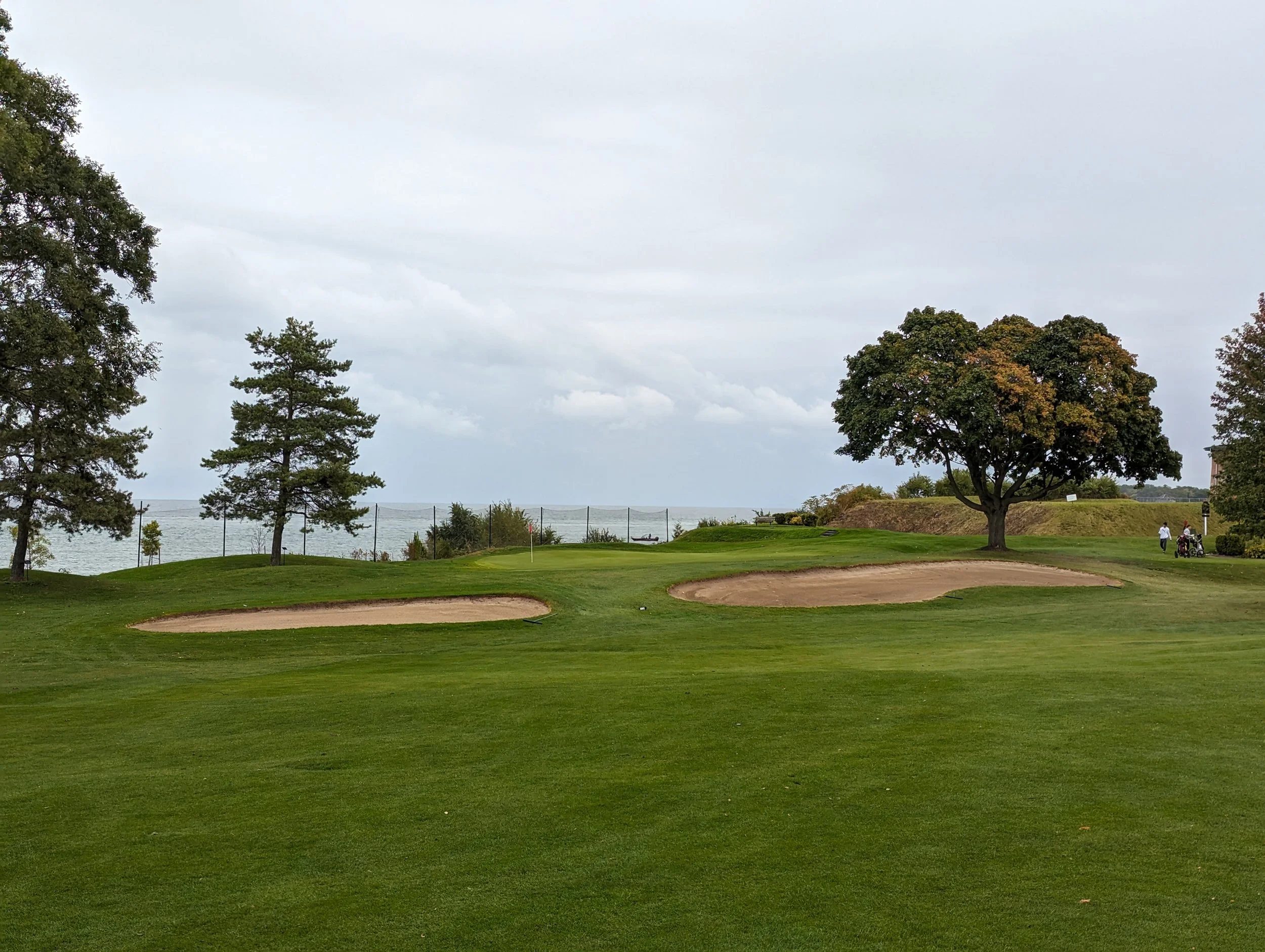
Eighth hole, par 4: For a course that has been in existence since 1875, there have been plenty of changes. Trees have grown in to shrink playing corridors, greens altered, holes entirely removed, bunkers added or reshaped. Yet, the 8th remains largely as original today as it did in 1875. A pretty astonishing feat considering the club was mostly closed during the World Wars. And for a course as old at NOTL, it's the variety in green settings and designs that makes it full of fine character.
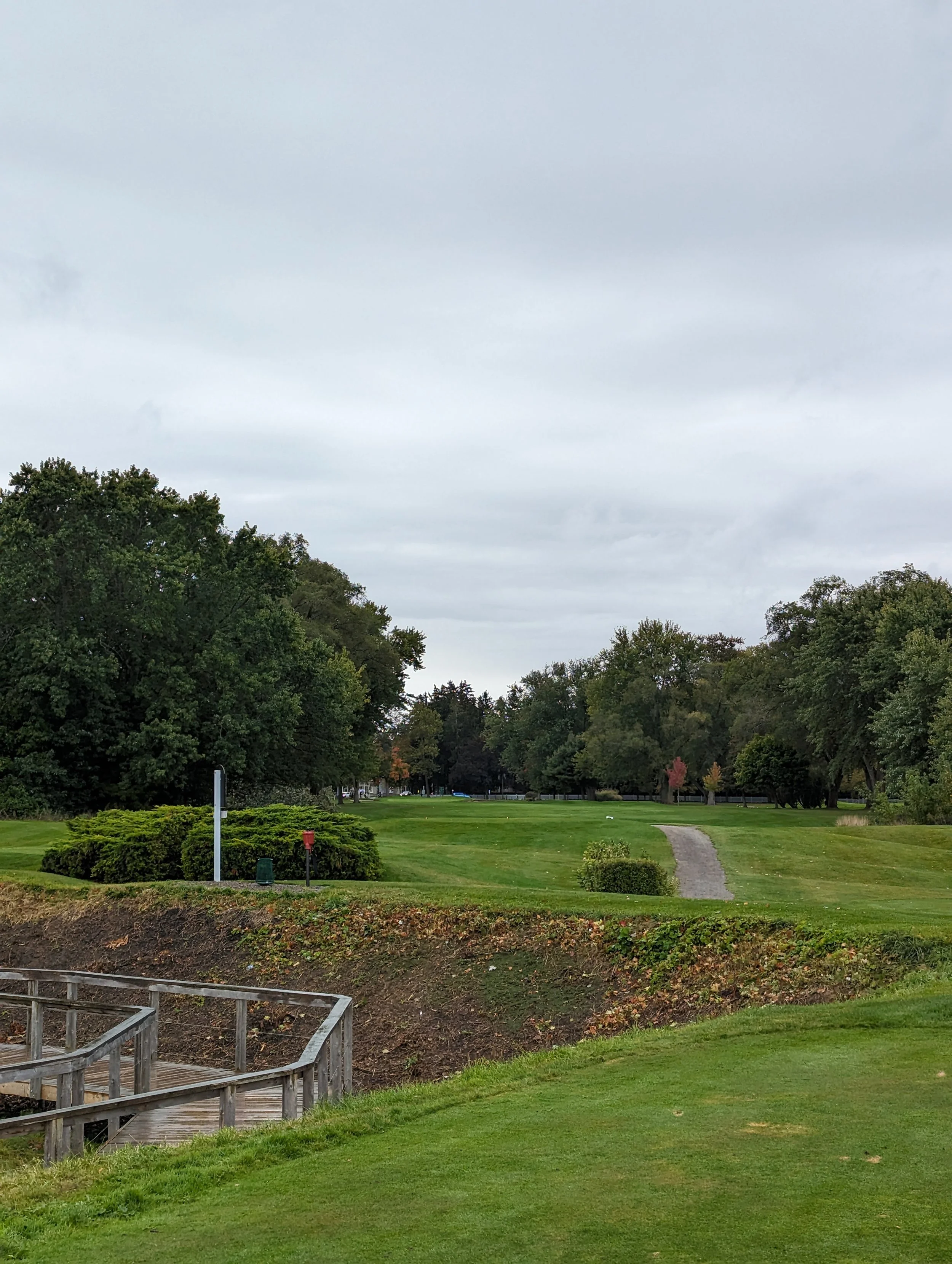
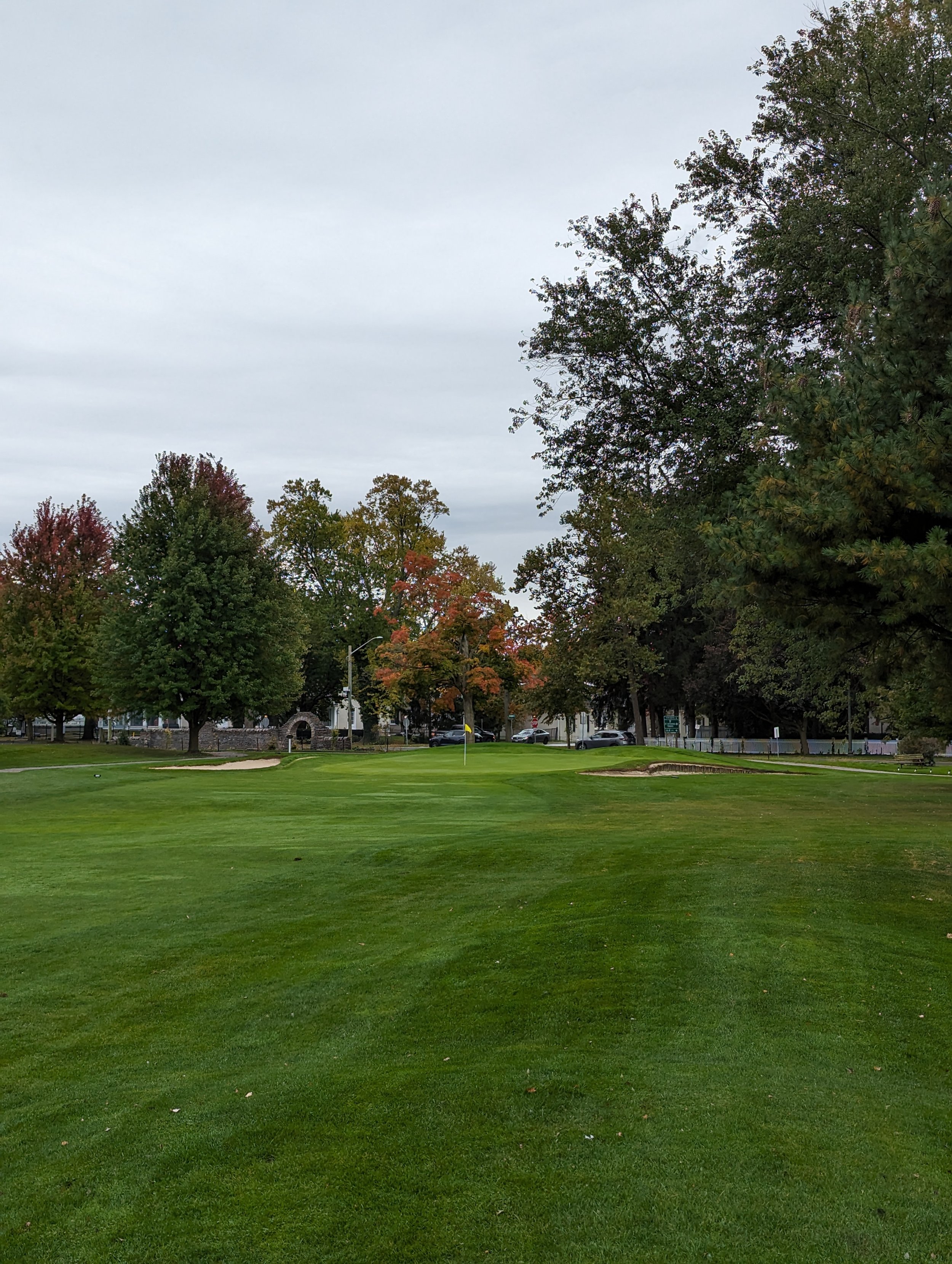
In a world of nine-hole courses that more often than not are obscure or far too tame, Niagara on the Lake is a shining example of simple, yet effective architecture. You’ll come for the history, but you’ll return for the pure enjoyment.
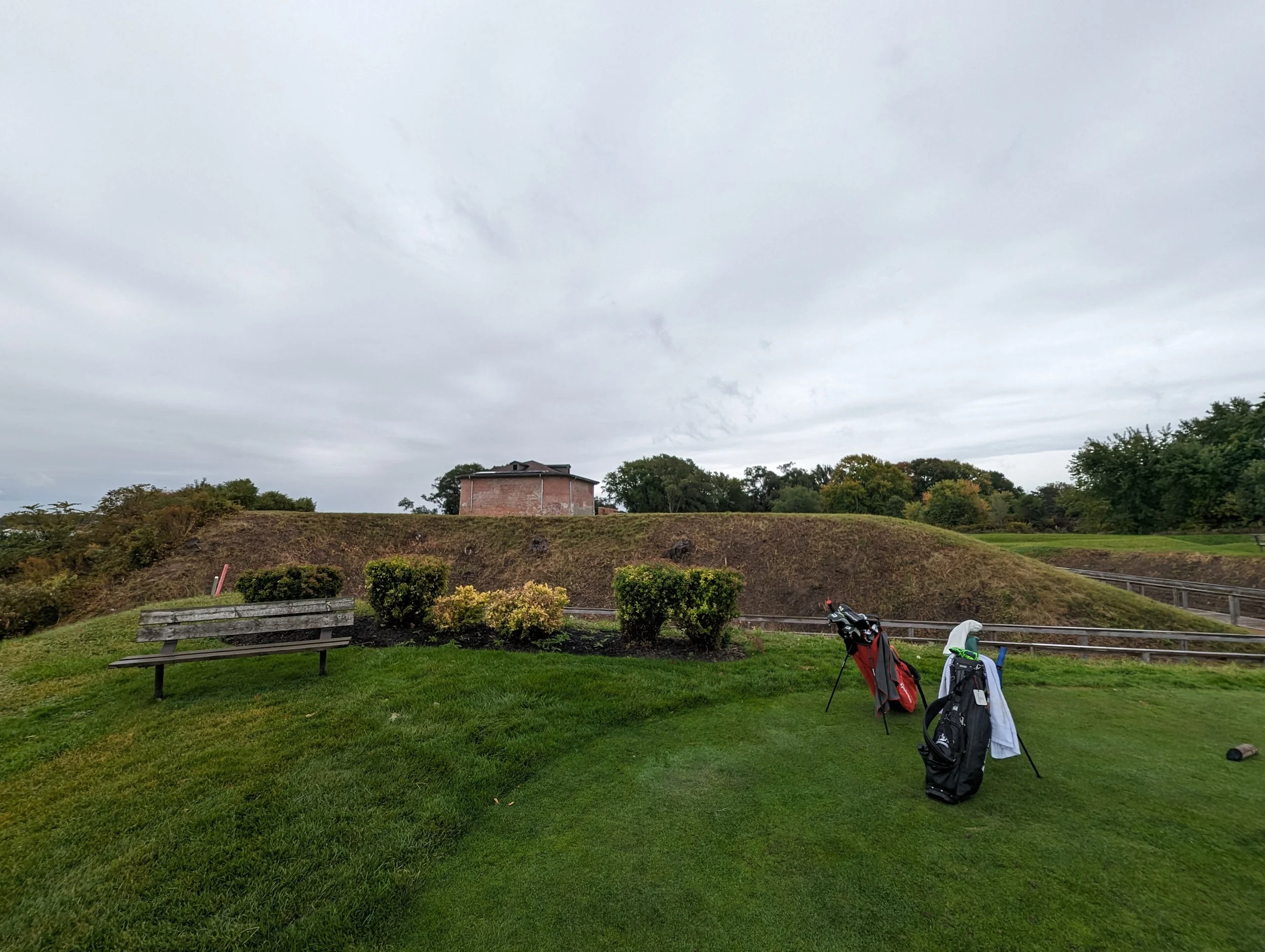
Fort Mississauga and the Moat beside 8th tee
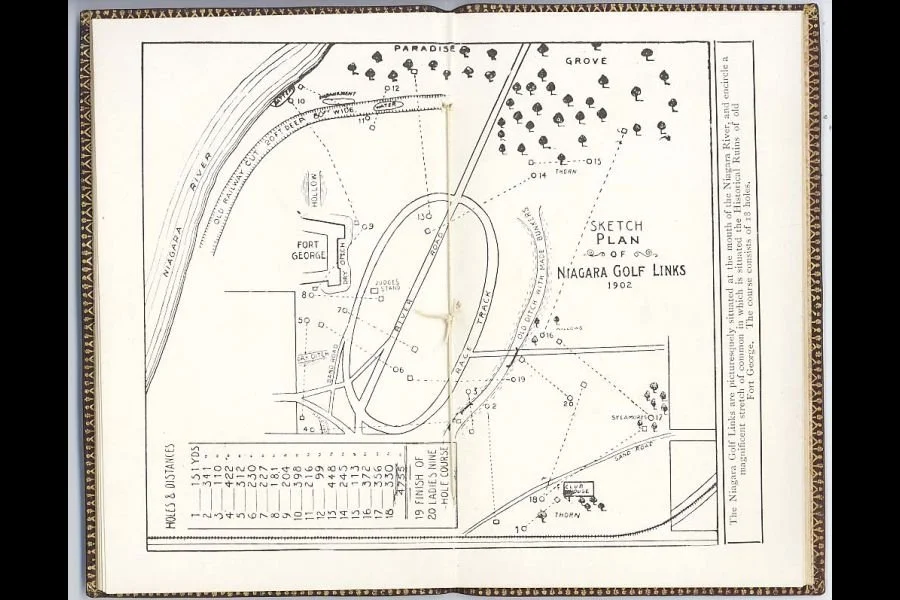
Sketch plan of Niagara Golf Links from 1902, showing golf course layout, trees, buildings, and surrounding area including Niagara River and creek.
You might also like..
-
Braeside
-
Norfolk
-
Waterton Lakes