Whirlpool
Overview
Whirlpool is not Stanley Thompson at his peak, but it is his last original design, and that carries historical significance for the man who is Canada’s most prolific architect. His parkland design sits above the Niagara River Gorge and features a natural hillside plateau that gives the routing its most interesting character. While the land forms may skew towards uninteresting, the bones are good enough to make it worth playing. An ongoing restoration project, detailed with inputs by Ian Andrew, is working to undo the drifting legacy of Thompson’s design intent.
AT A GLANCE
-
Stanley Thompson (1951)
David Moore and Dick Kirkpatrick (1996)
Renovation consultation by Ian Andrew (ongoing)
-
3351 Niagara River Pkwy
Niagara Falls, ON L0S 1J0
https://www.niagaraparks.com/visit/golf-course/whirlpool-golf-course/
-
Not ranked
-
Final design completed by Stanley Thompson
Active, phased restoration, underway by Ian Andrew
Public access ($50-$85)
-
None
About
Stanley Thompson died in January 1953 at the Royal York Hotel in Toronto, two years after the course that would become his final original design opened along the banks of the Niagara River. Whirlpool is not Thompson at his absolute peak. Rather, it may be categorized as a footnote to one of the most consequential careers in Canadian golf history. Banff, Capilano, Highlands Links, Jasper, and St. George's represent that ceiling. But it is undeniably his, and in its best moments, the fingerprints of Canada's most prolific architect are visible to those with a keen eye.
Owned and operated by the Niagara Parks Commission, Whirlpool sits alongside the Niagara River Gorge occupying a plot of land with no particularly remarkable landforms with which to build golf across. Even though the setting and topography are less dramatic than most of Thompson’s notable designs, he, alongside his design team — including his young nephew Nichol Thompson — was able to extract several pronounced features. The most interesting and meaningful of such, a hillside plateau congregated right in the middle section of the property. Making intelligent use of this particular landform, six holes were crafted to interact with this elevated terrain. Some climbing into it from below, others launching off it from above — distinguishing the architectural interest, more than its modest landforms suggest.
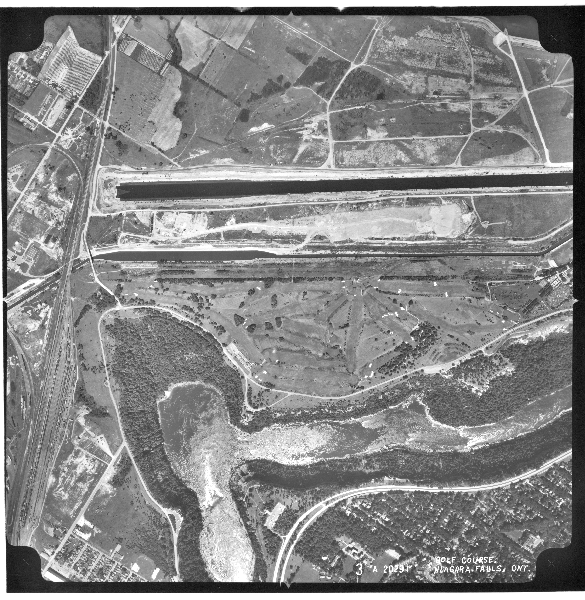
Seven and a half decade’s since Thompson’s golf course opened, the course has evolved. Trees have grown in considerably, a significant renovation and bunker program was done in the late 1990’s by David Moore and Dick Kirkpatrick, and greens have slowly changed. That’s all said to be tackled with a multi-year restoration effort led the Niagara Parks Commission and reinforced by design and historical inputs from occasional project consultant Ian Andrew. Aimed at returning tee boxes to their original locations, and removing unnecessary bunkers and side mounds not part of the original design.
For the golfer visiting today, Whirlpool offers a little charm and character that is bound to attach itself to those who stroll these grounds. The geographical bones are visible, the course just needs someone to help unlock the greater potential and restore a vision that might make sense given Thompson’s pedigree. Yet the evidence thus far suggests there is little hopeful attitude the restoration, when complete, will sharpen the architectural picture. In the meantime, Whirlpool remains a southern Ontario public favourite due to its a small piece of Thompson’s legacy, combined with public accessibility, reasonable pricing, and playability factor for all golfers.
Featured Holes and Course Details
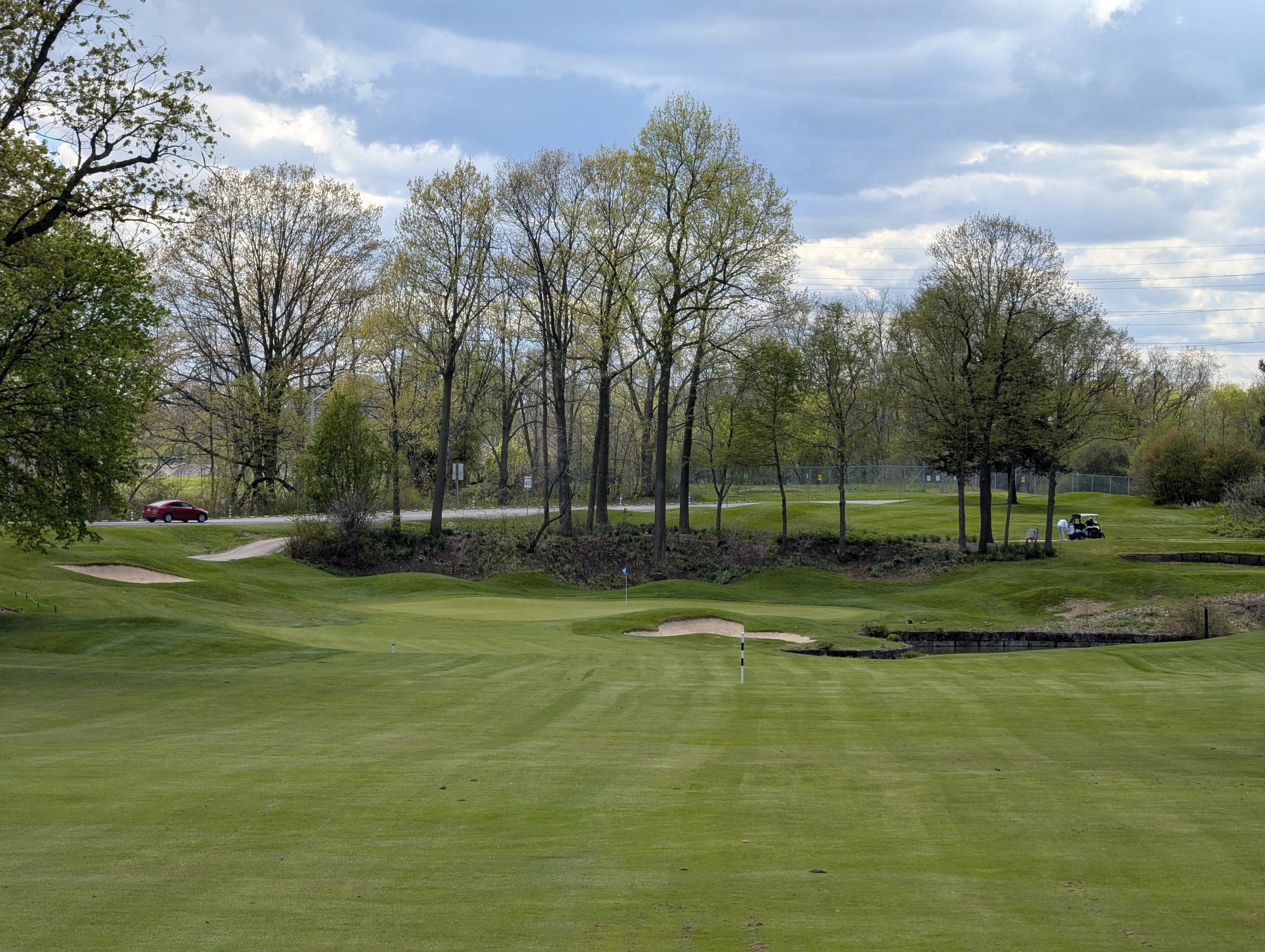
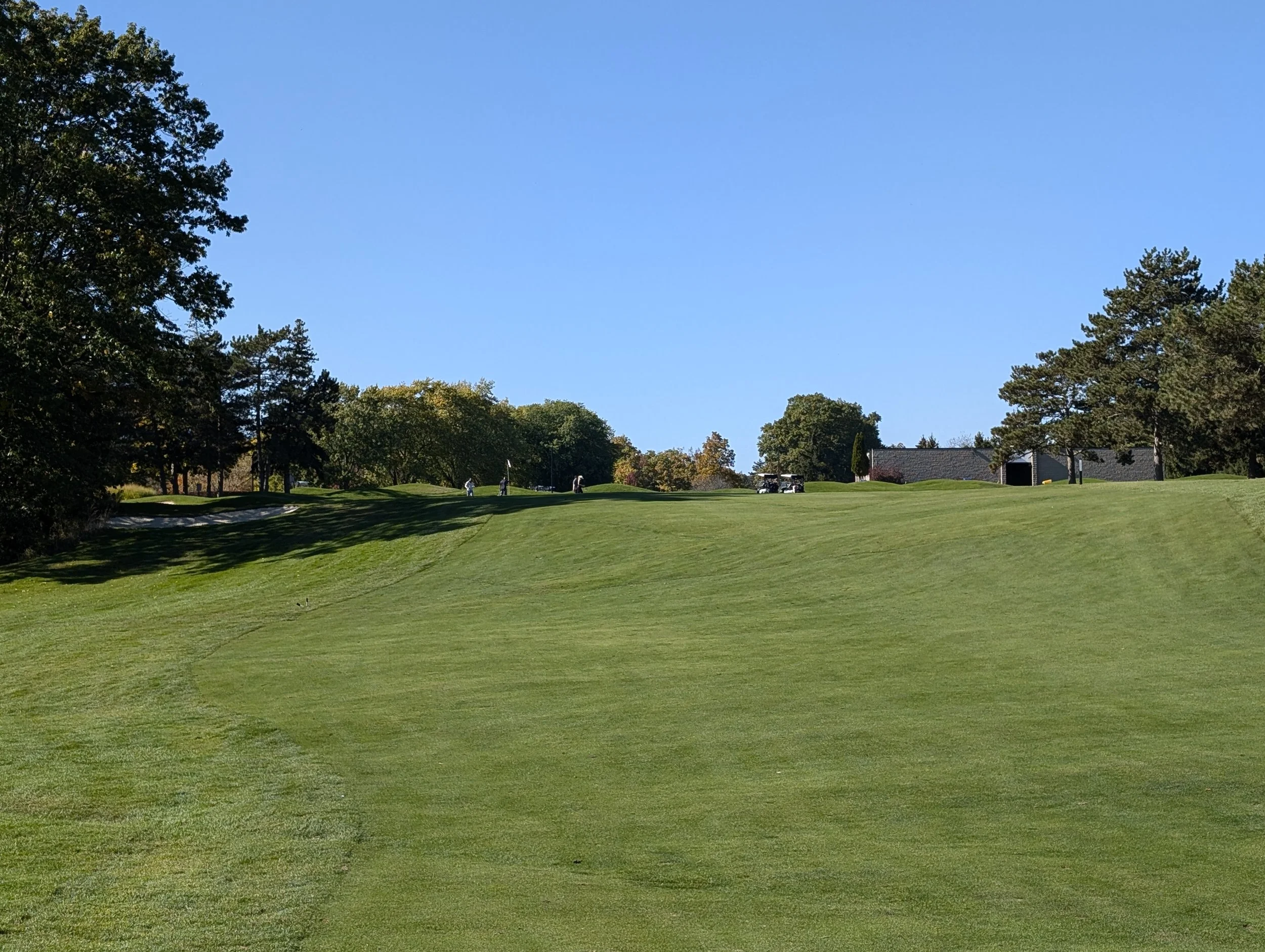
Second hole | par 4, 415 yards: The most memorable hole, on the course comes early in the routing. From the tee, the hole is blind, with the fairway dropping away in the distance. The hole narrows considerably as it descends, trees pressing in from both sides and out of bounds running the full length of the left. Get past the tee shot and the approach reveals itself as admittedly pretty, with the green set diagonally at the bottom of the hill, defended by hummocks left and long of the putting surface, a pond on the right, and single bunker on the inside of the corner pinched between the pond and the green. The green itself has two humps in the rear portion that act as a natural backstop for approach shots that take the slope. It is not a complicated hole on paper, but the sequence of blind commitment off the tee, the tight corridor, and the precise demand of the approach make it one that stays interesting on your 100th visit as much as the first.
Third hole | par 3, 234 yards: One of the key design traits often easily found on a course designed by Stanley Thompson is a long par three. Thompson believed par 3’s should test a players shot making abilities throughout the bag, including with a wood — not just one’s use of mid or short irons. At Whirlpool, four of the five par 3’s play over 200 yards from the back tee — a particular oddity given Thompson’s common use of one (or perhaps two) long one-shot holes that counteracted his deployment of a short one. A good example of this can be found at Jasper Park Lodge where the brutally long fourth (Cavell) is juxtaposed against the devilishly short fifteenth (Bad Baby). For most players, the longest of the par 3’s found at Whirlpool, comes at the third which plays over a valley and the same pond which guards the right side of the second green. The placement of the green, and this hole to a greater extent, beyond the valley is a really good use of the minimal topographical highlights available to Thompson on this piece of property. The green itself is sloped back-to-front, as it is with most Thompson greens, but is perched up above it surrounds to add additional character to its surrounds and further place emphasis on accurate approach from distance.
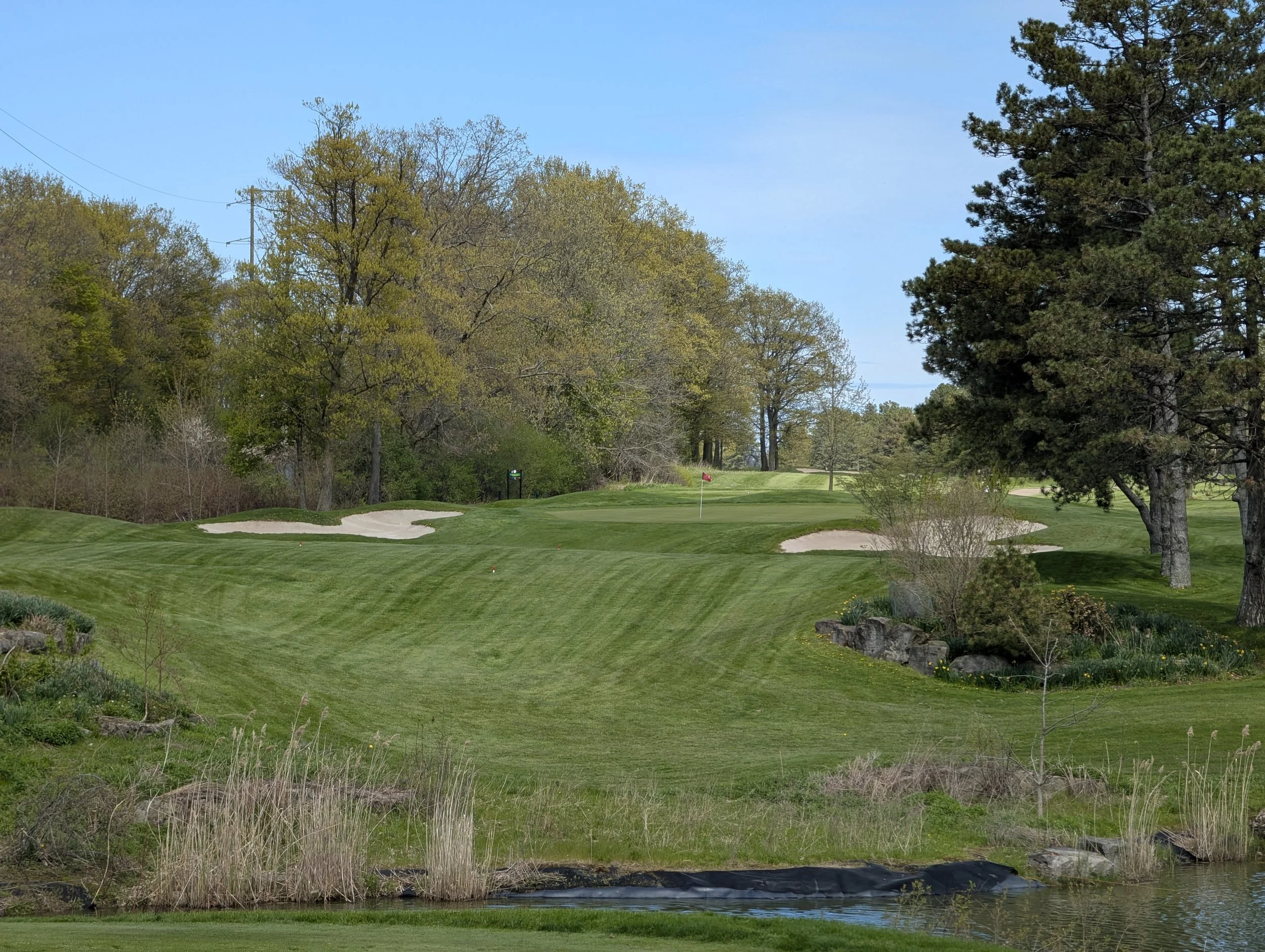
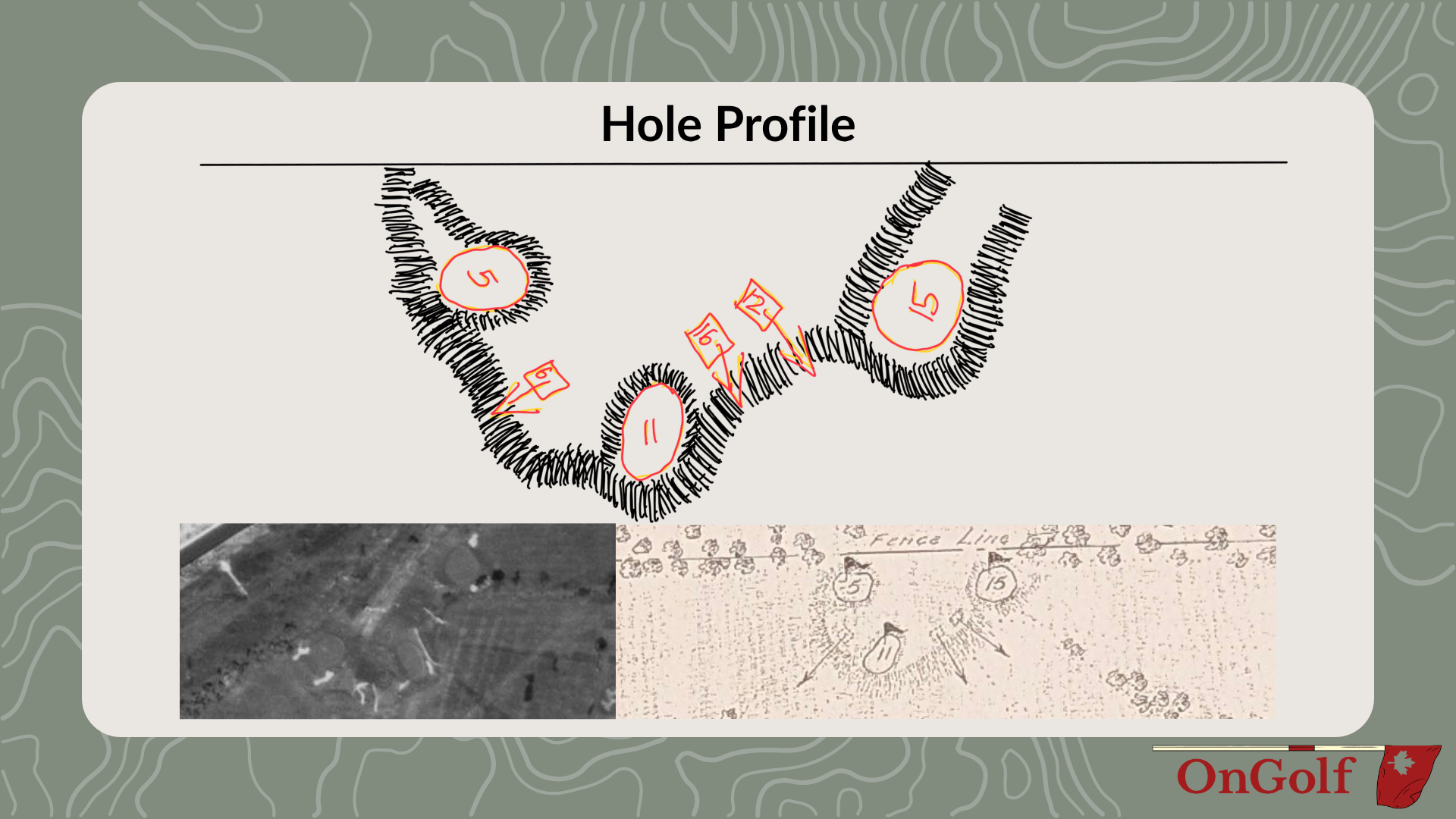
One of the key defining features of Whirlpool is this knoll and valley system which cuts through the interior of the property. The knoll organizes a full third of the course around its geographical character. Here, the fifth, 11th, and 15th greens are benched directly into the slope — cut into the hillside so that the approach plays upward and the green sits against the rise of the land. While the back tee’s of the sixth, 12th, and 16th tees sit atop the mound, launching downhill into their respective holes. It is one of the more interesting, topographically organizing, features of this particular golf course. Thompson's use of it gives the routing a sporadic variety and vertical interest that the remainder of the golf course largely fails to match due to its flatter and more micro oriented properties.
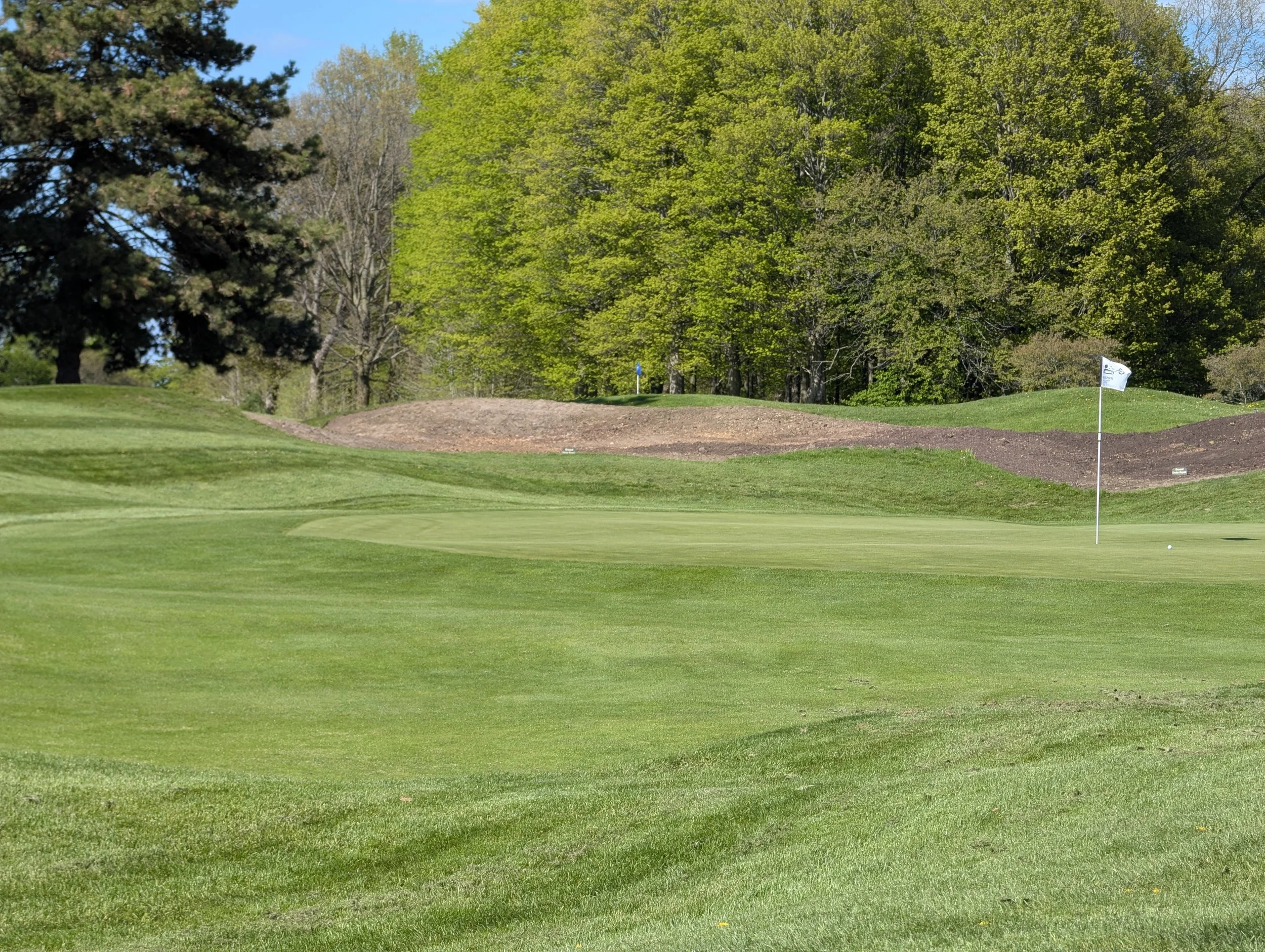
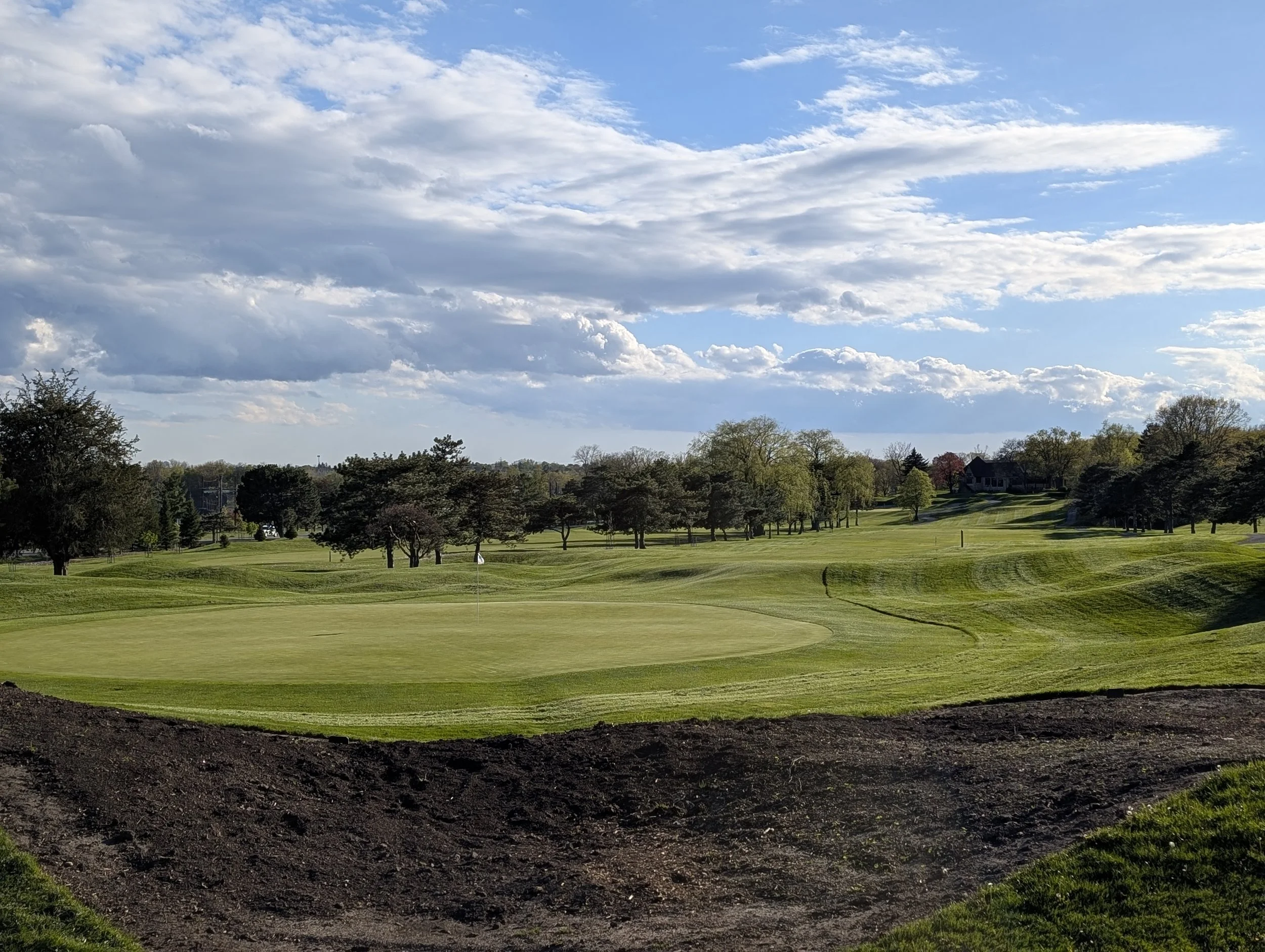
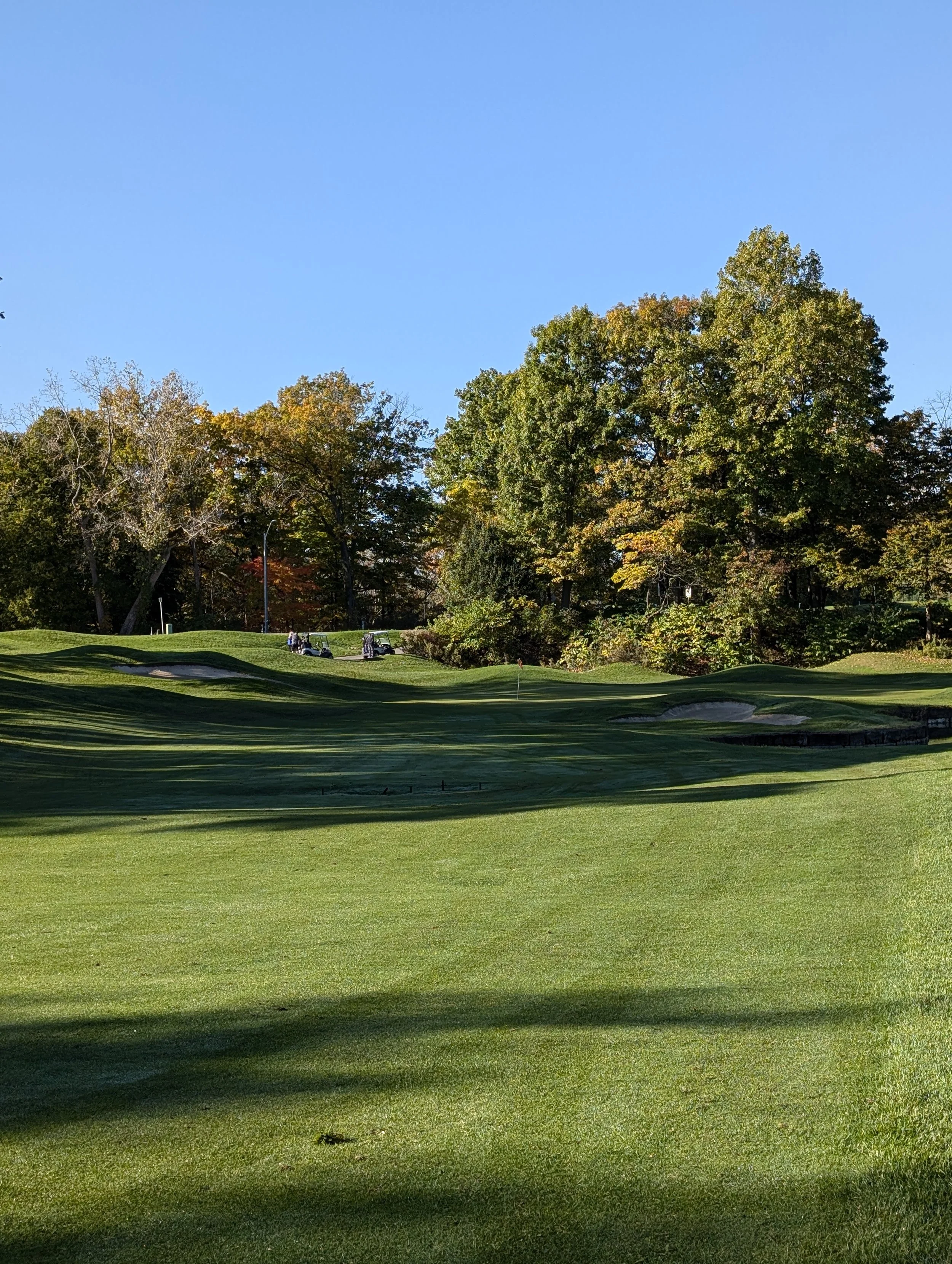
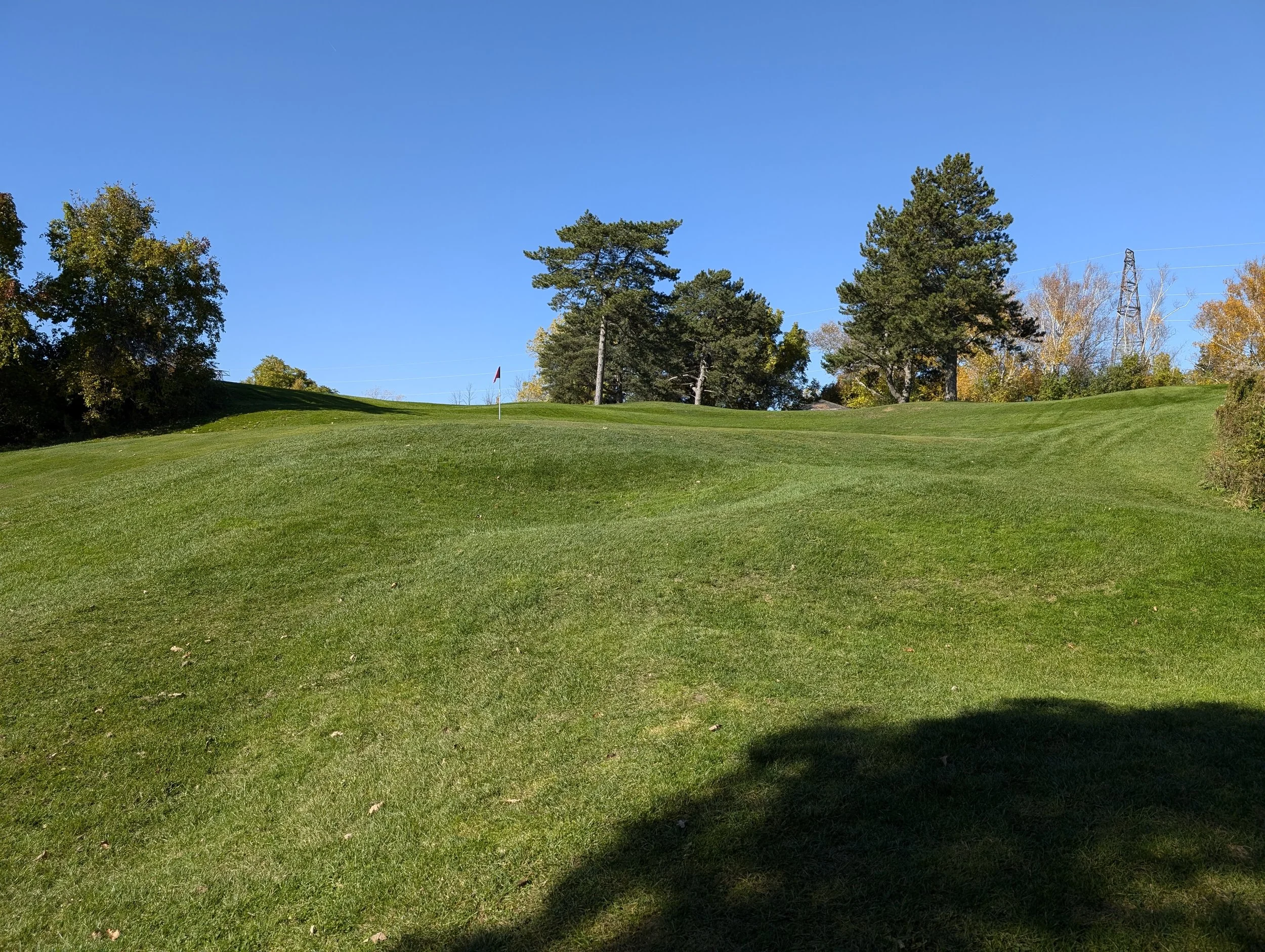
10th hole | par 4, 457 yards: The 10th hole isn’t particularly remarkable from tee to green, its elevated tee shot is hit to a straight away fairway with no bunkers. The notable features of this hole appear within the green surrounds, which are one of the most intriguing on the golf course, where an abundance of wavy rolls, hummocks, and hollows surround the land. These contours showcase the distinctive green placement within the confines of the small but noticeable elevation change. Yet, these key features of the land are largely obstructed from playing character by way of inadequate mow lines — covering up the potential for shots to be played along the ground. A simple but meaningful change would be to mow these areas with tighter short grass surrounds allowing for running shots that come in from a distance to bound around the land just as the game intended.
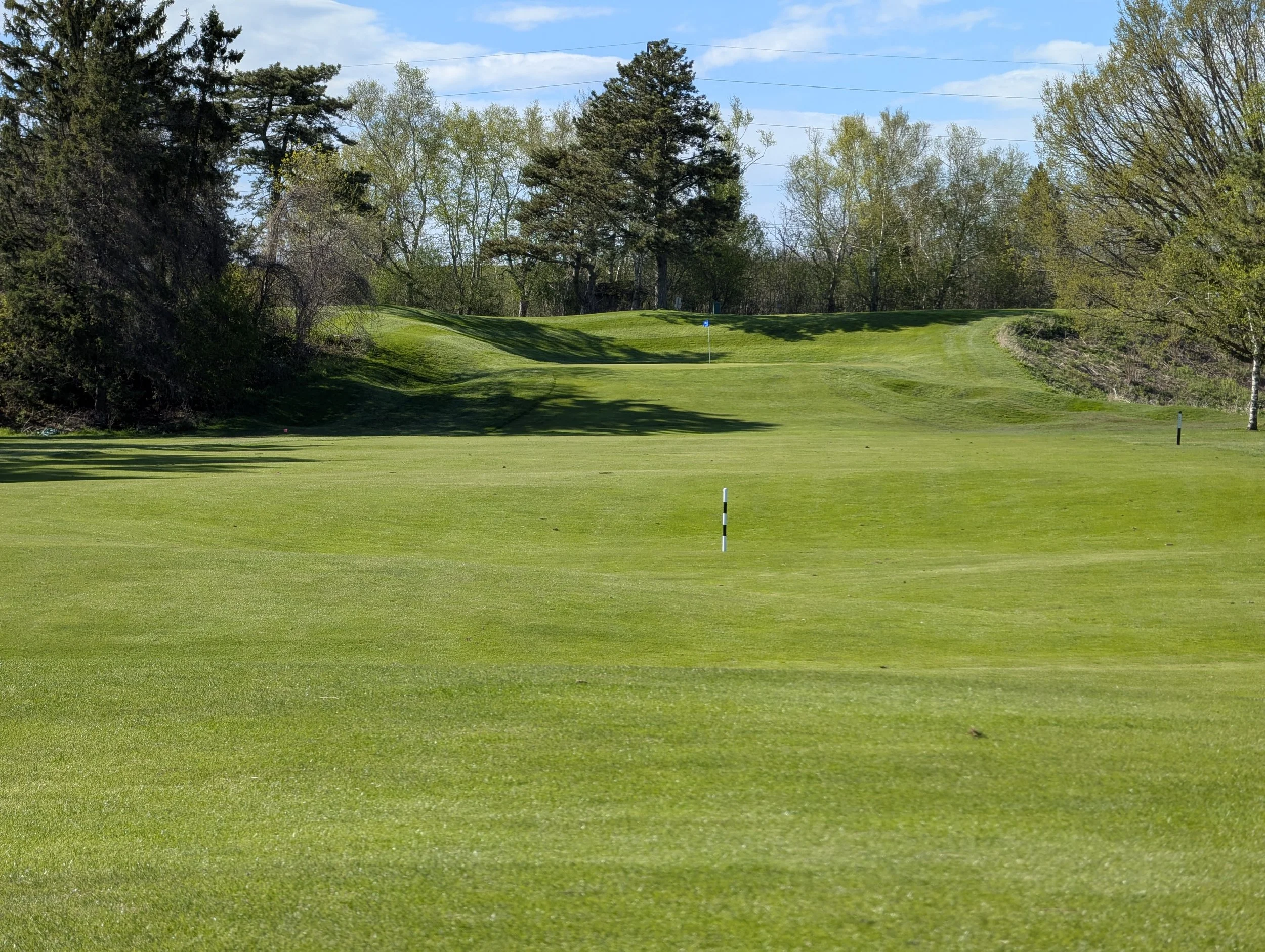
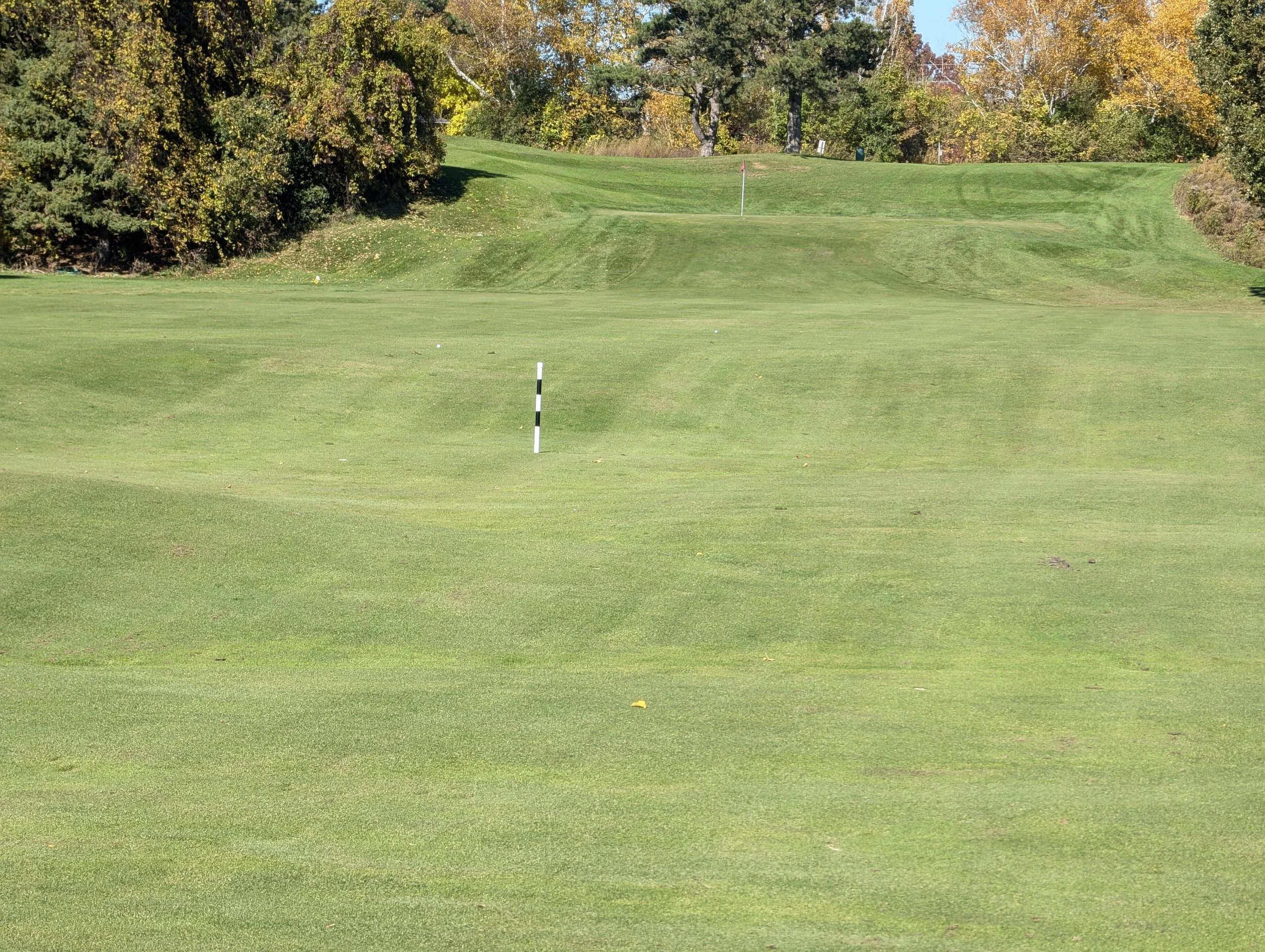
11th hole | par 4, 405 yards: At the 11th, another straight away tee shot looms over the player, this time with the hole playing slightly uphill through a rippled fairway. In the landing zone a natural depression heaves the ball across the undulations with few flat lies. From this area, the approach is played to the green which is benched into the central hillside. As such the putting surface is narrow, with a long false front, sitting in what feels like a natural amphitheatre of rough and rise. A glance at historical aerial images shows this green was well bunkered — today those bunkers are gone, replaced by grass hollows. There is no casual way to approach this green — the lengthy approach, elevation, and delicate pitch shots for those who are unable to navigate the former on the first attempt make this a challenging test. It is a good character hole, that reveals the hillside's architectural value most clearly.
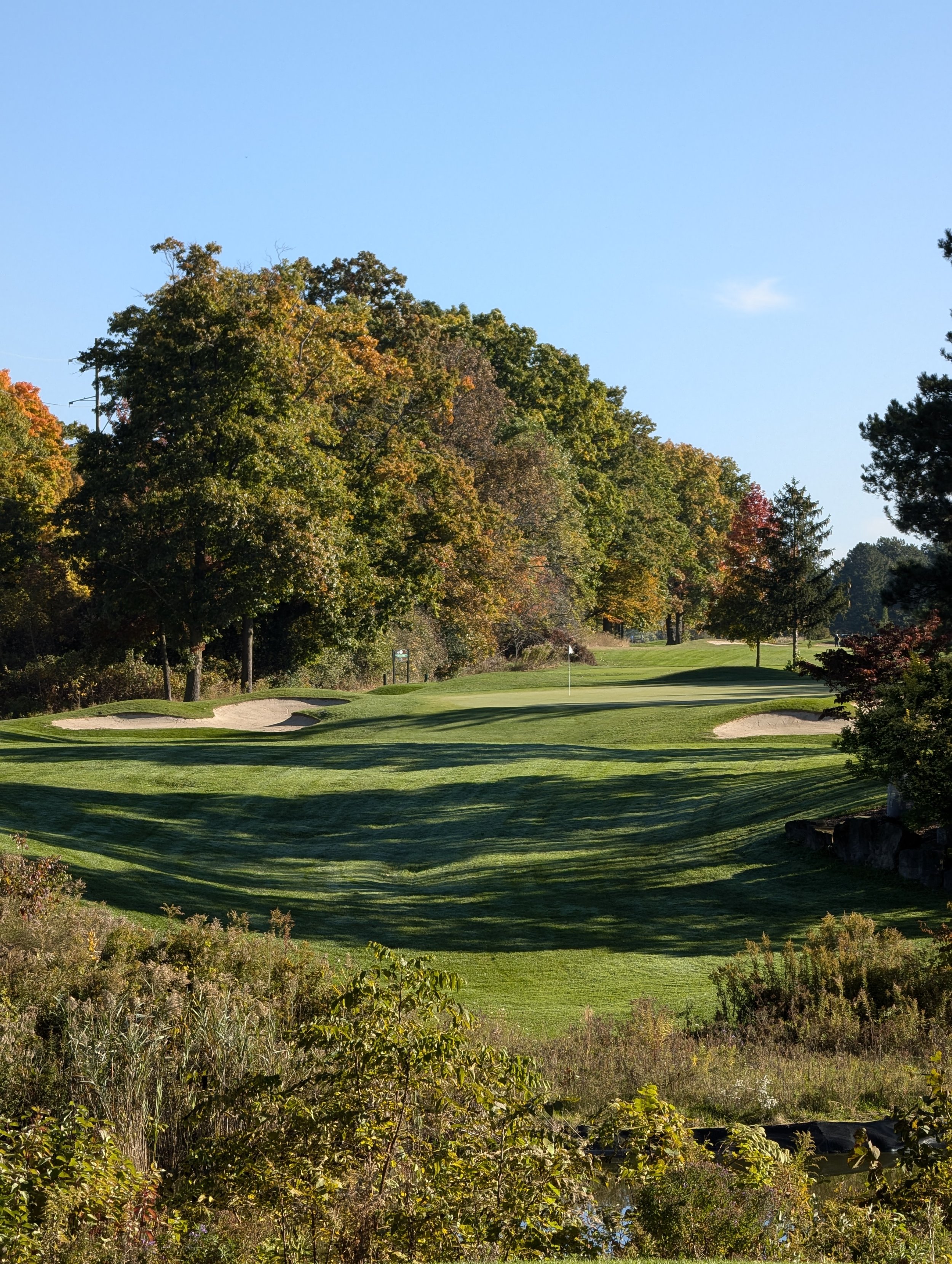
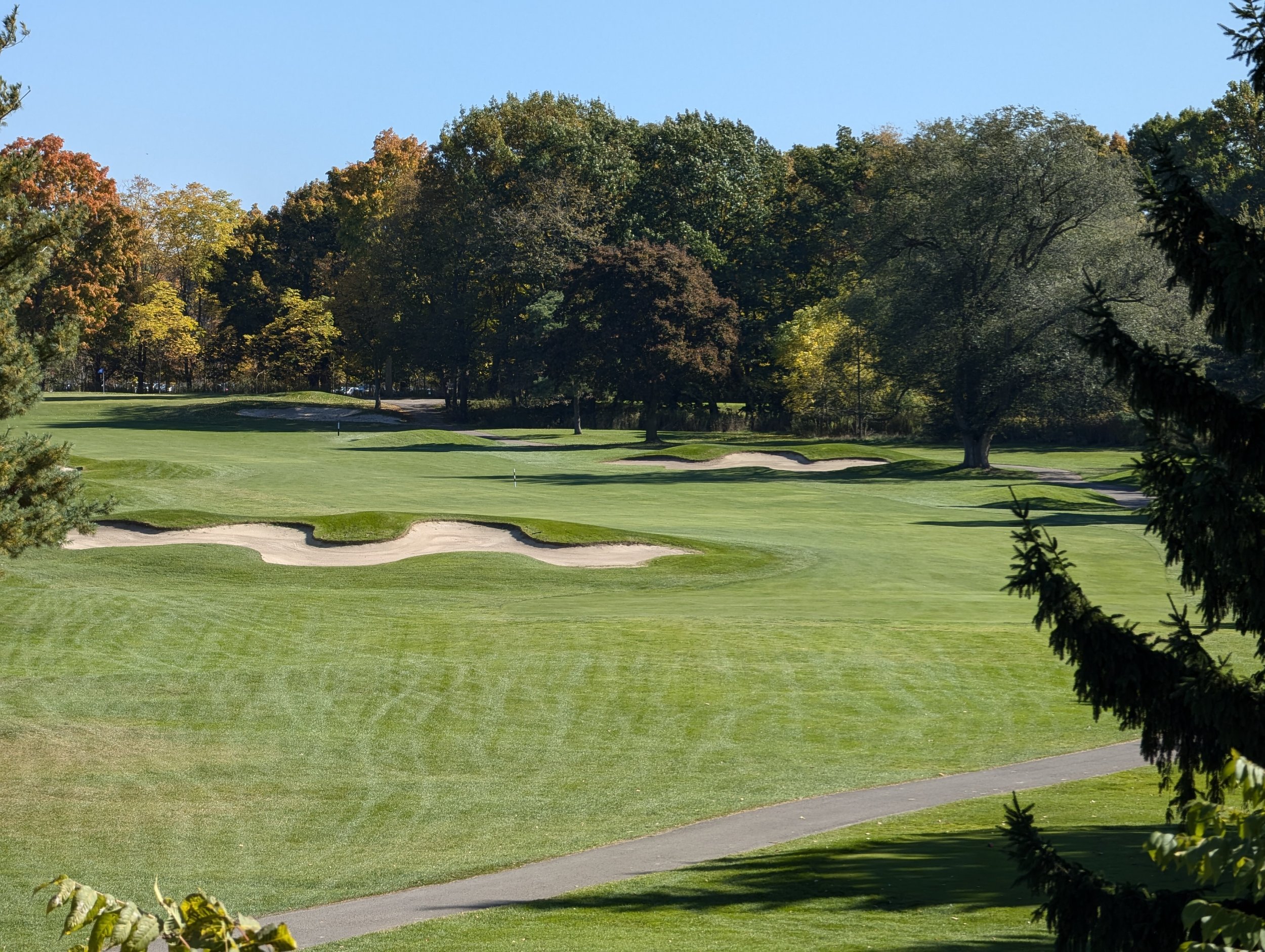
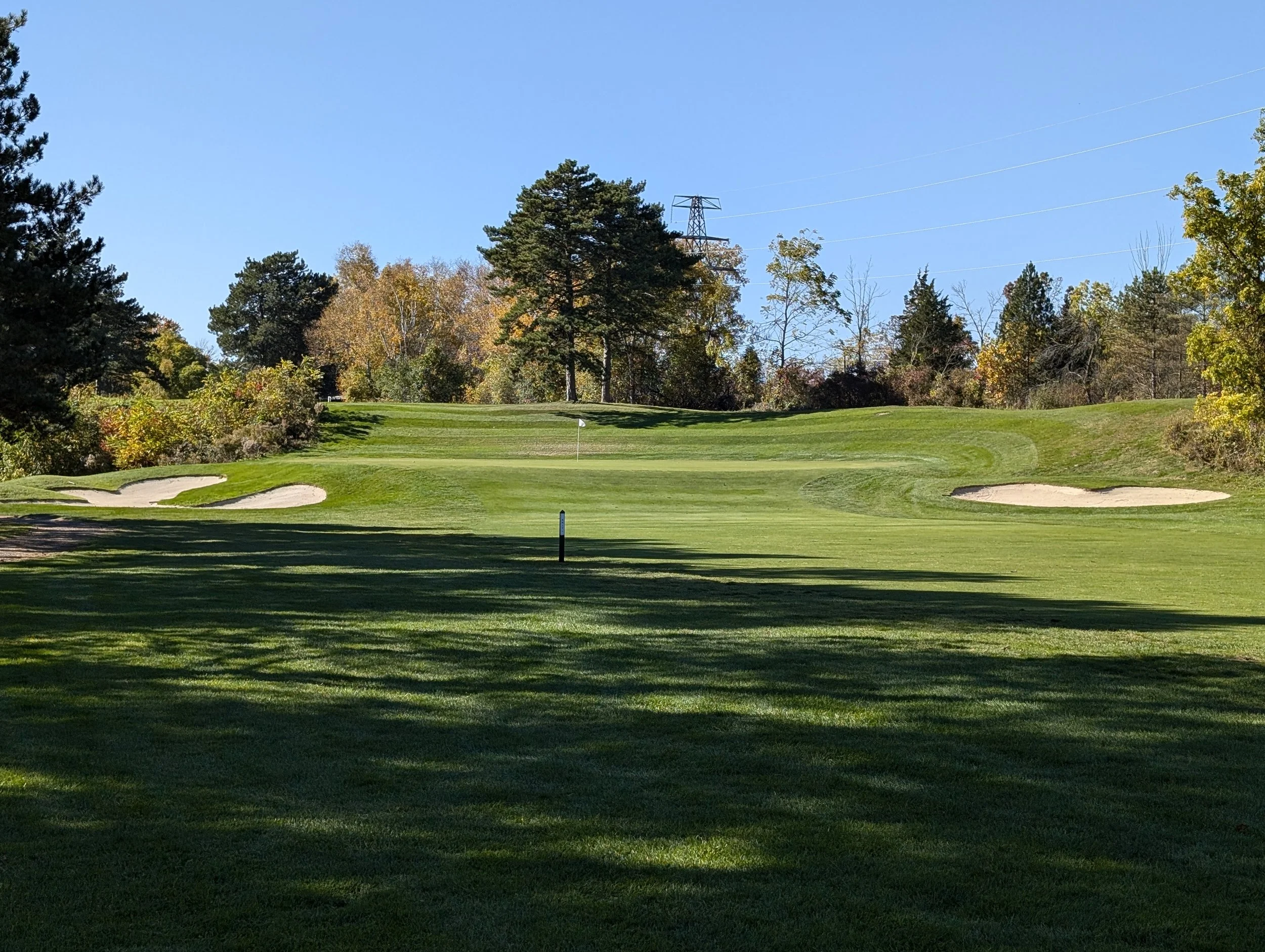
16th hole | par 4, 403 yards: In Thompson’s original design, this was the only golf hole with a fairway bunker. Which, if you’ve studied Thompson’s catalogue of original designs, wouldn’t be too surprising. For a man who is known for his bunkers, most of his original work rarely built features, like bunkers, for strategic importance — bunkers often sat on the perimeter of fairways as visual targets or none were built at all until Thompson or one of his disciples made changes to a property in future years. Today the hole has 6 bunkers scattered throughout, with the primary hazard on the outside of the hole, the bunker on the inside is primarily a visual deception, largely not in play, from such a short distance. The green site is raised above the fairway, causing the surface to be blind on approach. It’s a fun, shorter hole on the closing stretch that feels just a little different than most of the course.
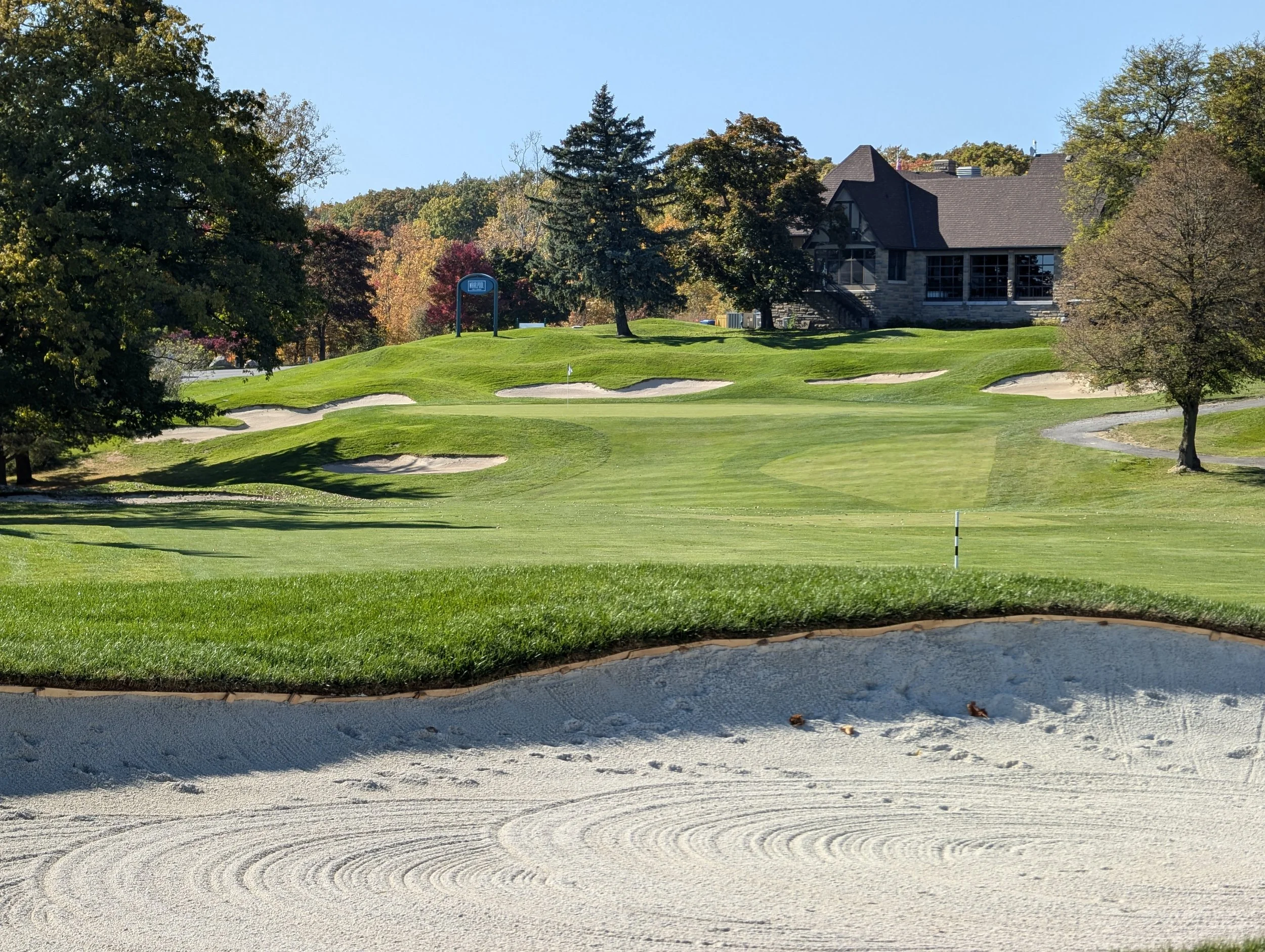
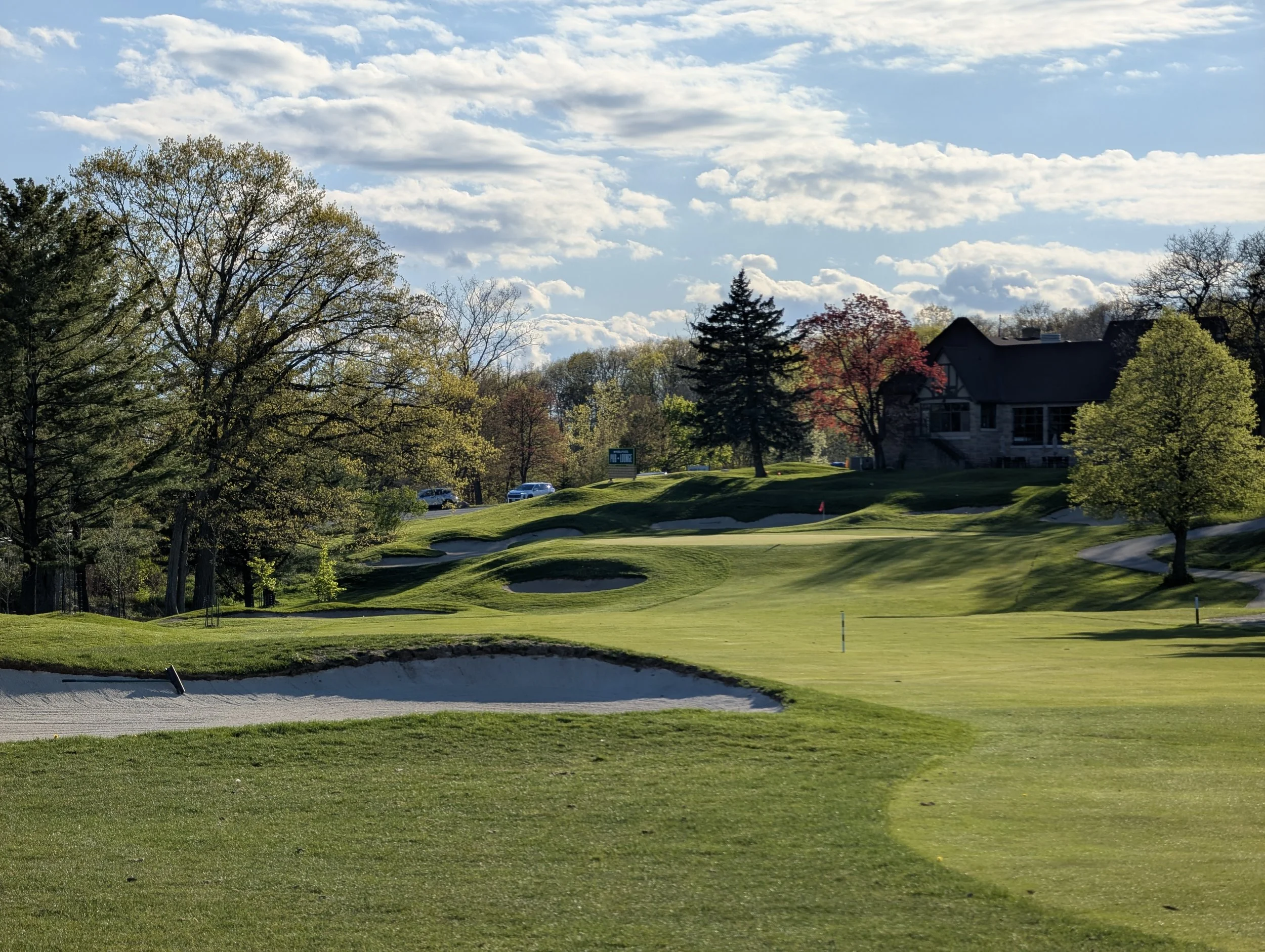
18th hole | par 5, 506 yards: Whirlpool finishes with one of the more exciting holes on property. The tee shot plays downhill with the Niagara River gorge sitting just beyond, out of bounds and a road running the full length left. Bunkers threaten both sides of the landing area off the tee. From there the fairway tumbles into the valley that cuts across the ninth, and 10th holes, a duo of bunkers tightening the lay-up zone on either side. The green sits on a shelf within the cascading hillside, elevated above the approach, angled back-to-front, and defended by four bunkers beyond and one short. With the clubhouse sitting further up the hillside and the surrounding bunkers tucked into the slope it’s a pretty finisher.
You might also like..
-
Chedoke (Beddoe)
-
Lakeview
-
Waterton Lakes