TPC Toronto @ Osprey Valley (North)
Overview
The North course at TPC Toronto is one of three distinctive Doug Carrick courses at the sprawling Caledon, Ontario facility. Where Heathlands drew from distinctive Irish links tradition and the Hoot channelled the gritty waste-land aesthetic of Pine Valley, the North is purely parkland: wide, rolling, generous, and explicitly built around playability. Two decades on from its debut, architect Ian Andrew refinished the venue to play host to the 2025, 2026, and 2027 Canadian Open.
AT A GLANCE
-
Doug Carrick (2001)
Renovation by Ian Andrew (2023)
-
-
Beyond The Contour 2024-2025 #78
SCOREGolf Top 59 Public 2025 #19
SCOREGolf Top 100 Golf Courses 2024-2025 #67
Top 100 Golf Courses #78
-
Host of 2025, 2026, and 2027 Canadian Open
Part of a 54-hole property; the Heathlands and Hoot courses round out the offering
Public access ($199-$250)
-
Impressions From The Newly Renovated TPC Toronto North - Golf Club Atlas
The Trajectory of TPC Toronto - SCOREGolf
About
The land beneath TPC Toronto at Osprey Valley was, before golf, partially a quarry — its industrial past left irregular topography which can be ideal for golf — cuts, fills, and sudden grade changes. Architect Doug Carrick and his team worked with and around these irregularities to build the diverse golf offerings found at Osprey Valley today. Originally opening in 2001 as "Toot" — a name owing to owner Jerry Humeniuk’s unique personality — North was the third and final of Carrick's course’s at Osprey Valley.
Carrick’s original design drew inspiration from modern parkland designs, strong green complexes and high-faced bunkers said to have been inspired loosely by those at Winged Foot and Royal Melbourne. In practice, the North leaned softer than that — wide corridors, bunkers used more for framing than as intended hazards or strategic interests, and generally less complex green surfaces. Since its initial inception it has held a comfortable rank among Canada's best public tracks, earning its spot on the SCOREGolf Top 100.
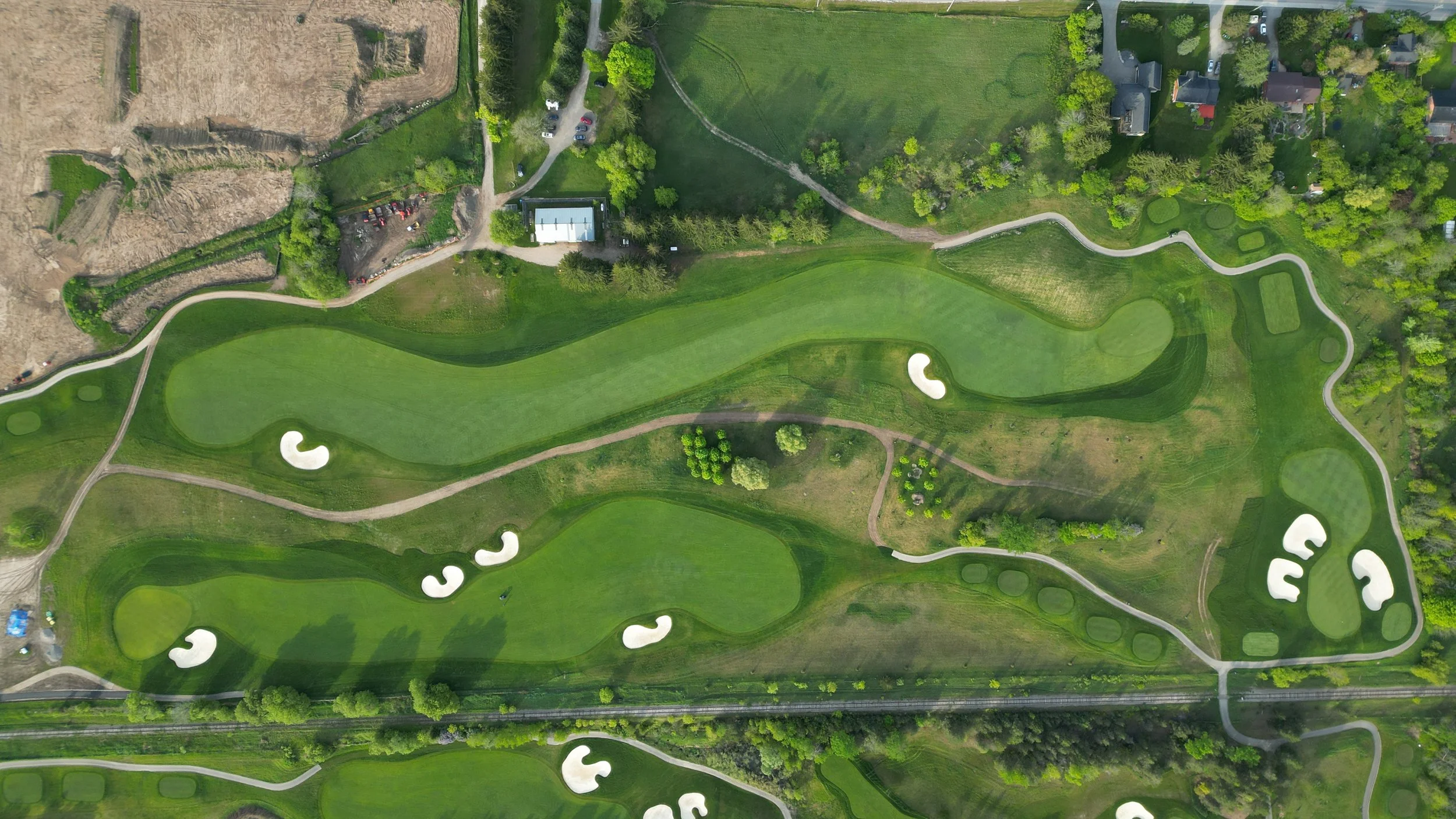
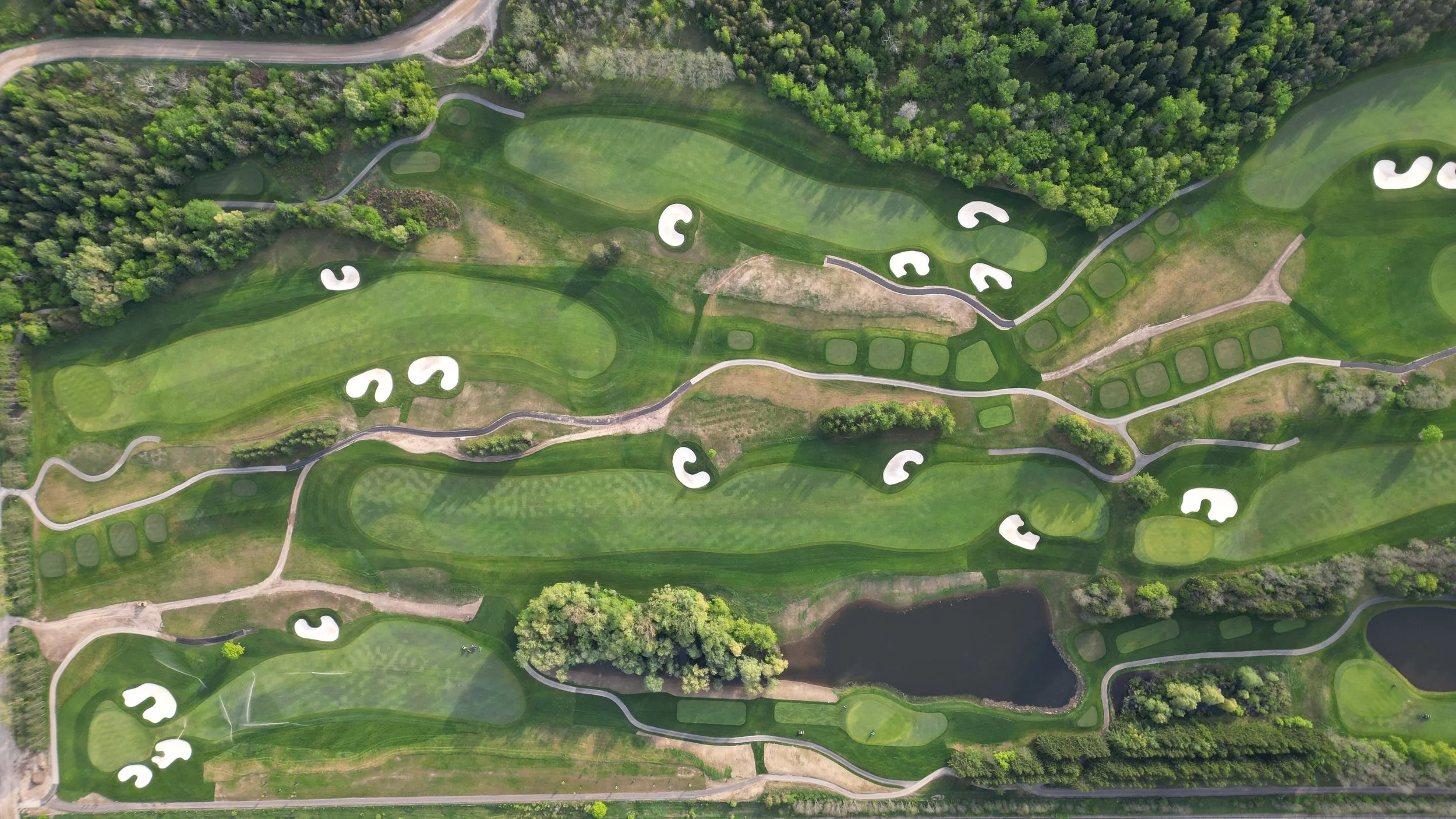
In 2018, Osprey Valley joined the TPC Network as the first, and only, Canadian property to do so. The undercurrent of this deal was always the possibility of hosting a Canadian Open, and when that possibility became a commitment, TPC Toronto was tasked with changing the North’s focus towards hosting big tournament golf. Architect Ian Andrew — who had worked alongside Carrick during the original construction of all three courses — was brought in to do the work. The renovation was completed in just four months in 2023 — a tight timeline necessitated by moving up hosting duties from the originally anticipated date of 2027 to 2025. The work repositioned all bunkers, built new championship tees stretching the layout to 7445 yards, tightened fairway mowing lines, removed trees to open sightlines and alter the dimensions of some holes, and introduced more shortgrass runoff areas around several greens. The goal was to create a course that could both challenge modern TOUR players and allow them to showcase their skills to fans. The timeline and conceptual prerogative meant it was never going to be a transformative renovation, rather improve the logistics of hosting the TOUR and focusing on allowing aggressive play that rewards players. But kudos to the team to a) pull off the job quickly and b) step up to the plate when Golf Canada and the tournament committee needed them the most to deliver our national open.
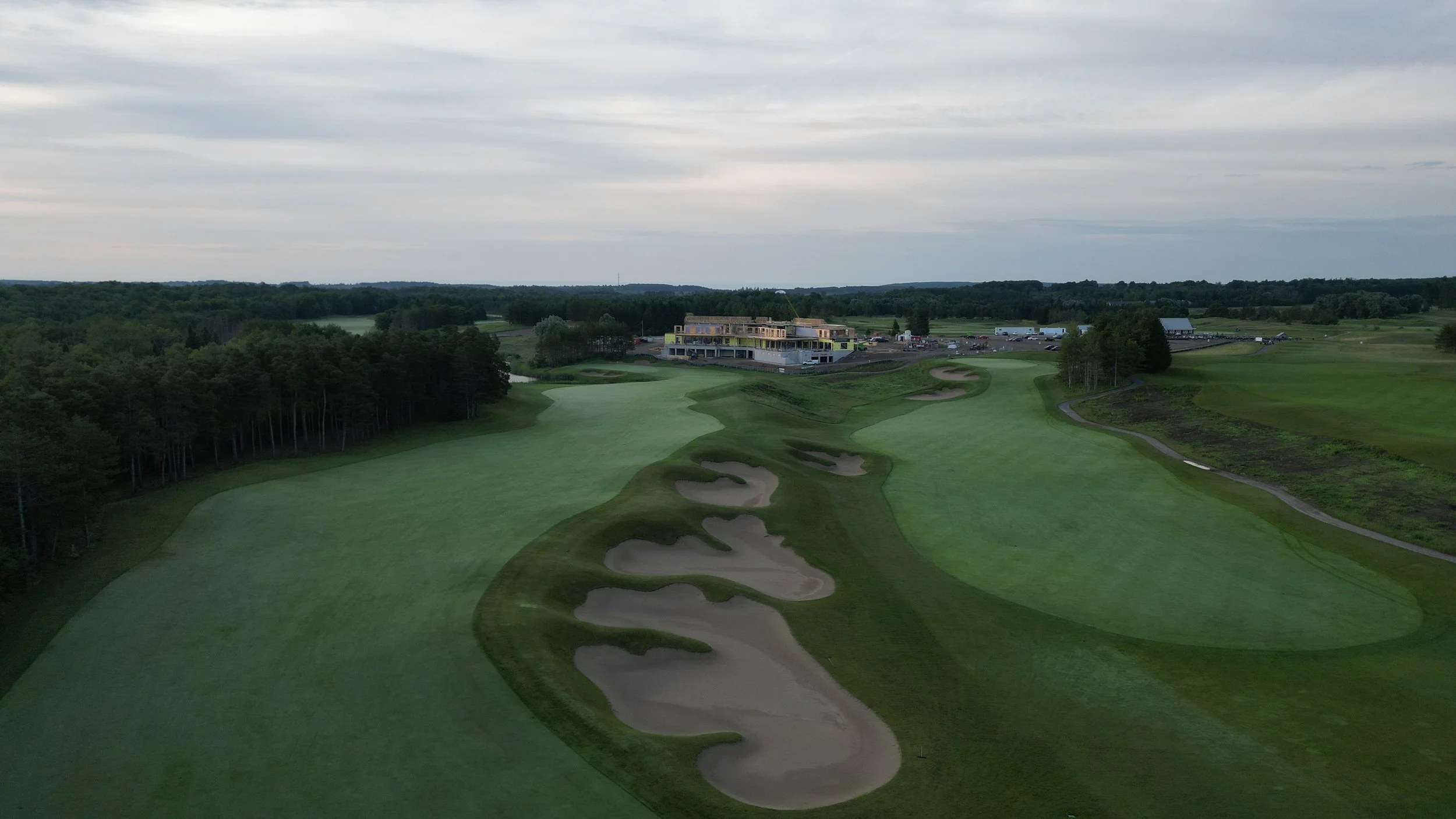
The renovations biggest improvements came in the form of lengthening holes, removing trees, and adding short grass run offs — the ninth through 12th holes being the clearest examples. Elsewhere, the fescue grasses put in place to add a little stylistic flair in place of trees which largely framed the course before the renovation. Though worth noting: these grasses peak between mid-July and September, meaning the Canadian Open will rarely see them at their best. And of course the bunkering, a hot topic of conversation, is consistent in its geometry — too consistent, missing some of the individual character Carrick's original shapes possessed. The main issue is that the repeated shapes, which were expected to soften and become less similar over time, appear nearly everywhere and rarely escape one’s attention - it becomes the main focal point instead of a complimenting factor in the overall aesthetic of the golf course.
The argument and crux of the criticisms really come from a place of desire to improve the golf offerings in Canada. Ultimately, the big splash — both from a financial and marketing perspective — on this renovation did little to differentiate North from other parkland offerings. The things that deliver a great golf architecture experience usually boil down to what makes it unique. Rolling topography, pristine conditions, and the greens themselves are not always good enough as differentiators. Osprey Valley’s product clearly shows flashes of the principles and ideals which make great golf courses great. The adventurous sense found at the Pine Valley inspired Hoot, and the ground focused design choices over on the Portmarnock inspired Heathlands certainly deliver on that uniqueness factor. But for that reason, the North course ranks low on memorability and continued playability. It's a modern take on TOUR golf, which in of itself, largely borders on the mundane - focused on entertainment as a product, rather than what makes golf exciting to play for architecture enthusiasts.
Featured Holes and Course Details
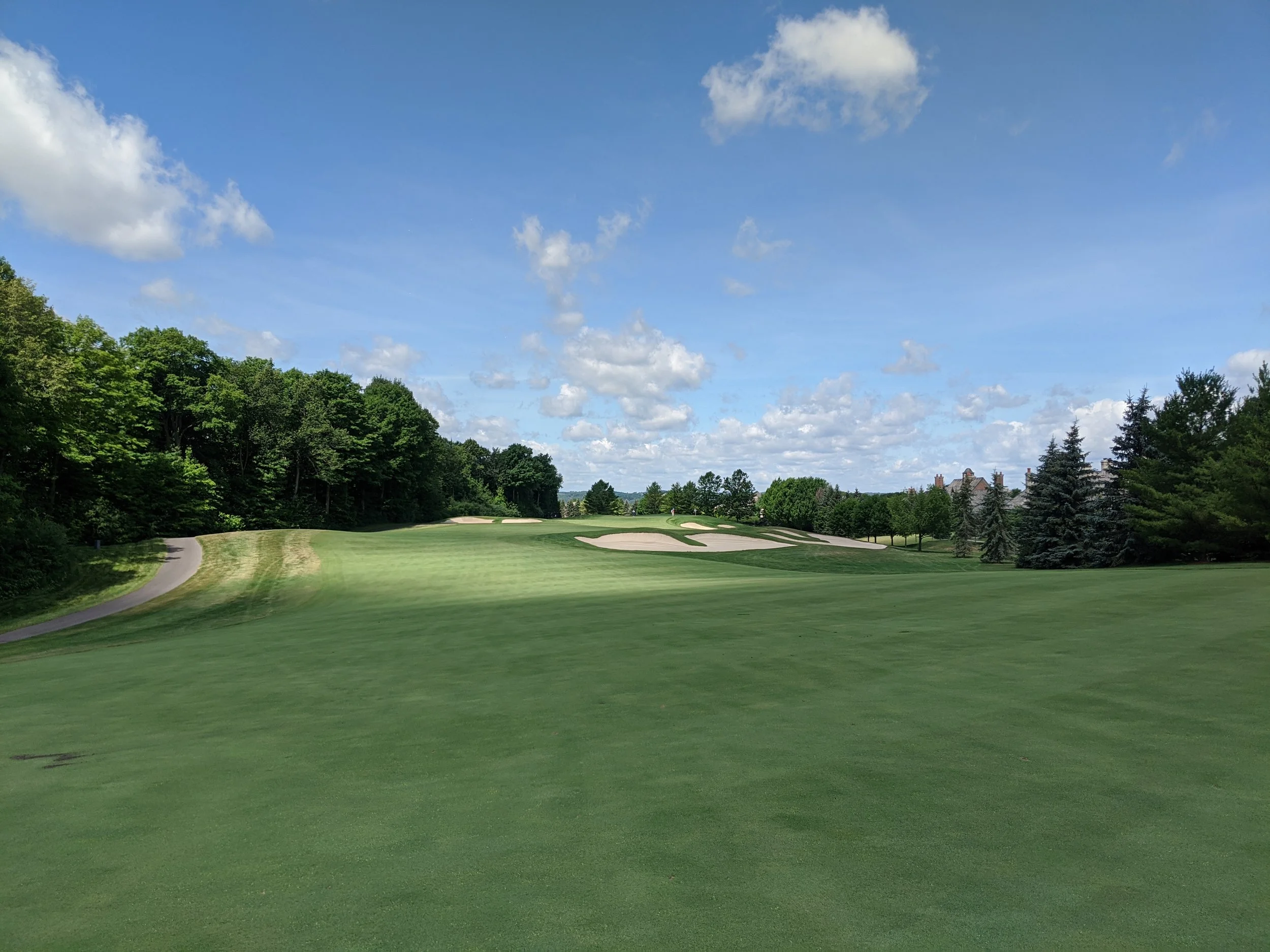
Hole 2 — Par 4, 481 Yards; At 480 yards from the back tees, this hole is a lengthy one, and quietly one of the most demanding holes on the golf course, after quickly easing into the round with the birdie opportunity at the first. The fairway cambers from left to right, meaning a tee ball hit up the left that uses the slope can access a speed slot on the left side — but that left side has two bunkers cut into the landing zone which then runs further away from the intended line of play towards the thick rough and another bunker on the outside of the corner. The further you commit to that line, the harder the approach becomes. The elevated green slopes steeply from back to front and left to right, and there is a generous shortgrass area to the left if the approach goes astray. The right side of the green narrows toward a steeply sloped bank that has been mowed tightly up to the edge, any shot that leaks or lands without enough forward momentum will funnel quickly down and away from the putting surface.
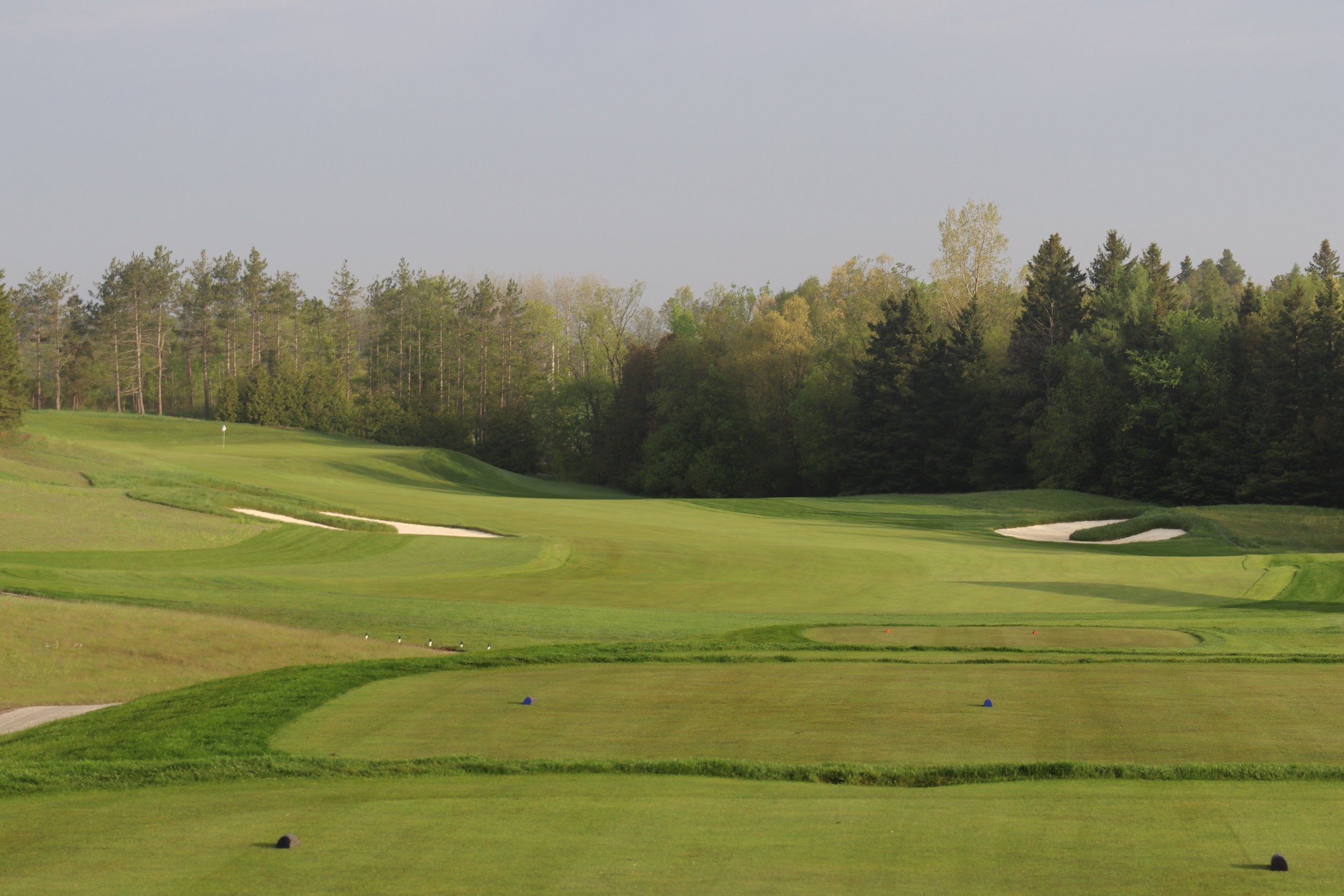
Hole 3 — Par 4, 440 Yards; The third hole evokes similarities to that of the second, but at 40 yards shorter and a different bunker scheme this hole proves to be an easier test. Ian Andrew has described this as a Cape-style tee shot — not a term often applied to parkland golf, but apt here. The fairway curls against a left-to-right natural slope, and longer players who want a clear angle into the green must take an aggressive line down the left side. The green has a deep protective bunker short-right, and the seemingly inviting shortgrass area long-left conceals a delicate pitch back down to a surface that slopes away from this line of play. One of the reason’s the third rests on our list of featured holes, is because of the tilted difference to that of the second - whereas the second is lengthy and wide off the tee, the third narrows and its green sits with the opposite tilt which puts emphasis on missing in the right areas in order to recover.
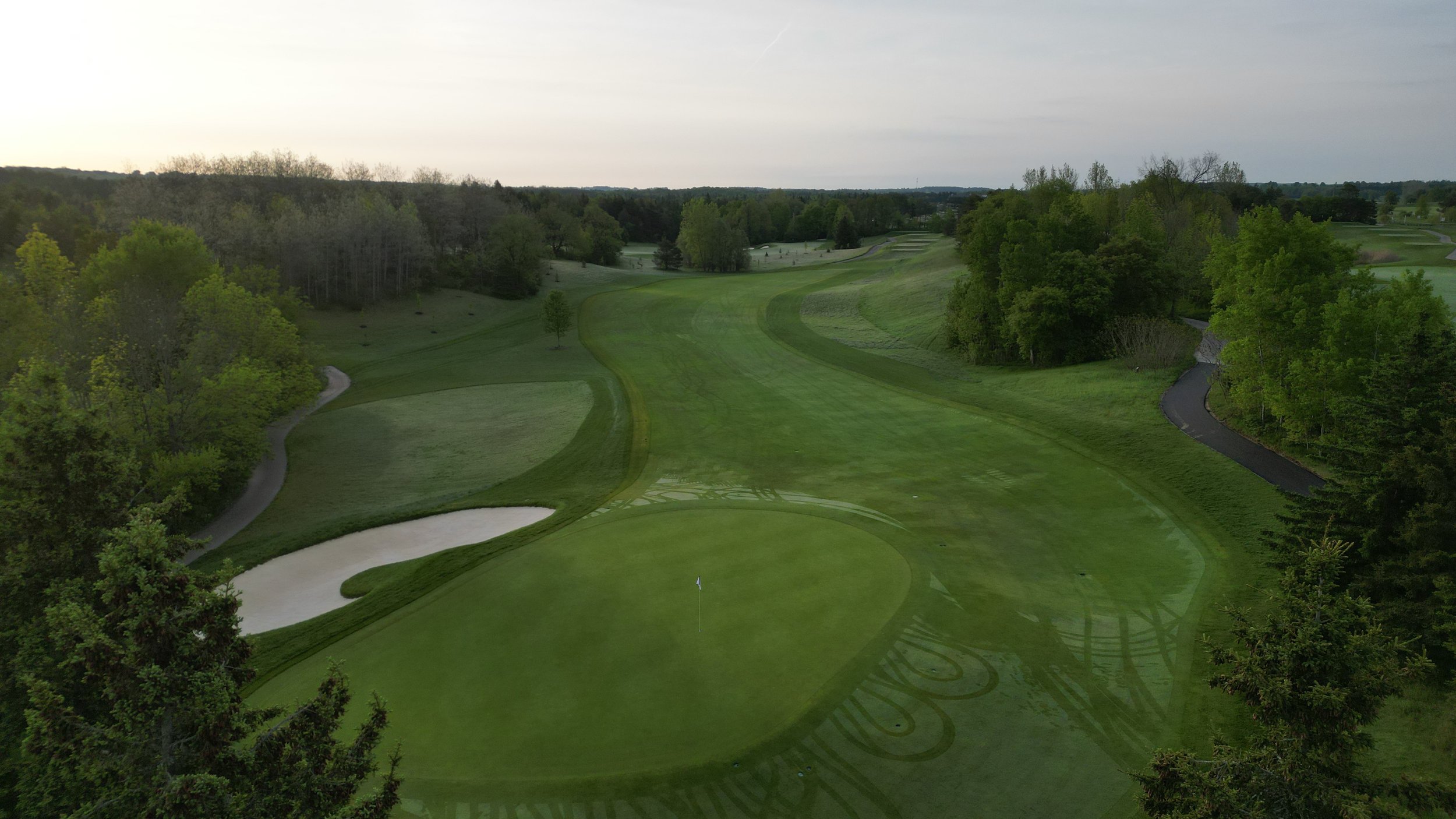
Hole 4 — Par 3, 158 Yards; The shortest par three on the card is also its most precise. A severe back-to-front tilt on an otherwise generous green makes the effective target considerably smaller than the yardage suggests. The green sits with a knoll in the middle, which obscures the back edge, effectively making the green look smaller than it appears from the tee. Anything that leaks right or lands with too much backspin finds a steep runoff that deposits the ball far away from the putting surface, leaving a difficult recovery. The four par threes on the North are well sequenced — the 4th and 14th are the scoring opportunities, the 7th and 11th are the tests of might — and the 4th sets that contrast up well early in the round.
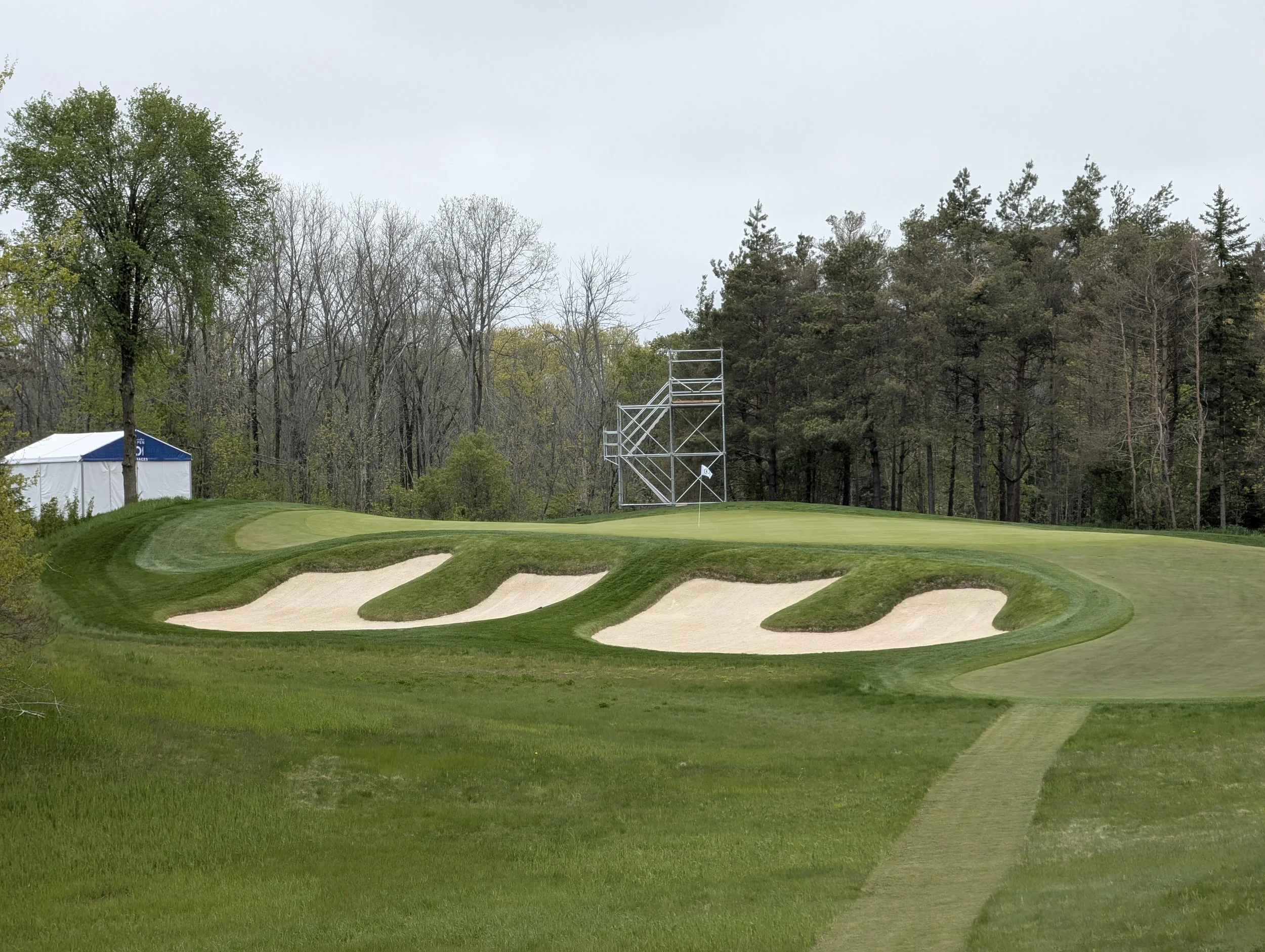
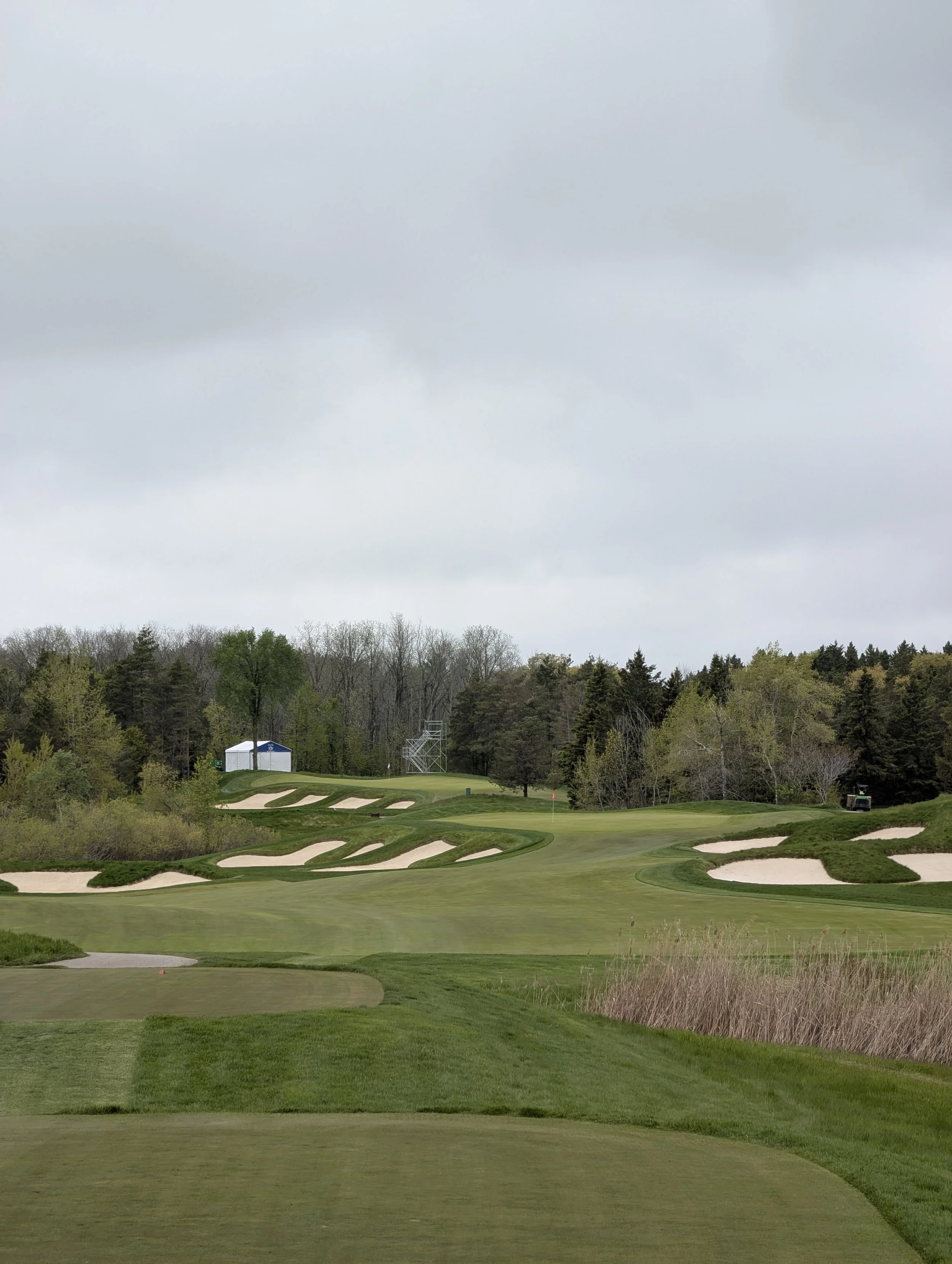
Hole 6 — Par 4, 350 Yards; For tournament play, the North sets up with many half-par holes — a clear part of its design ethos is to allow players to show off for the fans. The clearest of these half-par holes comes at the 350 yard par 4 sixth. Players can lay back to a comfortable yardage, or take on the green in one shot, blasting over and above the five bunkers that frame the corridor. A feeder slope at the last bunker kicks the ball toward the green for those who make the carry. The fairway cambers sharply right to left and narrows more severely the further up the hole you go, funnelling balls well below the putting surface for anyone who decides on the delicate approach. The sixth tells you everything on the tee — the angles, the risk, the reward — which is why it plays as such an exciting moment within the golf course.
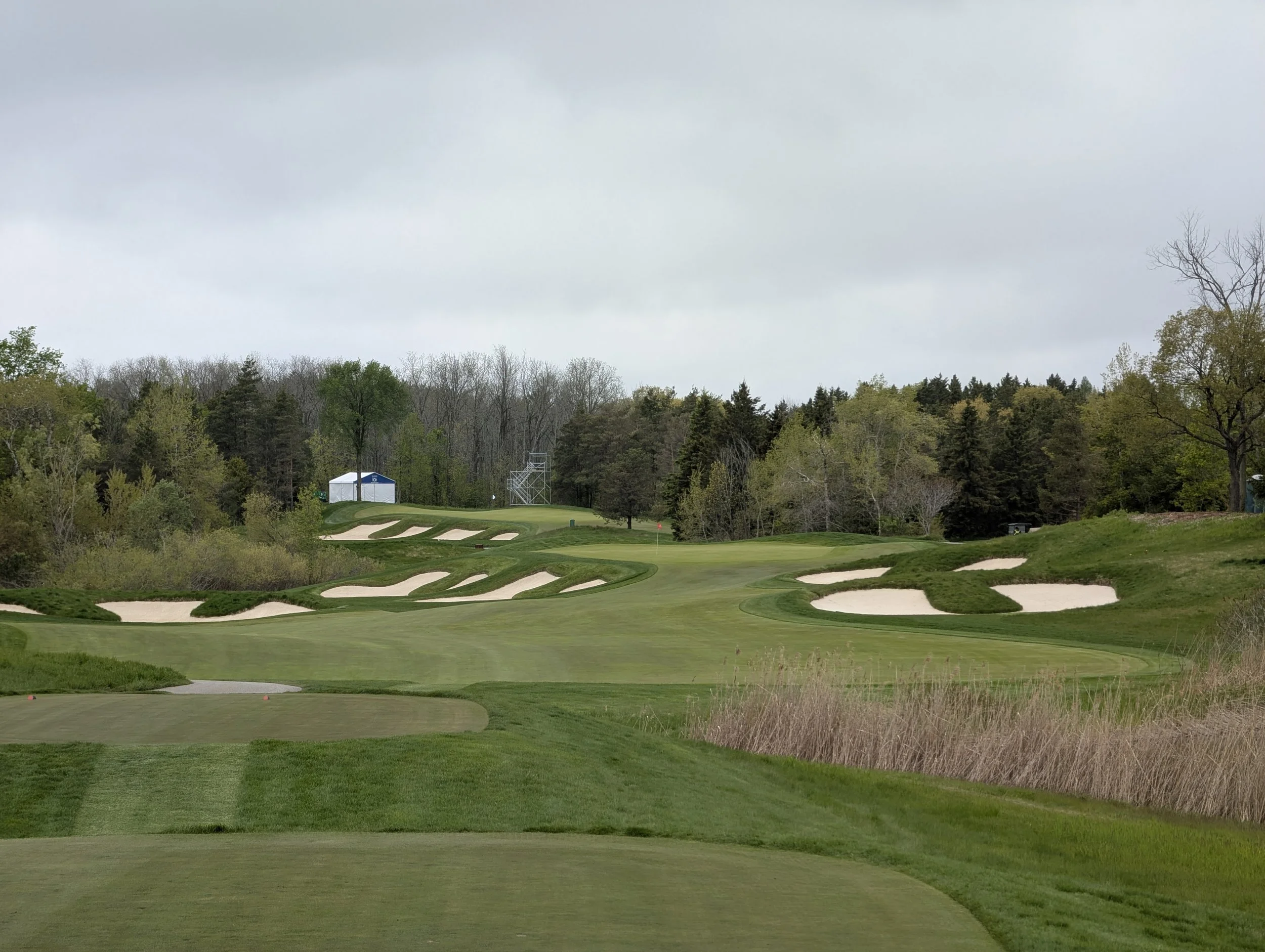
Hole 9 — Par 4, 500 Yards; Doug Carrick considered this one of the most naturally formed holes on the property — a hole that needed minimal earthwork because the valley it plays through was already there. From the fairway the approach shot is played to an elevated green that is multi-tiered and heavily sloped, and the single greenside bunker catches anything that misses short. During the renovation, Ian Andrew added a fairway bunker on the inside corner to protect the more direct approach angle, and the tee was extended considerably. At 500 yards from the tips, it is a long closer to the front nine, and a good one — becoming one of the most impactful design changes. Yet, because the TOUR continues to prioritize play that doesn’t skew towards difficulty, this new tee was never used during the 2025 iteration of the Canadian Open — it remains to be seen if the 2026 or 2027 event might differ in that regard.
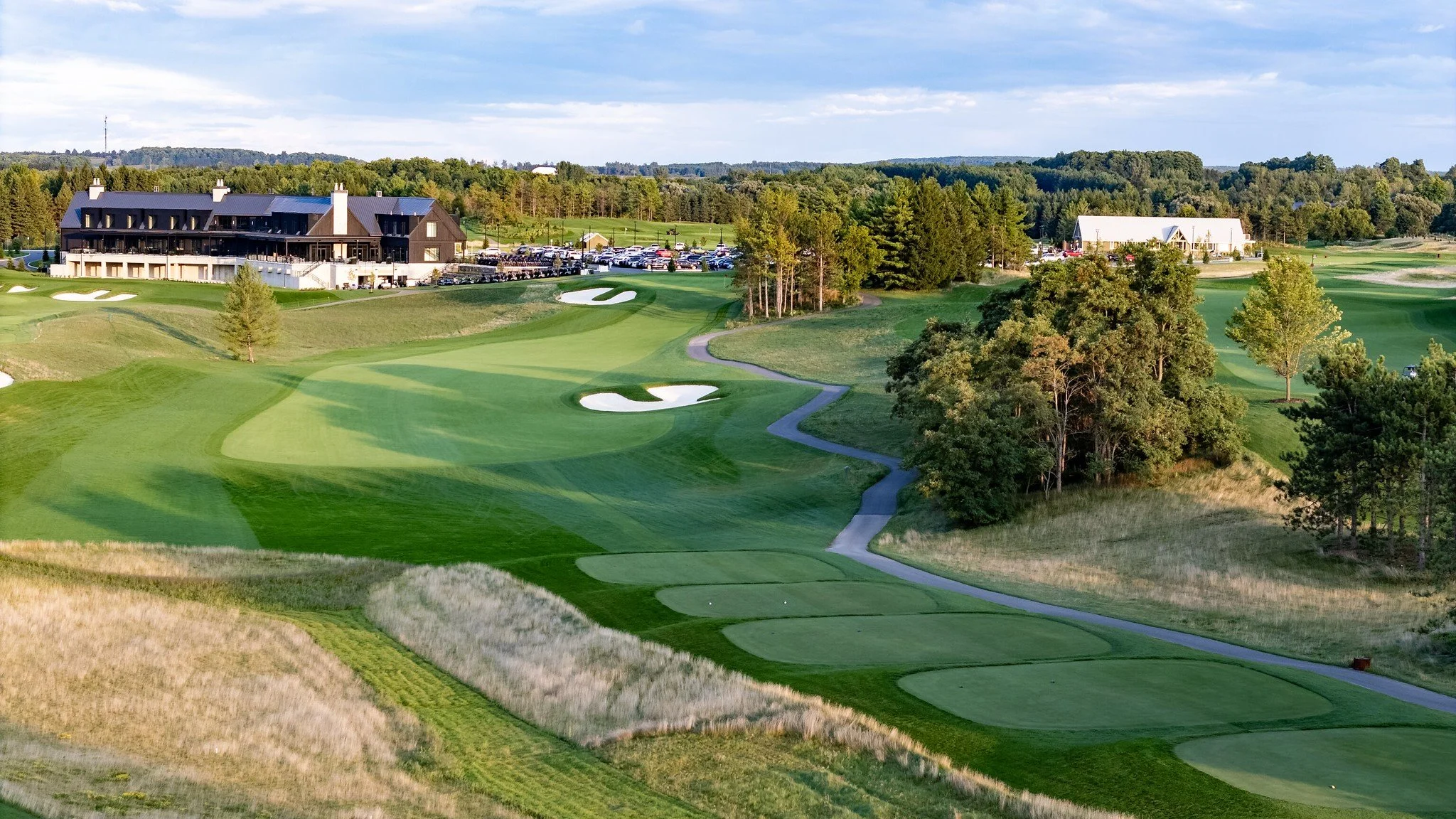
Interlude
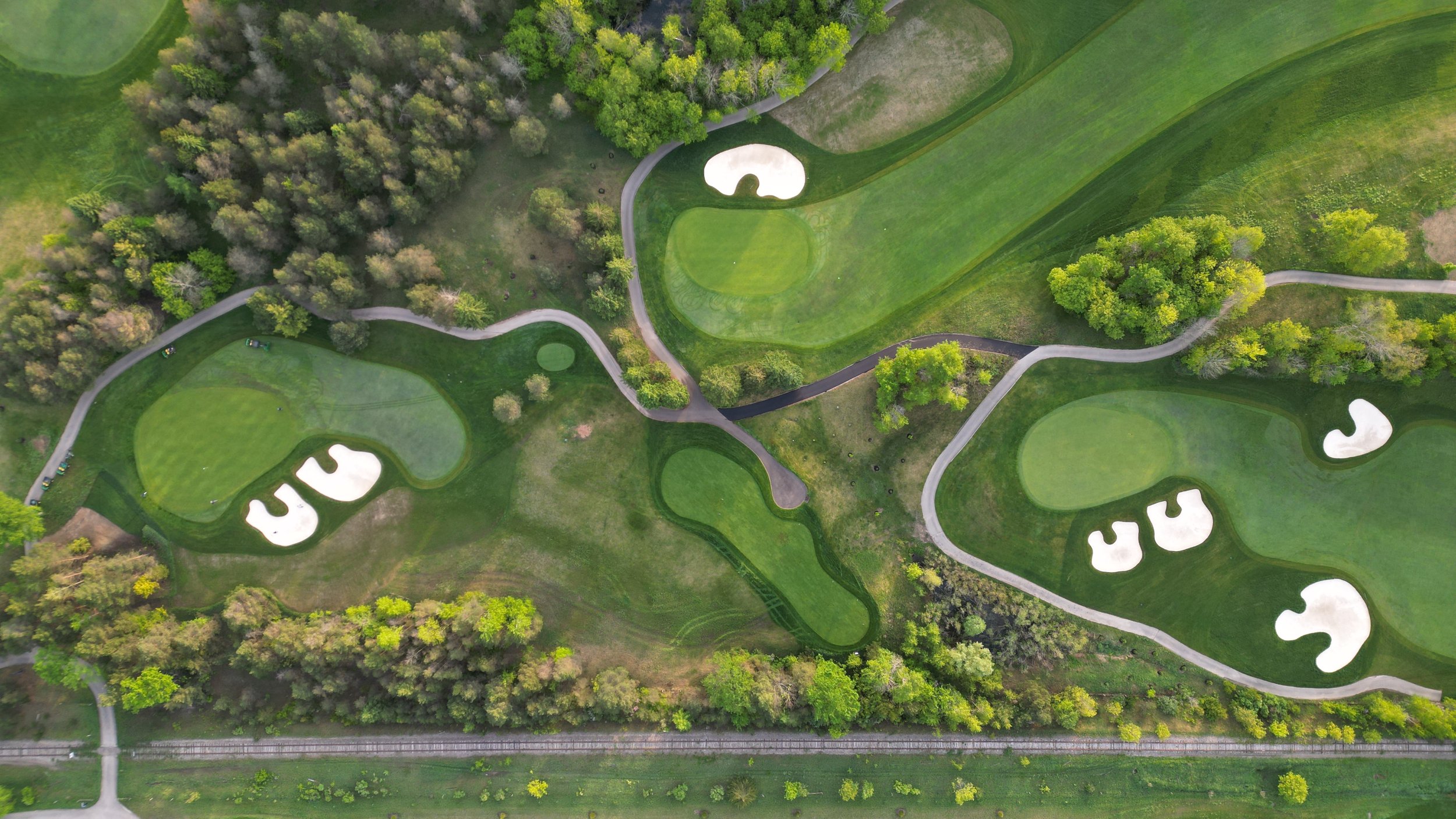
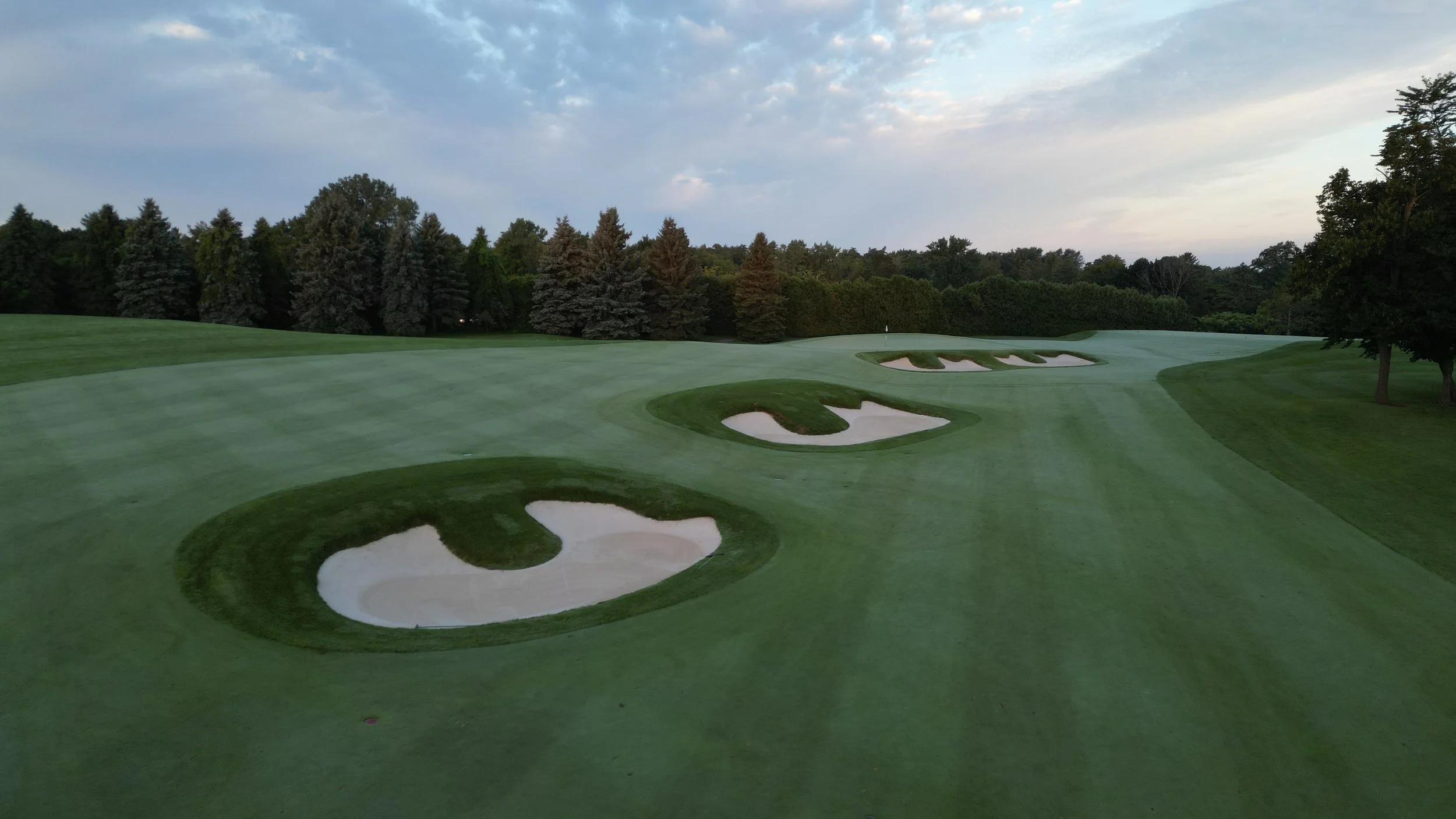
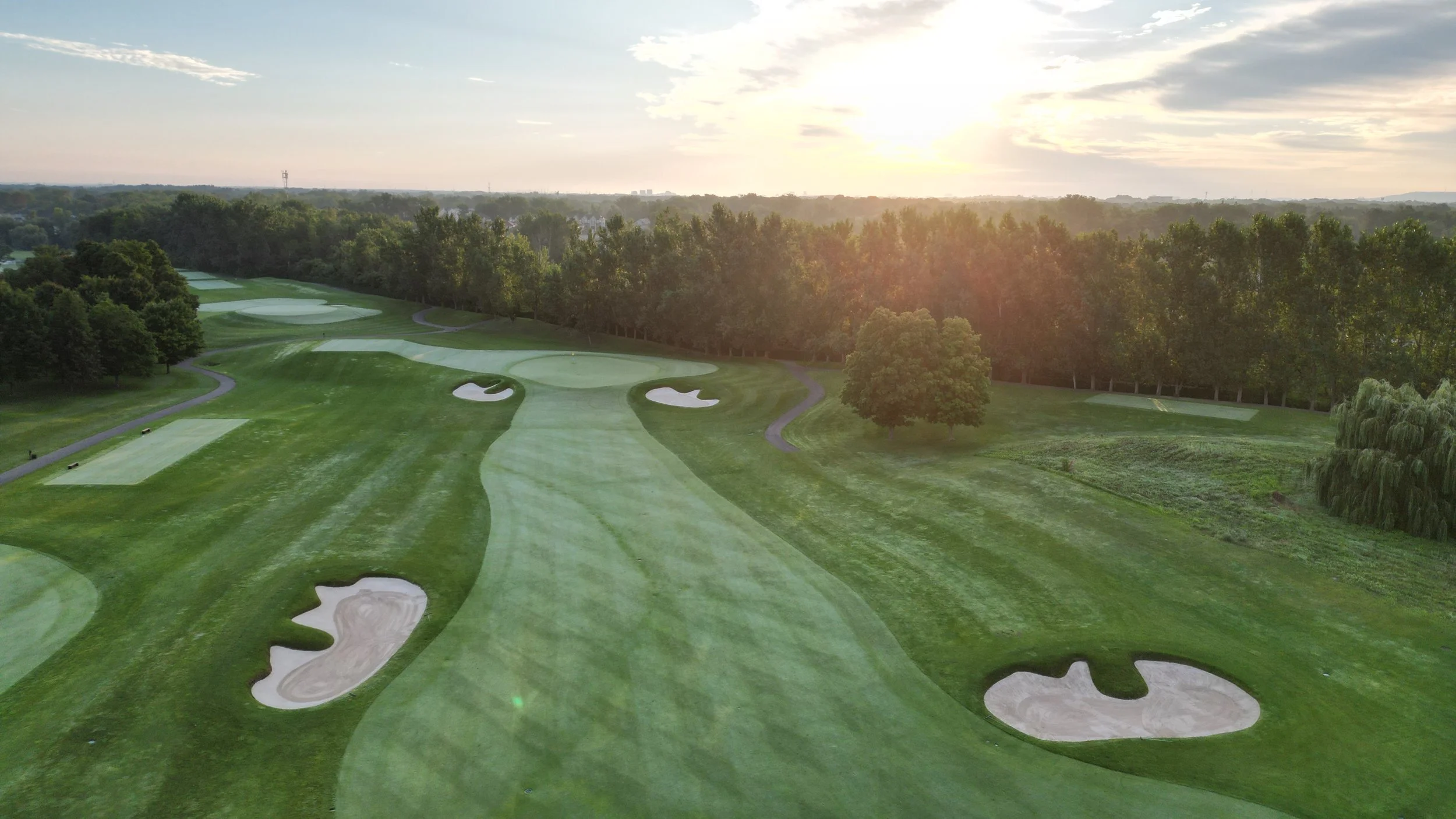
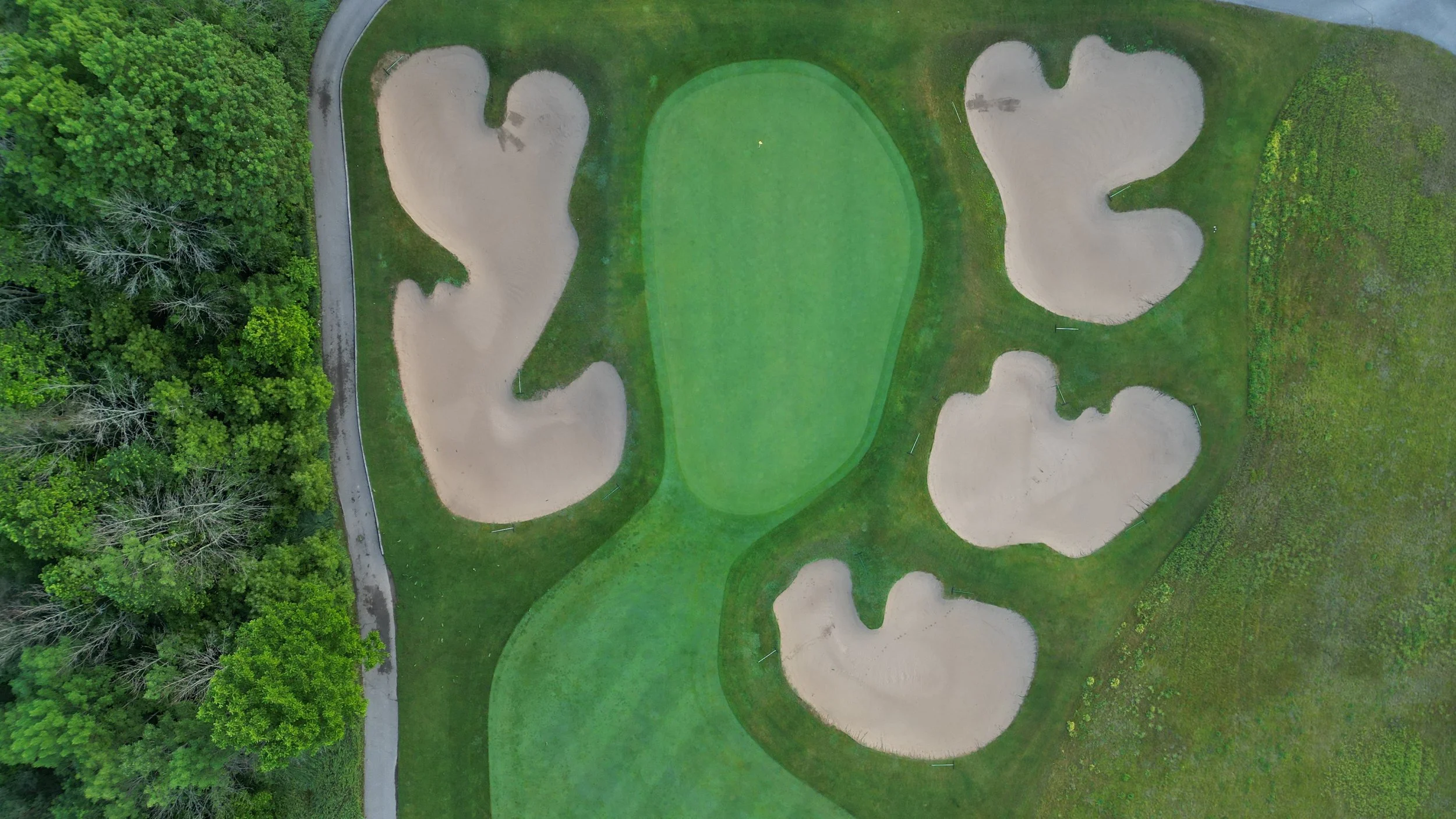
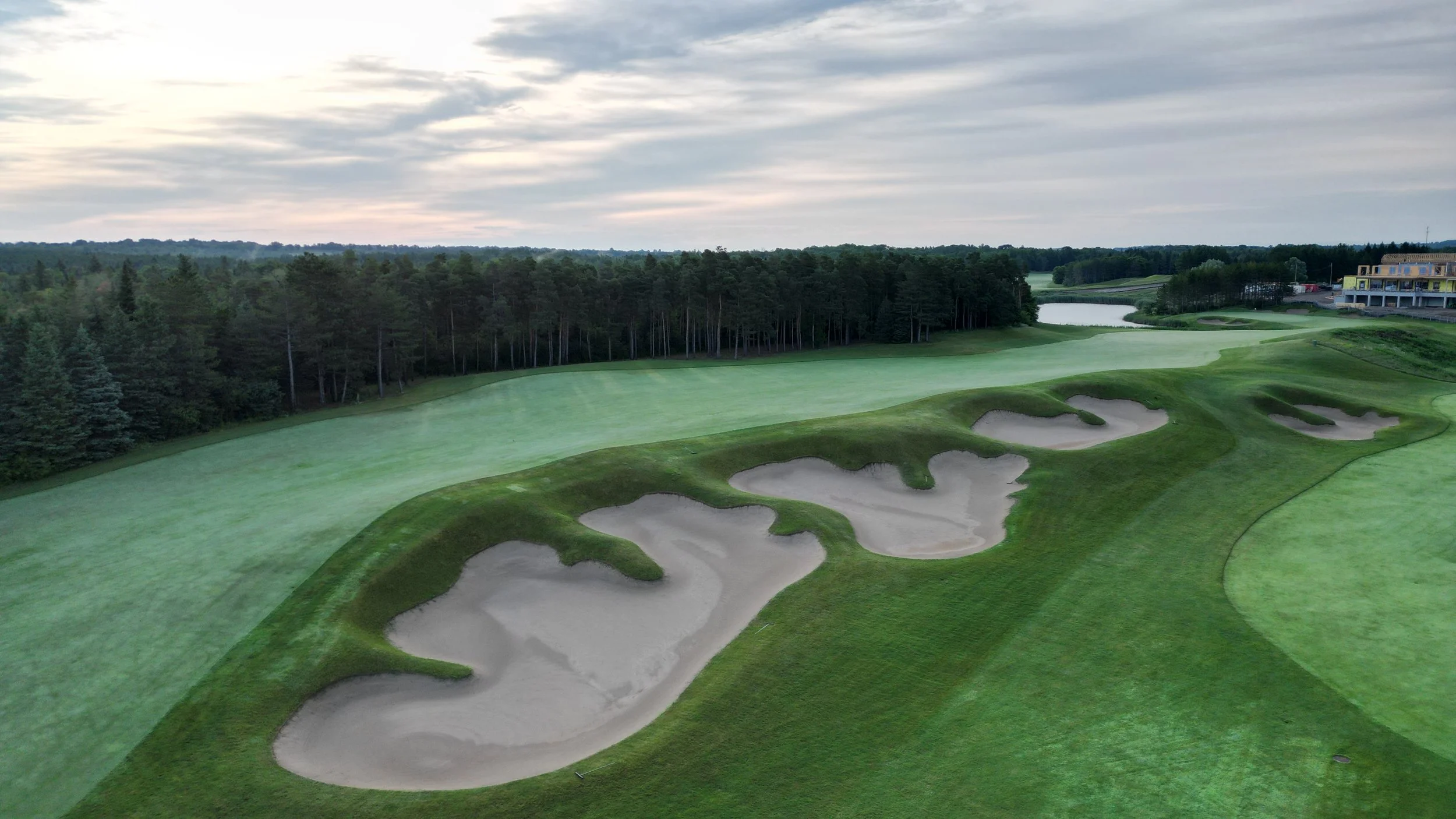
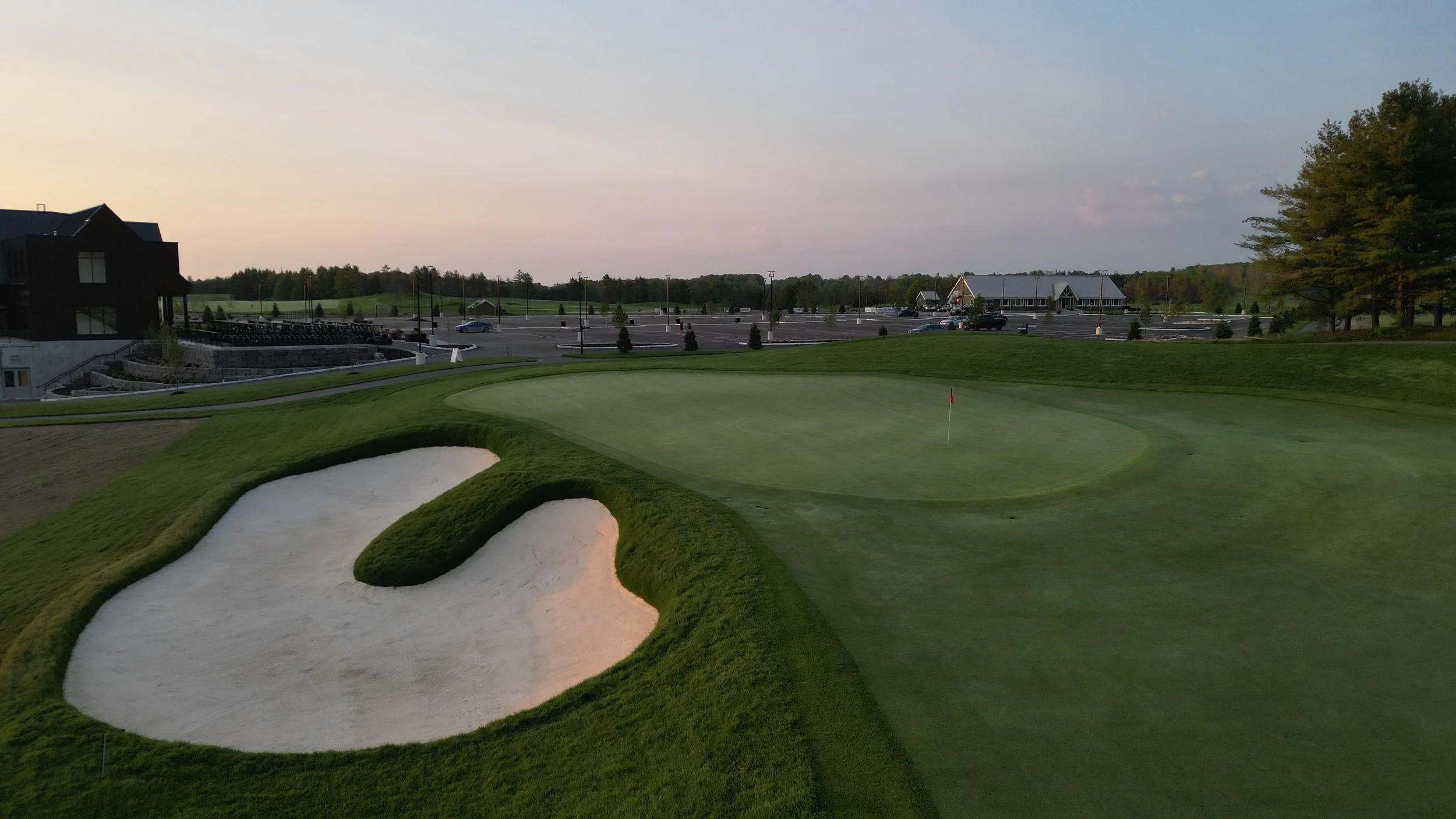
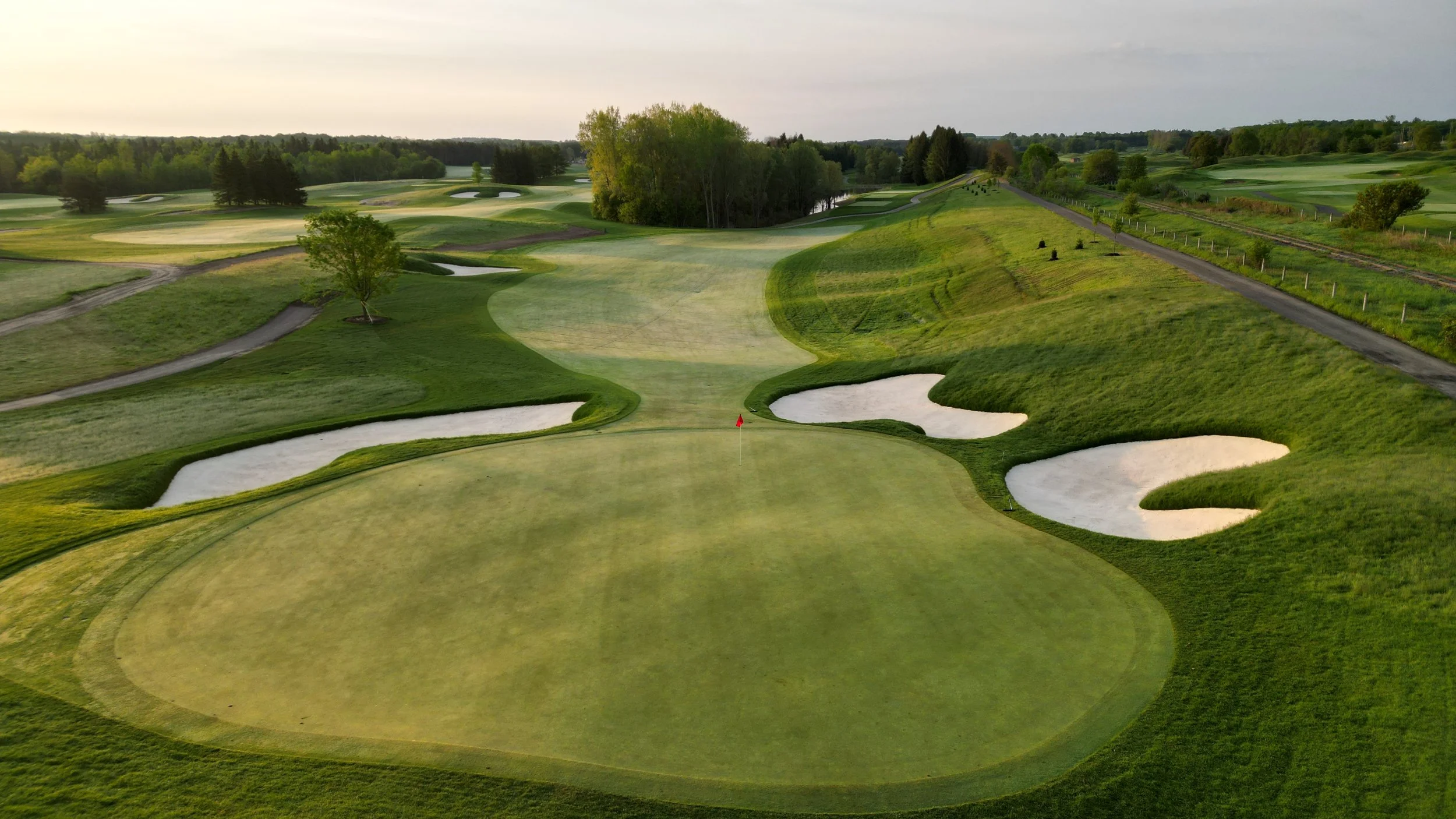
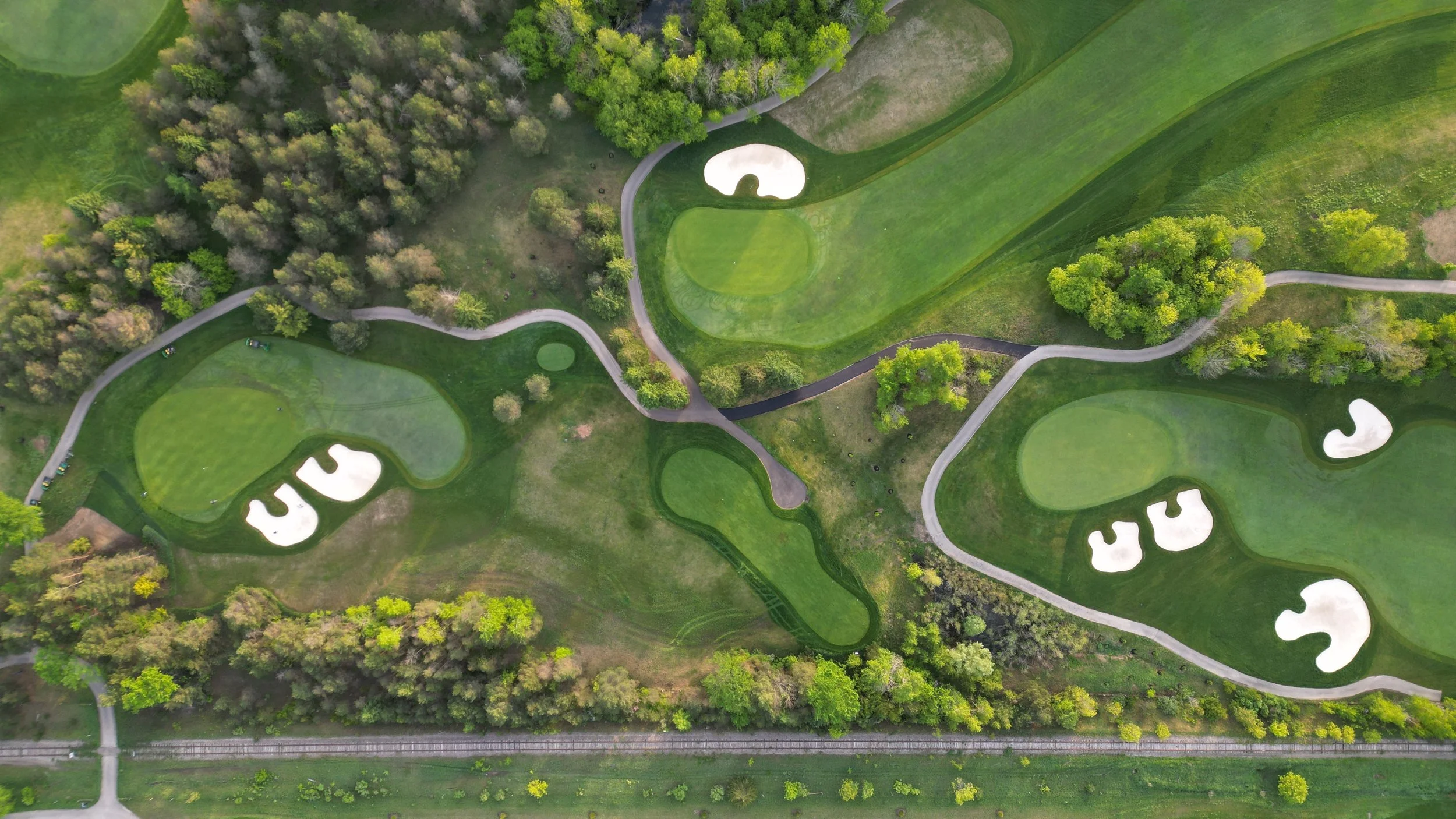
The bunkers have been a divisive and, at times, harsh, criticism of the golf course. Of course, when you are hosting the national open, it comes with the territory. It’s also the most eye catching trait of the golf course. Perhaps they may soften or alter in shape and appearance with their fescue grass faces over time to greater appeal. It does feels appropriate to compare them to a similar set which can be found over at Ian Andrew’s Blue Course at Laval-sur-le-Lac. The photos below illustrate that while the bunkers may look similar in nature, the set at Laval differ quite noticeably in size, orientations, and intricate detailing, like the little capes and bays found around the main “thumb”. There is some of this variety if you study the set found around the North’s 12th green. It amounts to the type of appeal that can elevate a course from back half on a Canadian top 100 up into the top half.
Continued
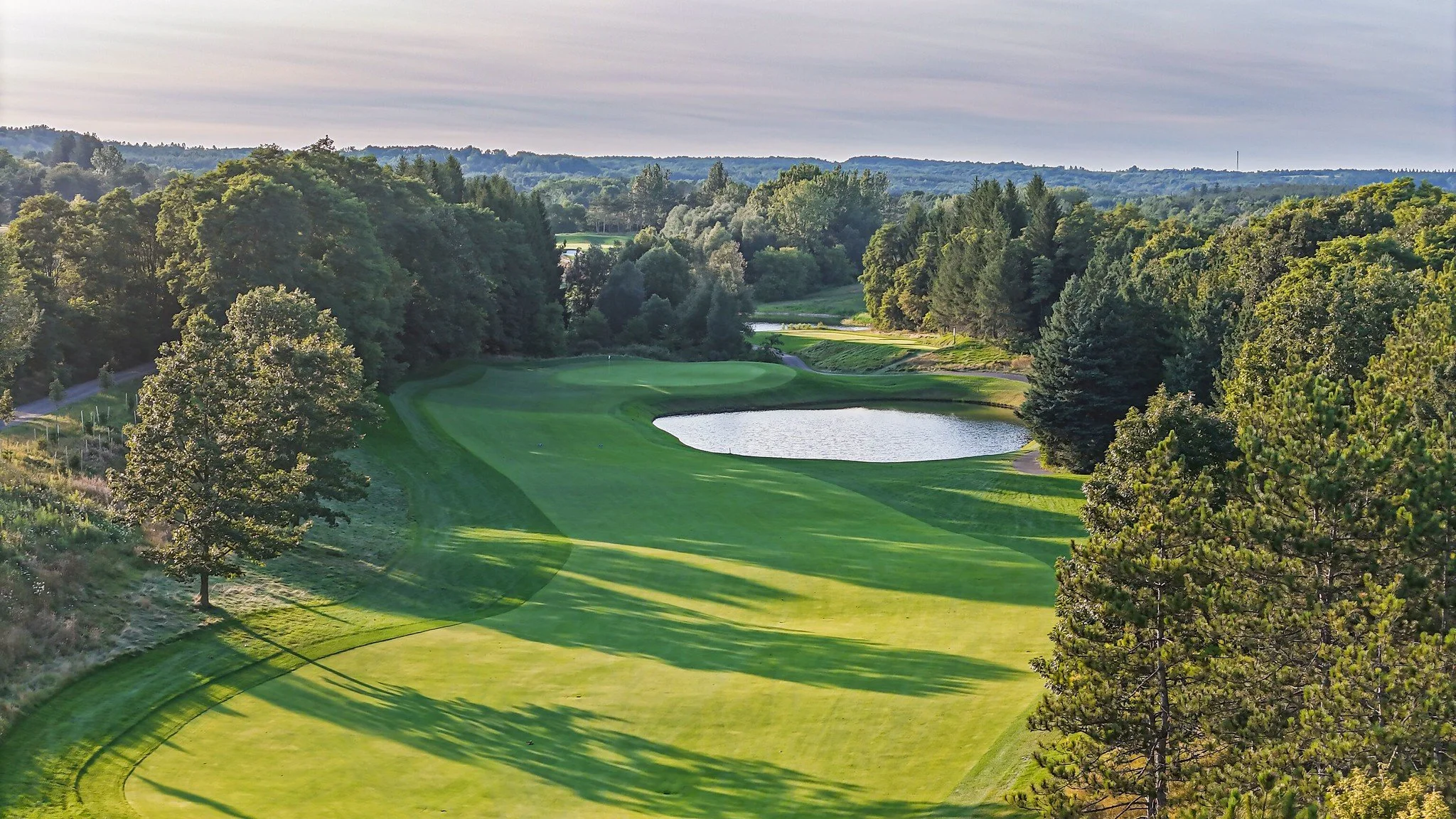
Hole 10 — Par 4, 415 Yards; The tenth opens the back nine with a change of pace and character. There are no bunkers — unusual on the North — and the hole plays as a winding S-shape that drops into the valley carved by the property's topography. The tee shot requires either a deliberate draw or a lay-back off the right-to-left curve of the fairway, and the approach is defined almost entirely by where the tee shot landed. A pond sits short of the green, and the shortgrass runoff that slopes toward it effectively moves the line of the hazard several paces into the front of the putting surface — under firm conditions, anything that comes up slightly short has a realistic chance of ending up wet. Additionally, the back edge of the green is tightly mown - which makes for a delicate recovery shot for anything that goes long. It is one of the North's most graceful holes.
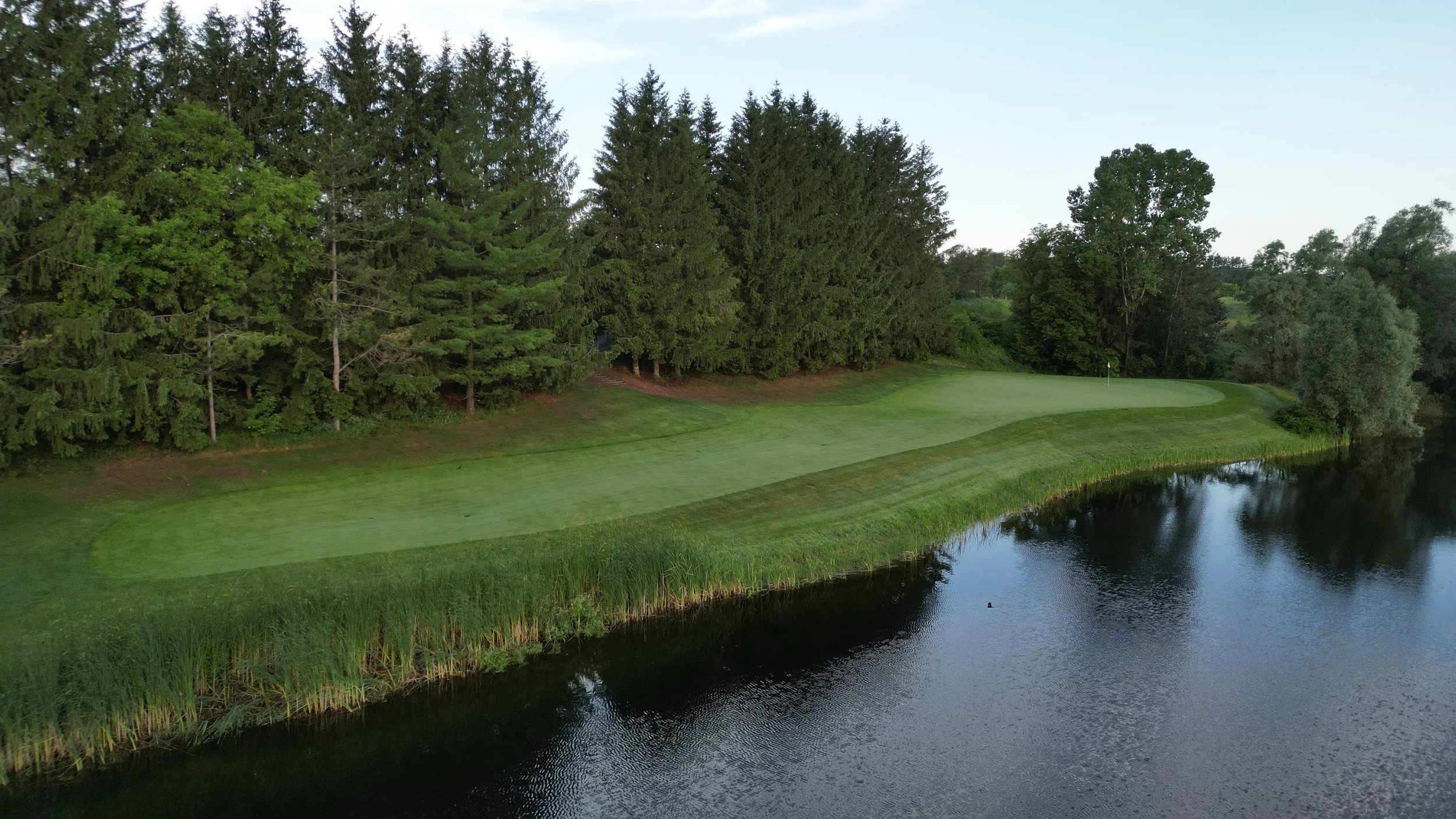
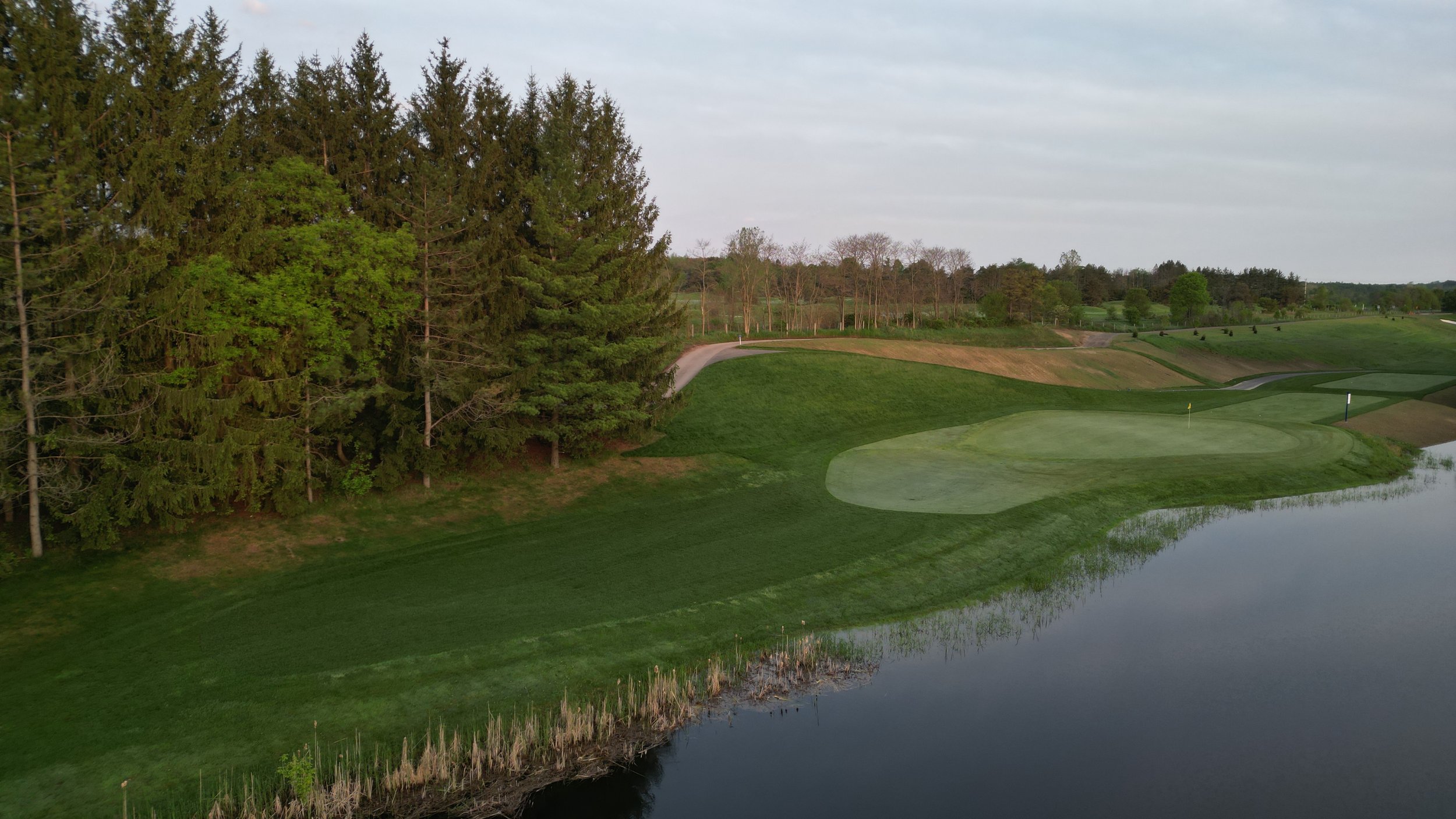
Hole 11 — Par 3, 225 Yards; The hardest single shot hole on the golf course. Water, wind, and distance converge on a green set between a pond and a fescue-covered hillside which was uncovered as part of changes during the renovation. The fescue “wall” left of the green replaced a stand of trees that players once used to bank the ball down onto the surface — a quirk that was entertaining, if unintentional. What replaced it is considerably more severe and far better architecturally. The green is divided by a spine through the middle, and the left shortgrass escape area sets up a manageable chip but concedes the realistic chance at a two. The changes to this hole, and the tee placement for the subsequent 12th are some of the most improved aspects of the renovation. A before and after image have been provided below illustrating the dramatic, and improved changes to this hole.
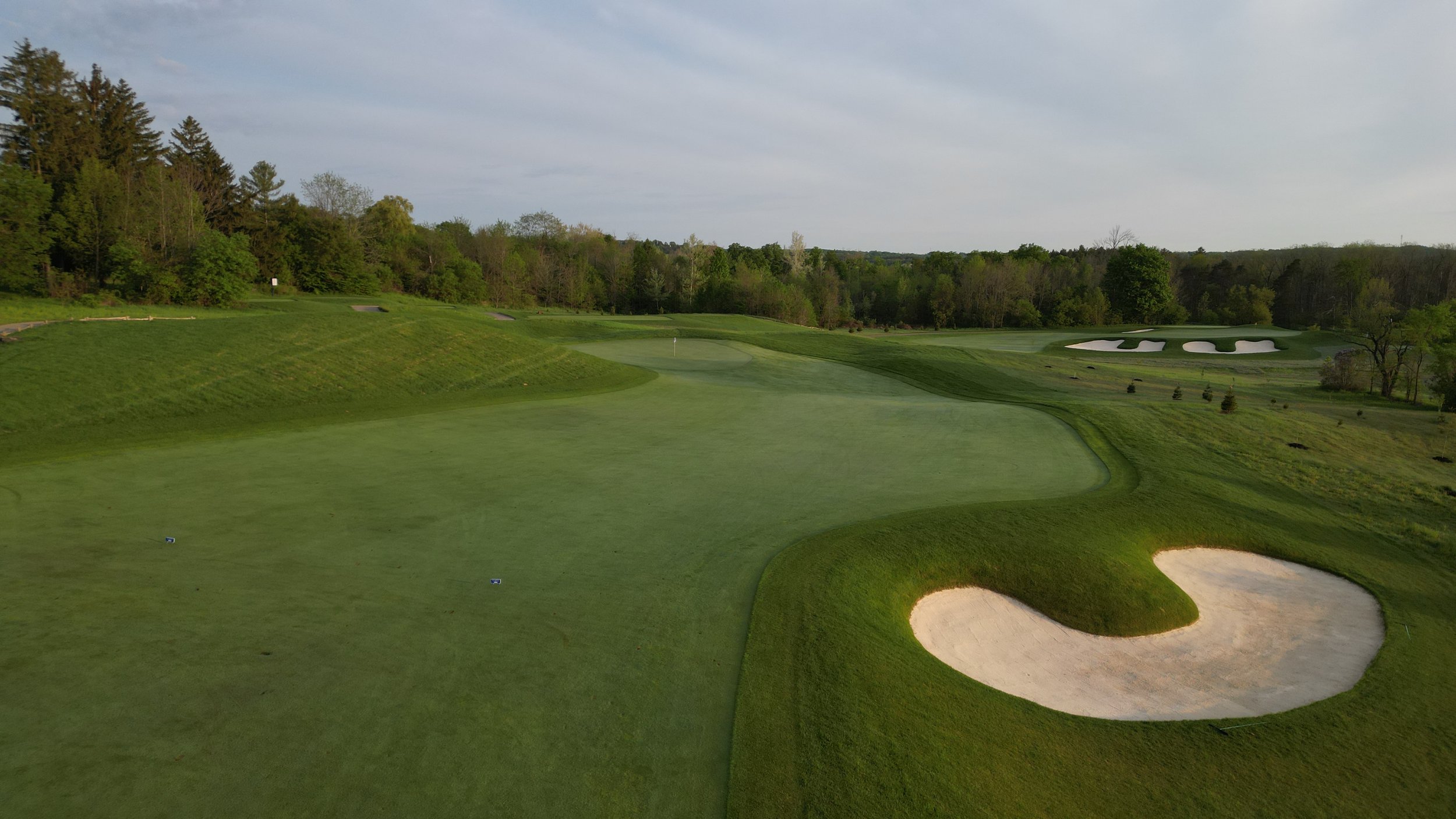
Hole 13 — Par 5, 536 Yards; The thirteenth sits in a part of the property shaped as much by its former life as a quarry as by any architect's hand, and the terrain shows. A large fescue-covered mound dominates the left side of the green, obscuring a significant portion of the putting surface from the fairway and providing a reference point that forces a decision on the approach: challenge the right side of the fairway where bunkers and thick rough guard the preferred angle, or play safely left and face an increasingly difficult shot as the mound blocks significant portions, or all, of the target. For the Canadian Open, this hole converts to a par 4 at upwards of the full 536 yards — one of the longer par fours in the event's history. For the everyday golfer, it is a demanding three-shot hole with a complex, but potentially rewarding finish.
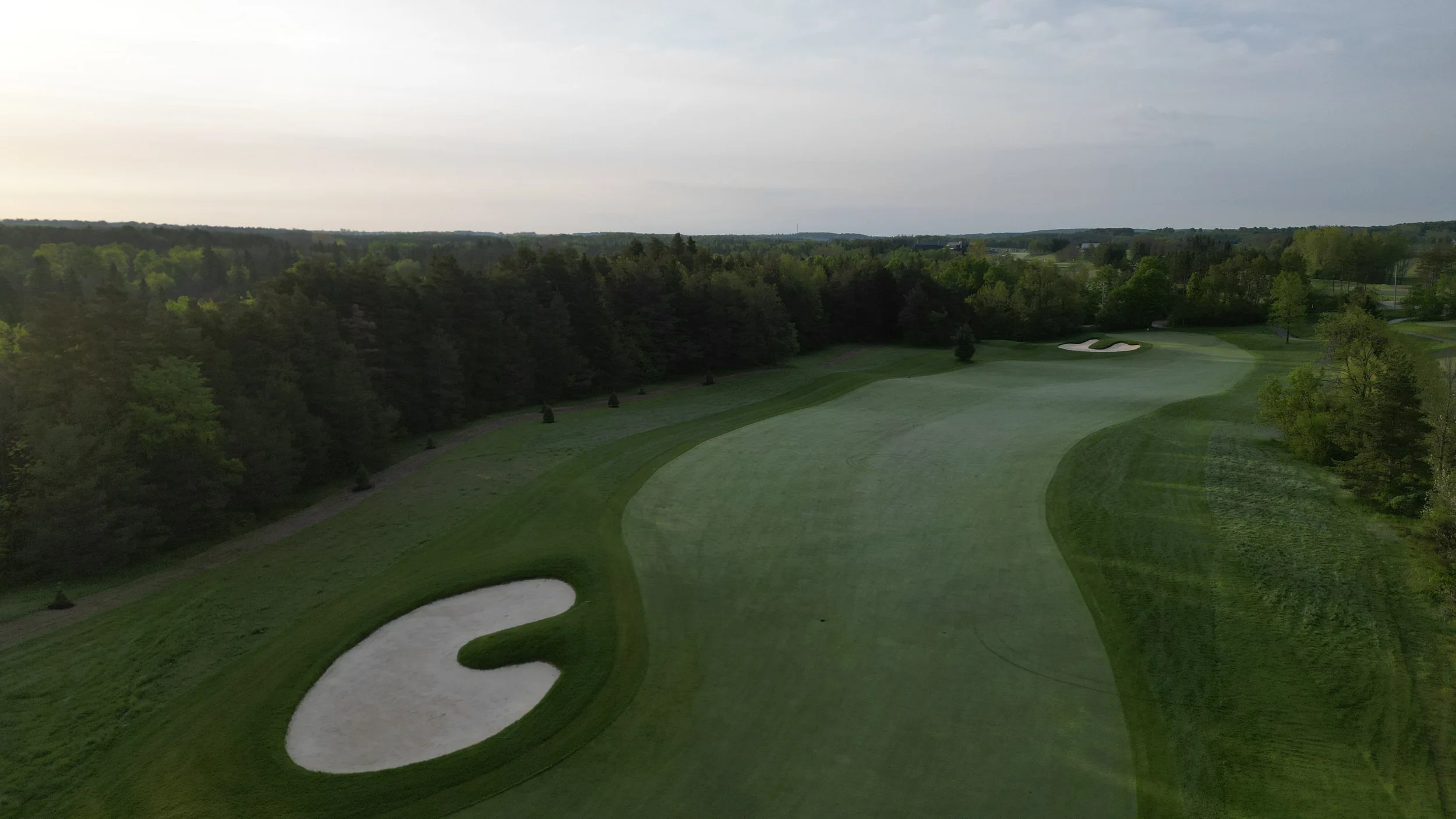
Hole 16 — Par 4, 513 Yards; Architect Ian Andrew called the sixteenth a perseverance hole, and the description is accurate. It is positioned deliberately between scoring chances — the 15th is a short dogleg with a driveable line, and opportunities exist at 17 and 18 to further improve on the scorecard. Its task in the routing is to separate the field before the finish. The tee shot is blind, launching over a crest and revealing a long downhill fairway on the other side. The tempting line is right, which opens the better angle into the green but puts tee shots into fescue or a stand of dense forest if they miss. The left side is safer and considerably harder to score from. The green is one of the more heavily tilted on the course, protected by a bunker short-left, creating an approach from the long distance that feels very uncomfortable at times.
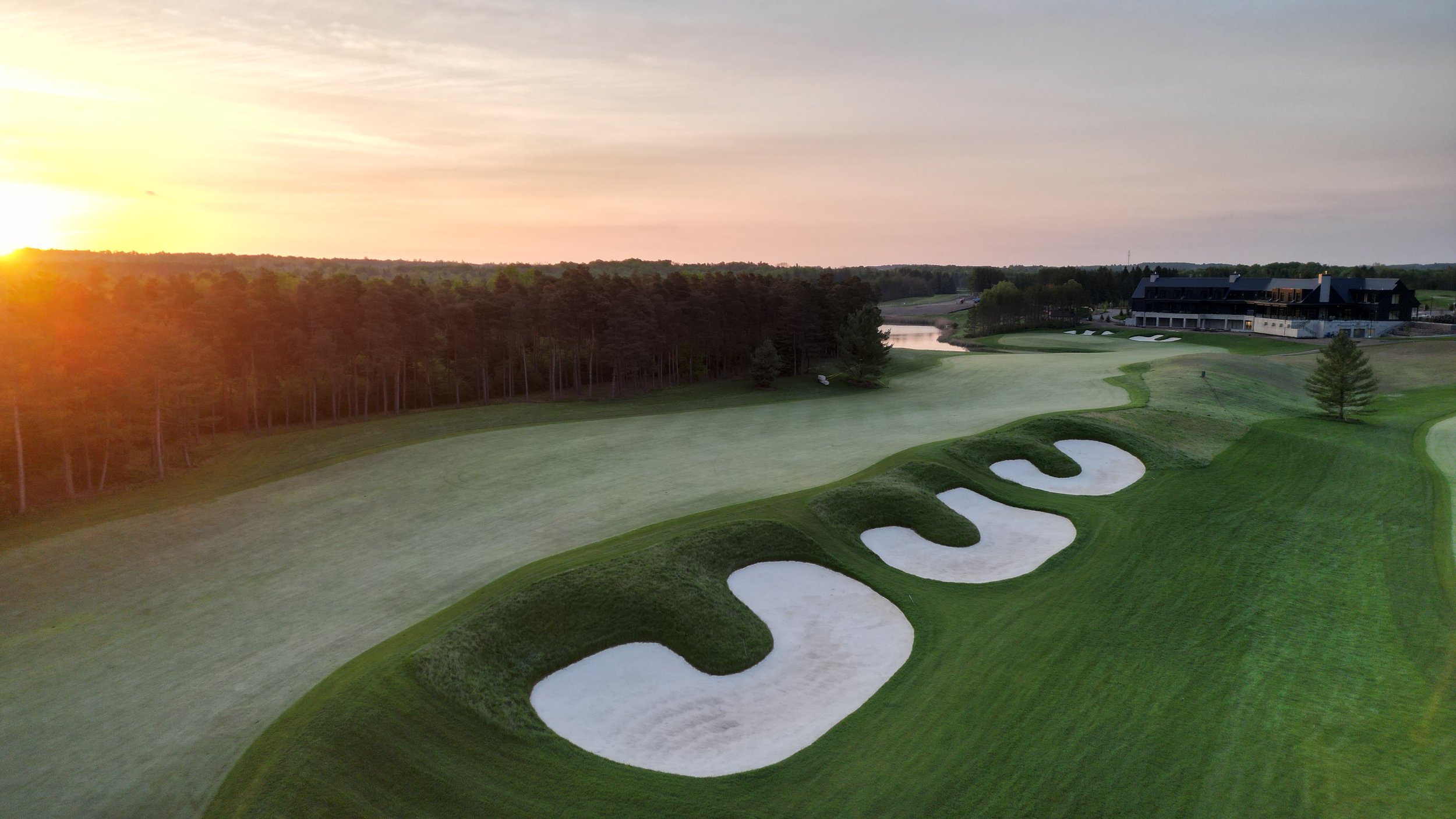
Hole 18 — Par 5, 581 Yards; The North's finishing hole was built to produce drama at any level of play, and it certainly can - just ask Ryan Fox, the 2025 Canadian Open champion who hit his approach to 8 feet to seal the win on the fourth playoff hole. A series of angled bunkers down the right side of the fairway require 310-plus yards to fully carry — a threshold that frames the tee shot as a risk-reward decision between an aggressive line that accesses a speed slot shortening the approach, or a safer play that leaves a longer, more complicated second shot. The green is bordered by water front and left, and the shaved runoff that slopes toward the pond. Meaning anything coming up fractionally short, or ends up long, must face recovery back towards the hazard that has little chance of holding up. As a stage for the finishing of the Canadian Open, this hole may end up as a fitting closure to our National Championship.
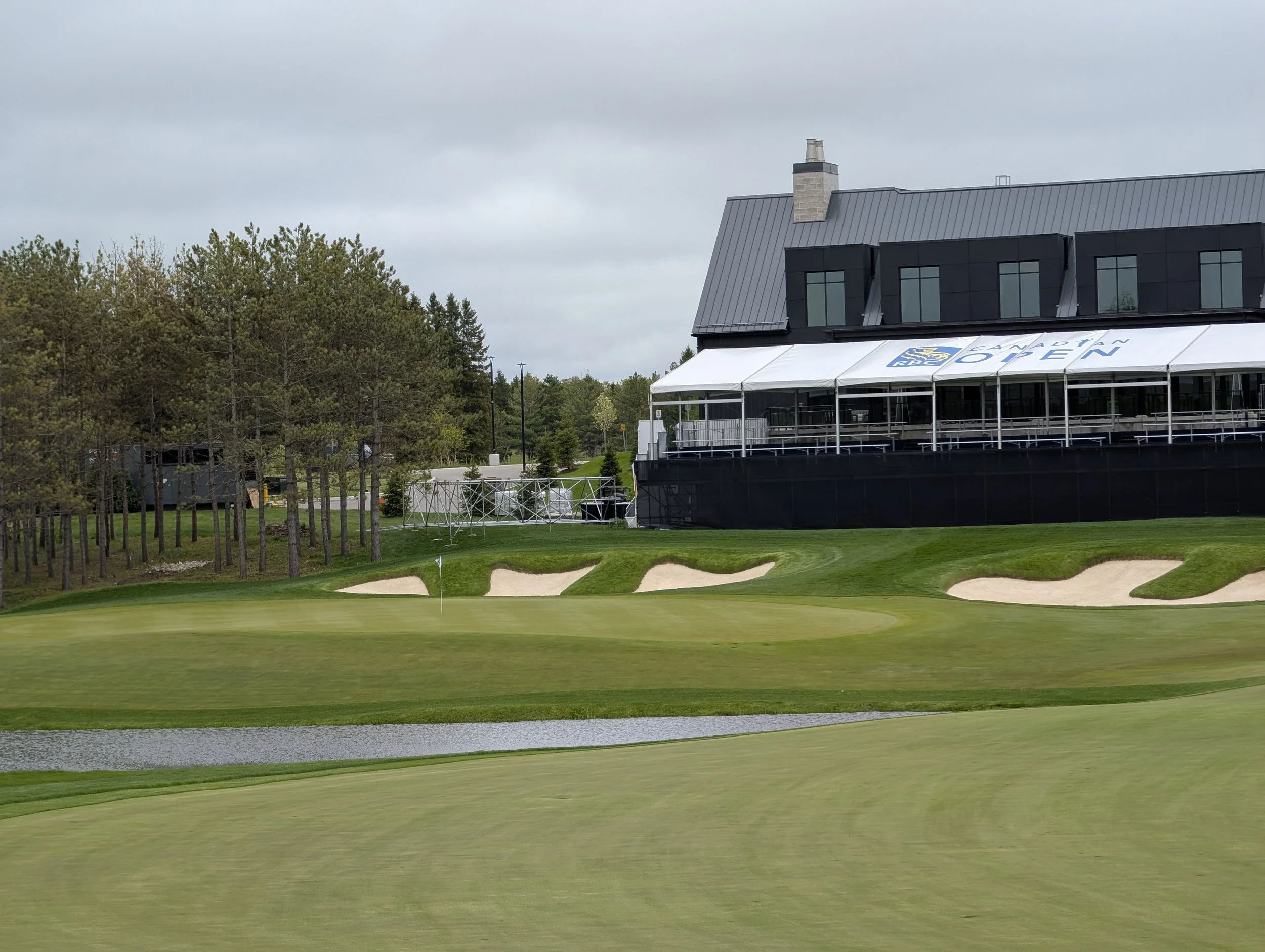
Osprey Valley’s North course has long been a staple on Canada’s 100 best courses lists. And now, the opportunity to play a course that hosts the Canadian Open, at public (although pricey) rates, is something that will greatly appeal to many golfers. The 2023 renovation achieved its stated purpose, hosting a successful Canadian Open and holding up to Tour conditions far better than many anticipated. Coupled with the infrastructure produced around the golf certainly it’s worked its way into conversation around best all-around facility in the country. However, it is clear the national focus on this project came far too quickly. The time it takes to consider and make meaningful change was not available to this Organization as a result of many behind the scenes circumstances. Unfortunately for architecture enthusiasts the renovation didn't make the North a more interesting golf course. The uniform bunker scheme is the clearest symptom of prioritized tournament logistics over design expression. For that reason, the North remains a step behind its siblings on our provincial and national guides — with Hoot and Heathlands carrying the elevated architectural personality that golfers in these pages seek.
You might also like..
-
Glen Abbey
-
London Hunt
-
Magna