What Makes A Great Set Of Greens?
We recently profiled the fantastic Lakeview Golf Course - one of Canada’s finest municipal tracks. A particular reason why we love Lakeview as much as we do is its set of quirky green complexes. A set full of micro and macro contours, slopes on grade, and a variety of small unique features that set each one apart from the next. It really helps to have a good understanding of what makes a great green complex, and while tastes are largely subjective to the player, we’ve broken down what it means to understand a great set above the rest.
In golf architecture terms, the "green" is really a misnomer. We prefer to discuss the entire package that is the green complex. This includes the putting surface (what most would consider the green), the bunkers closely guarding, the slopes leading into it, and the surrounds (the grass immediately adjacent). A great green complex works as a cohesive unit. For example, a steep slope on the right side of a green might look like a hazard, but a clever architect designs it as an object that could be used by a player to feed the ball if executed properly. If the area around the green is nothing but thick, uniform rough, most of the strategy is lost.
But what distinguishes a truly great set of greens from a merely functional one?
Size and Scale
One of the hallmarks of a good golf course is that no two greens feel the same. If a course has 18 medium-sized, circular greens, or if the same concepts are used repeatedly, it lacks variety. A great set of greens provides a mix of elevated or sunken targets, variety in shaping concepts, use of internal contours - both large and small, and plethora of surrounding hazards oriented in different shapes and locations. Some examples that showcase variety include:
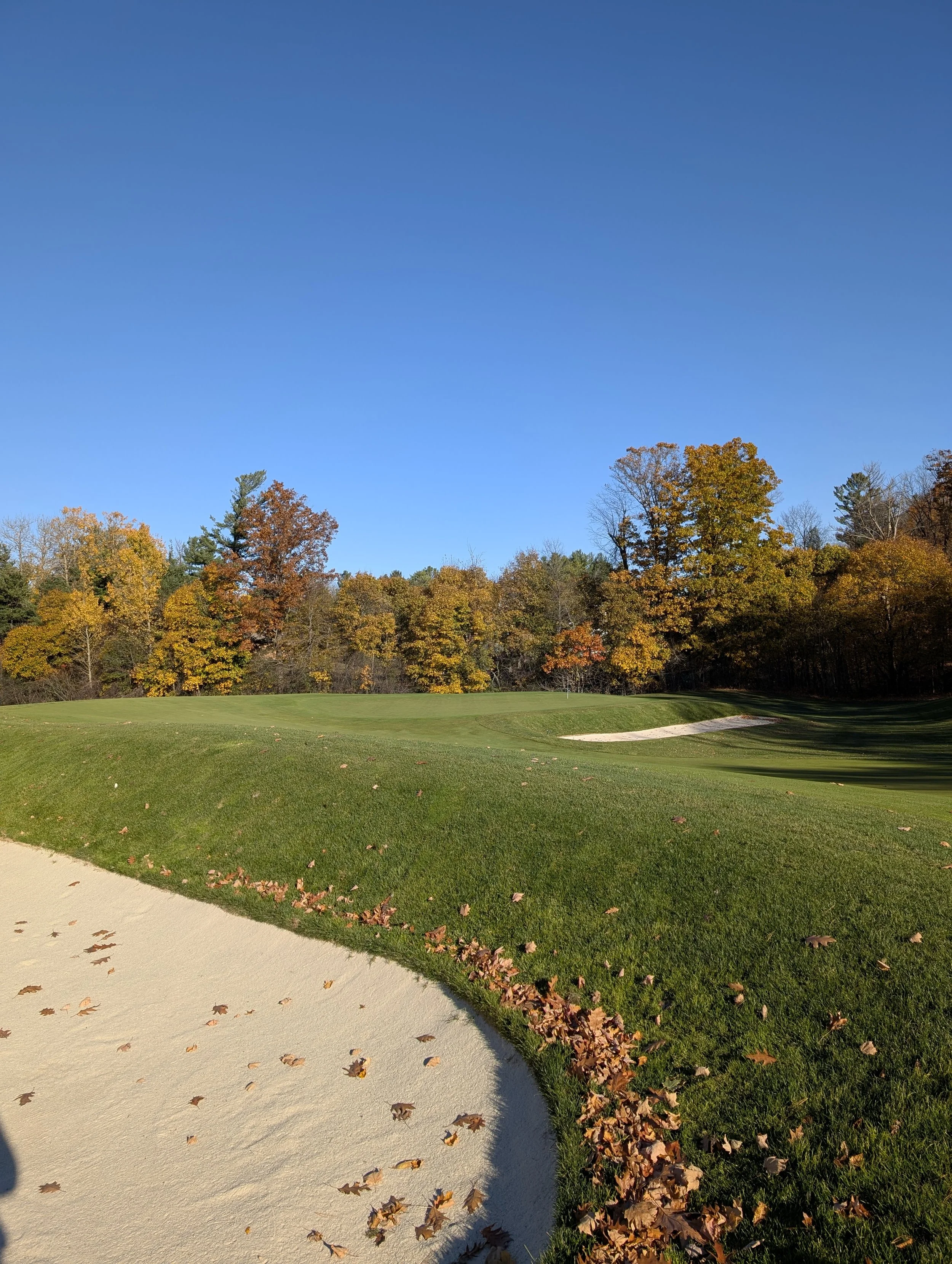
A shorter hole might feature a small, potentially narrower, green that demands extreme precision one might expect from having less distance from tee to green. Like that of the reverse redan on the par 4 12th hole at Maple Downs (photo 1 below).
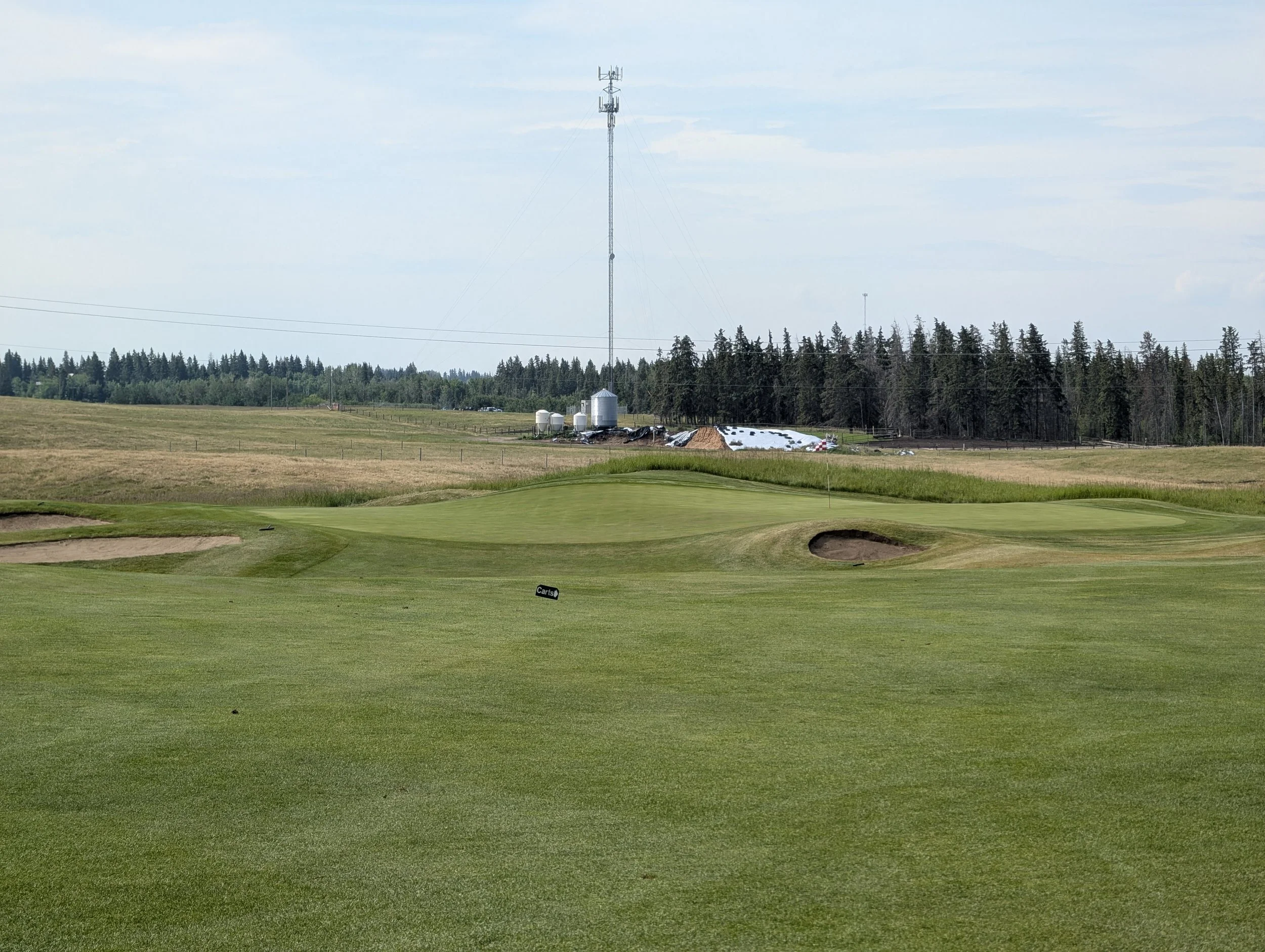
Some holes might have a bigger green surface or one with larger internal contouring offering compartmentalization within the green. While easy to hit - particularly on par 5’s that offer risk/reward plays, the challenge shifts to lag putting, where a 3-putt is a very real possibility. Like that of the green on the par 5 8th hole at Cabot Links (photo 2 below).

Internal Contours
Generally best greens have internal contours that divide the surface into smaller sections, using ridges, spines, hollows, or tiers. This internal contouring creates most of the strategic interest once you’ve arrived in and around the green. But those contours need to be functional - a green with many large tiers is less functional than one with smaller, softer contours like the example below. Often a by product of this, is that, greens can more easily drain to more than 1 point on the putting surface helping with overall conditioning.
Wavy potato chip like green at Wolf Creek Resort (Old course)
The Relationship with the Approach Shot
A great green complex is likely to have been designed to be approached from a specific or preferred side of the fairway.
The Angle of Entry: If a green is long and narrow, tilted from left to right, it becomes much easier to hold if the player approaches from the far left side of the fairway. Most often encouraging golfers to challenge fairway hazards to gain an advantage.
The False Front: A classic design attribute often deployed where the first five yards of the green look safe, but are actually sloped back toward the fairway. A great set of greens uses tricks like false fronts to trick the golfer, rewarding those who know to carry the ball further or more precisely towards the target.
Knolls, Hummocks, and Hollows: Like that of the false front another common design element used within the green or its surrounds are knolls, hummocks, and hollows. These often small but significant depressions or raised areas can have great affect on getting close to the pin location - naturally propelling rolling shots closer to or away from the target.
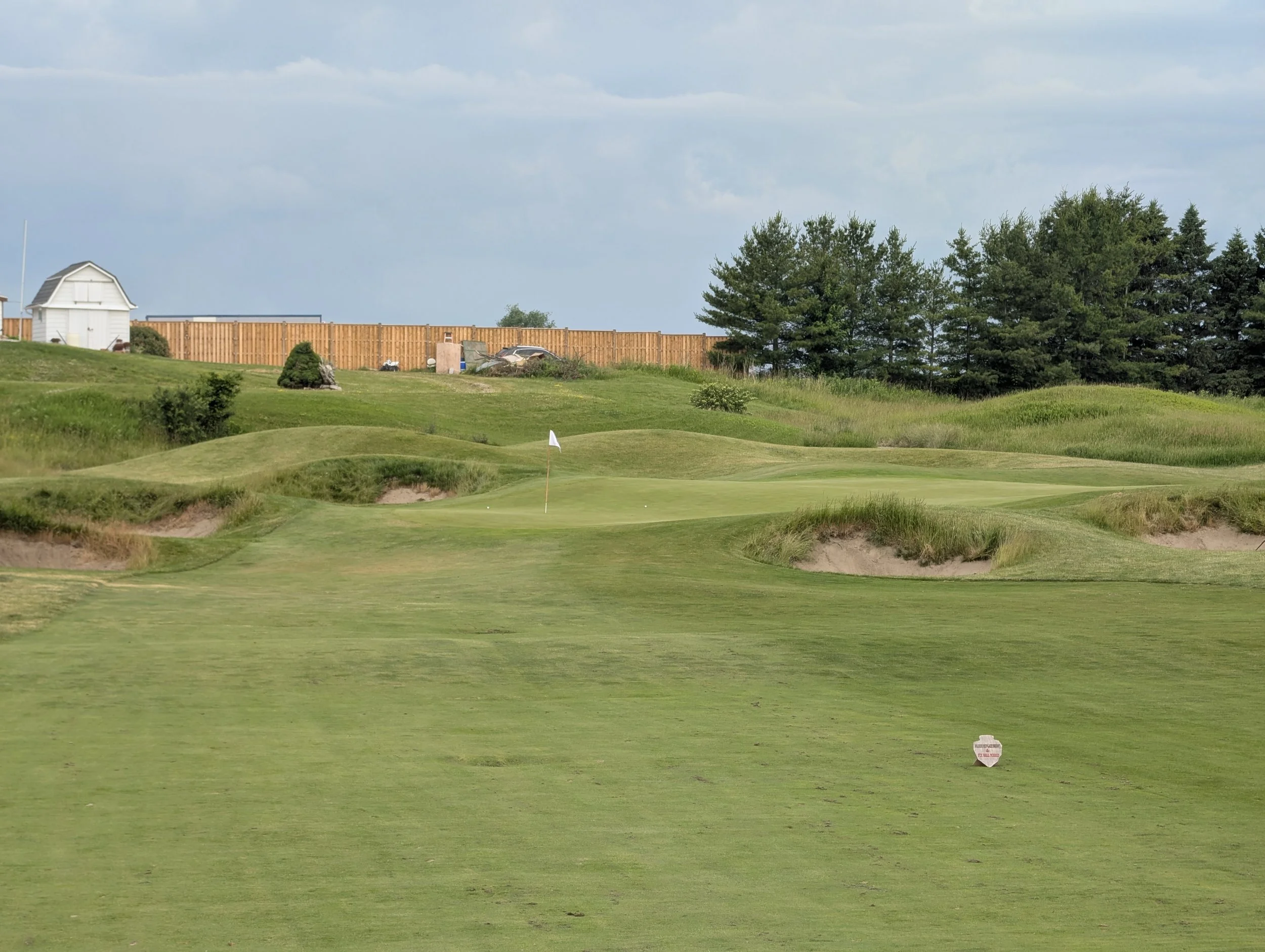
The 11th hole at Tarandowah deploys numerous design elements - a small false front, angled entry best approached from the left half of fairway, and numerous hummocks and hollows surround the putting surface
Integration with the Natural Terrain
While not absolutely mandatory, some of the most celebrated greens in the World, like those at The Old Course, often look like they were found rather than built. Not every great set is this way of course - many highly acclaimed layouts like Winged Foot or Oakmont were of course built on less than ideal land forms. But when an architect uses the natural tilt of the land, the greens feel organic. A green that follows the natural fall of a hillside creates a side-slope challenge that is far more interesting than a perfectly levelled, or overly contoured artificial surface.
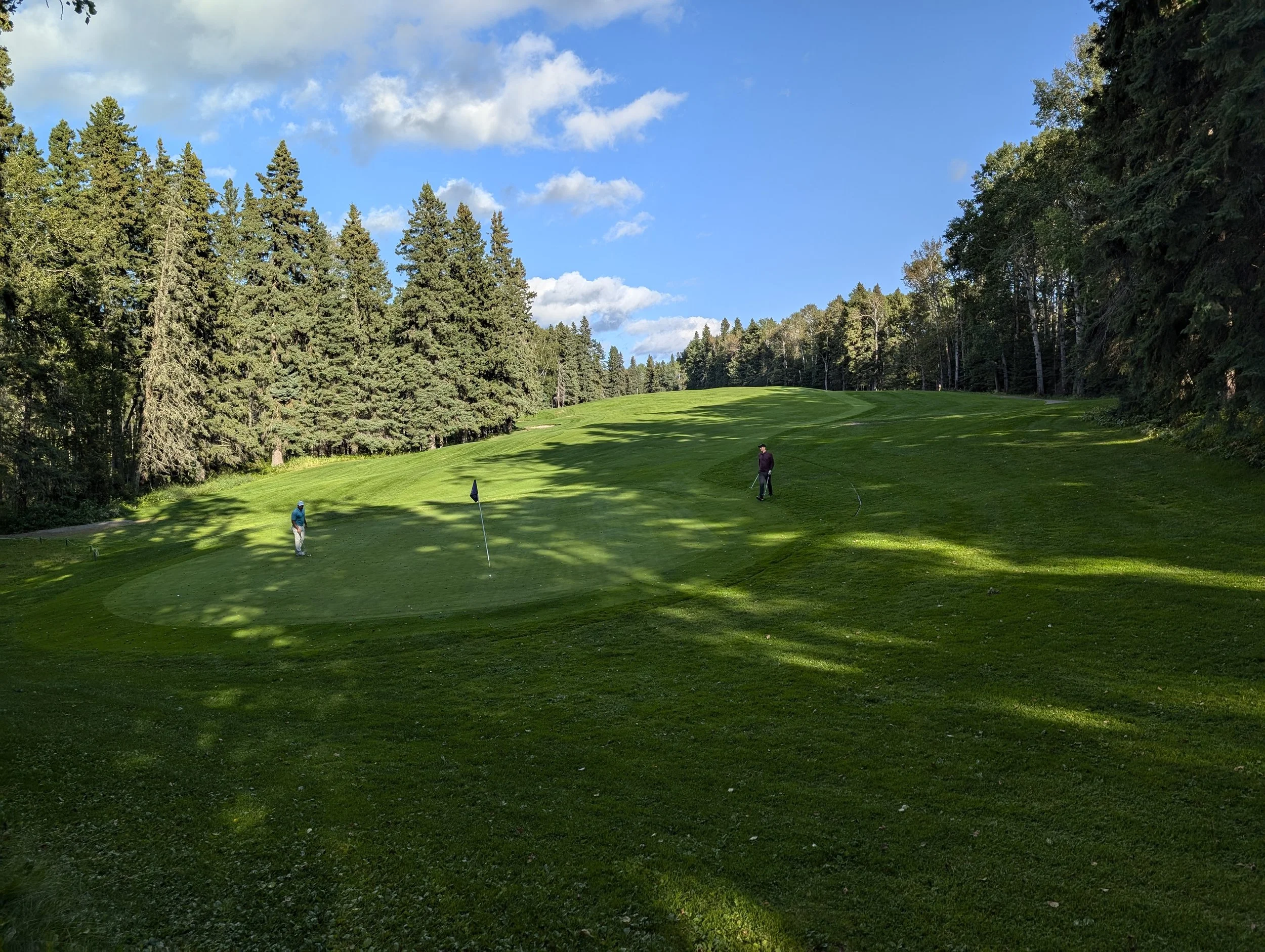
This green at Waskesiu is built completely along the grade of the slope. The difference from front to back is a few feet in elevation. The contour of land does all the talking and the pace of the green is excellently matched against the slope so as to not be impossible to hold or putt on the surface.
Defended by Choice
While bunkers are the traditional way to defend a green, the best sets of greens use a combination of topography and hazards as a defense. For example, a Redan style green uses a massive diagonal slope to move the ball - from right to left, or left to right for a reverse redan. Combined with other topographical interest such as short grass surrounds, hummocks or hollows, a bunker or set of bunkers, or even no bunkers at all, green complexes go from basic circular spots on the course to ones that encourage variety in shot making and daily play.
When a green complex is designed well, the golfer is constantly asks themselves: What are my options? Do I fly it to the hole, or do I bounce it off or into that mound and let it roll there?
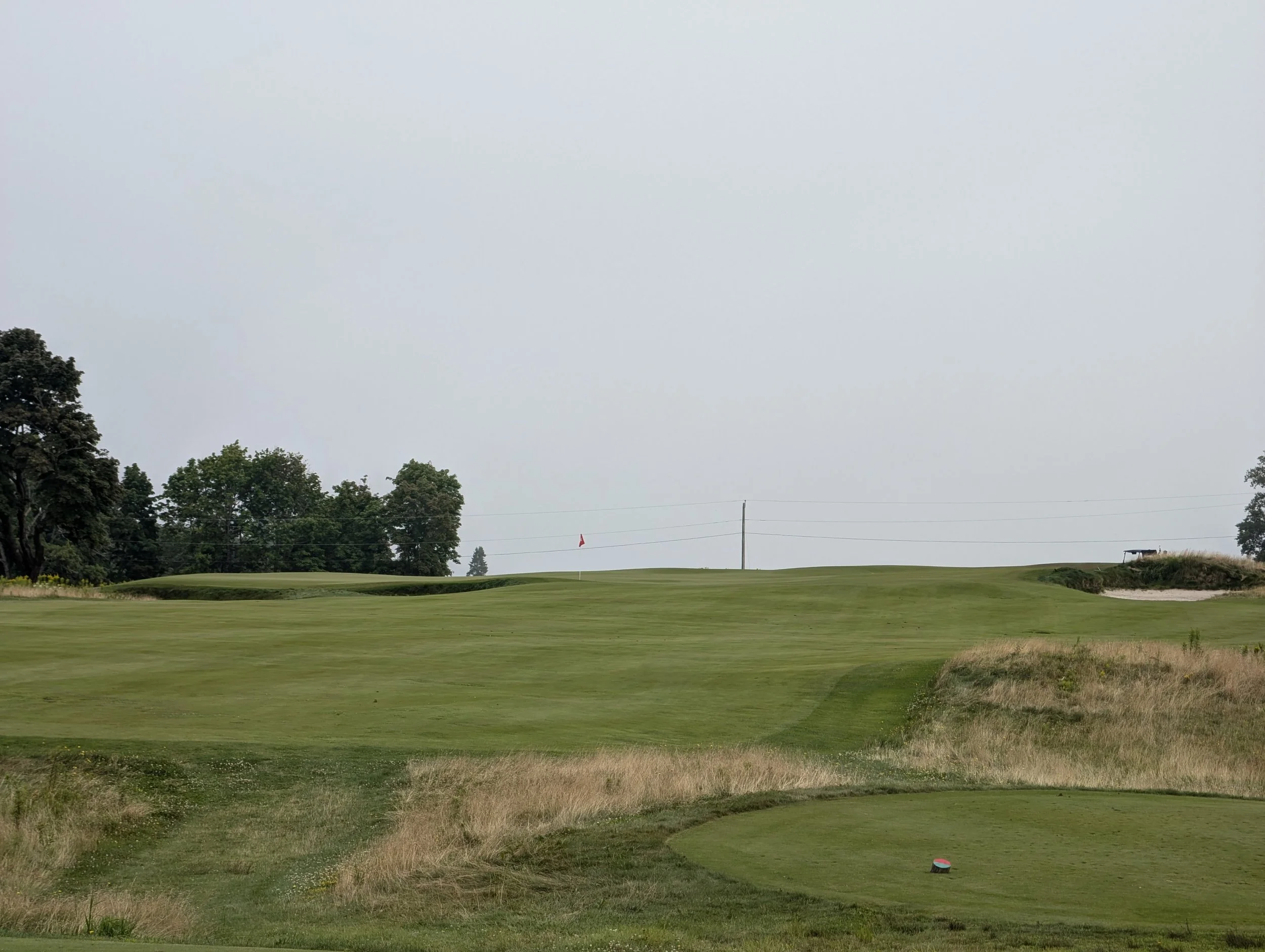
The 10th hole at The Algonquin - a redan styled green with a right to left tilt. The mounding short of the green hides the ideal entry point, while bunkers left directly guard the narrowest section of green and the bunker right is well short of the green to conceal angles and depth perception.
How to Identify Good Greens on Your Next Round
A great set of greens doesn't have to be lightning-fast or full of big, easy to spot contours. So next time you play, ask yourself these three questions to see if the course has a great set of complexes:
Do I remember the shape of every green? If they all blur together, they probably lack character.
Can I use the slopes to my advantage? Great greens allow for creative "ground game" shots.
Is there a 'best' spot in the fairway to hit from? This shows the green was designed with strategy in mind.
