Opportunity Waiting: A Few Transformative Renovations For A Better Game
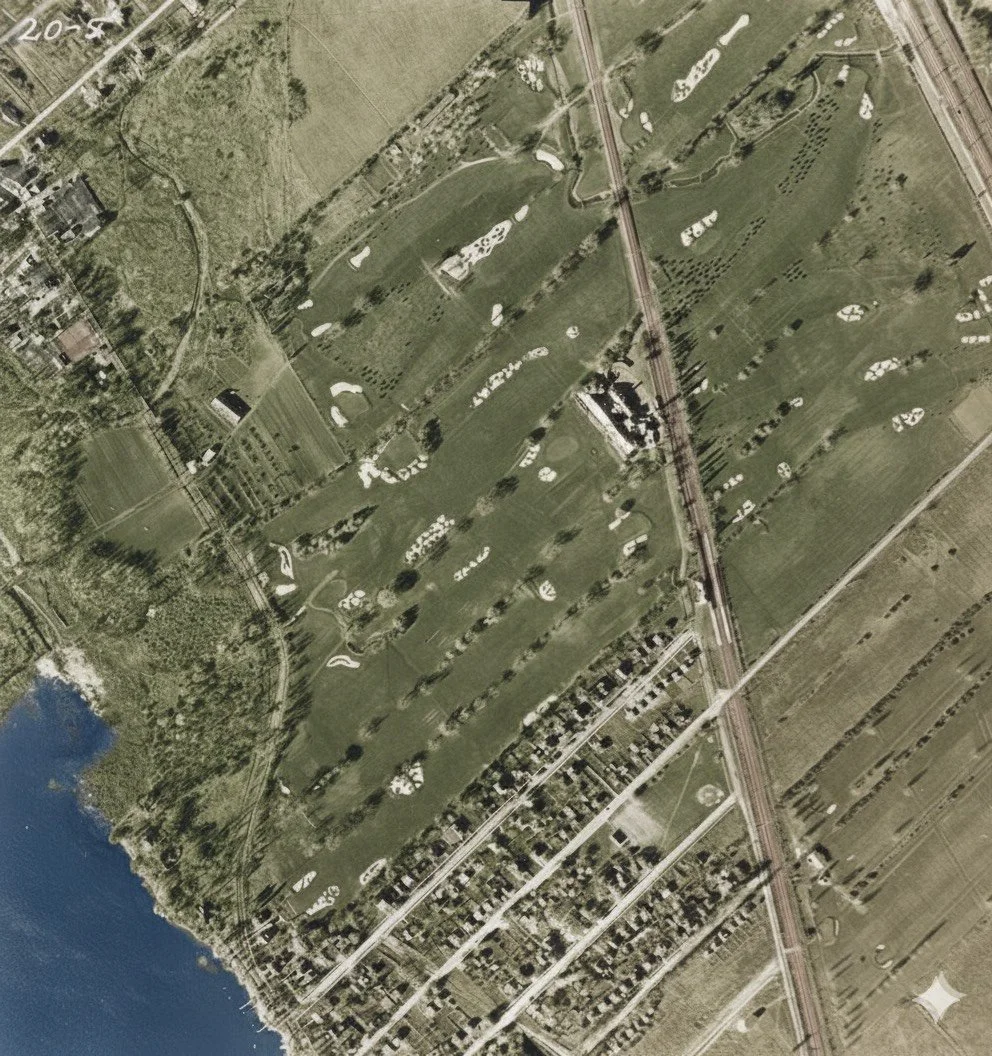
Royal Montreal - Dixie location (Willie Park Jr.)
Canada’s golf landscape remains a patchwork of untapped potential—a collection of beautiful natural sites and historic golf courses waiting for a revival that feels perpetually out of reach. While the nation boasts some of the world’s most sublime natural canvases, many of our iconic courses are content to rest on their laurels, defined by aging infrastructure, over-styled aesthetics, and a profound lack of cohesive vision. That’s not what readers, club professionals, and members want to hear. But it’s the truth.
Globally, golf has undergone a radical renaissance in the last five years. Witnessing billions poured into the sport’s natural theatres, resulting in transformative works at established clubs and a flurry of ambitious new builds is eye opening to the opportunity at hand. Yet, only a fraction of this momentum has crossed the border — with minor interventions that most often fail to achieve substantial change. Whether suppressed by the reality of a short season, escalating costs, or a simple deficit of imagination, the domestic industry remains curiously stagnant.
For too long, the Canadian golfing public has been sold a narrow, diluted version of what a golf course should be. Take a trip overseas to the UK or Ireland and you’ll see exactly the kind of golf that should be inspiring our designs. A soft hand, using the fortuitous natural contours instead of impressing design concepts on top of it. Canada does not need more half-hearted designs inspired by a Stanley Thompson aesthetic that has been bastardized by successive generations of weak designers.
True transformation requires an architect with the courage to move beyond the status quo. While leading such a project is no small feat, the right hands can redefine the national landscape. There have been rare flashes of success over the last two decades: Whitman and Cutten at The Algonquin, their refined work at Brantford, Jeff Mingay’s work at Cutten Fields, Rivermead, and Beaconsfield, and perhaps the most notable work is the collaboration of Ian Andrew and Mike Weir at Laval-sur-le-Lac (Blue) back in 2011. These outliers prove that excellence and deviation from the mean is possible.
Keeping an eye on the changing landscape, a big focus will be on multiple new or renovated openings in 2027 and 2028. Cabot Revelstoke (WAC), Hillsdale (WAC), The Meadows at Glencoe Club (WAC), Whistler Golf Club (Thad Layton Design), Taboo (OCM Golf Course Design), Fox Harb’r (Thomas McBroom & Doug Carrick), and Jeff Mingay’s project in rural Nova Scotia.
Beyond those notable works, here is a short list encompassing a few notable places where truly transformative renovations could take place. List is in no particular order.
1) Dakota Dunes
Perhaps the best natural site for golf anywhere in the country, Dakota Dunes sits on a swath of sand about 30 minutes south of Saskatoon, Saskatchewan. It’s this ideal site that presents the best canvas for firm, fast, and uniquely proper golf not easily matched anywhere in Canada. Designed by Graham Cooke and Wayne Carleton in 2004 - Dakota Dunes has moments and flashes for such a rich site but does not take full advantage of the possibilities. Hard not to imagine what could have been built here by someone with a more artistic hand.
You can read more about Dakota Dunes here.
2) Crowbush Cove
Hard not to think about what could have been on such rich land along the coast of PEI’s north shore. The property was to be developed by Pete Dye initially with Rod Whitman as shaper. Unfortunately the place landed in other hands - with Thomas McBroom designing the golf course. It’s good enough to be the ~90th best golf course in the country. But a seaside, sandy site like this doesn’t come around all that often and it could have turned PEI into a true destination for golf.
3) Le Manoir Richelieu
Perhaps the most dramatic topographic site in Eastern Canada, overlooking the St. Lawrence River, Le Manoir Richelieu is a fraction of the original design intentions of Herbert Strong. While a historical restoration is unlikely, the opportunity to have a transformative renovation inspired by Strong’s legacy and architectural pedigree is impressive.
Read more on Herbert Strong’s Le Manoir Richelieu over at Golf Club Atlas.
4) Kananaskis Country
Whether people want to admit it or not, Kananaskis Country is for sure one of the largest what-ifs of the past couple of decades in Canadian golf. After devastating floods ruined the courses in 2013, the approach to rebuilding was arguably too safe. What Kananaskis offers in natural beauty is nearly unmatched in Canada. Yet, its on course product doesn't reflect the same. Similar to Crowbush Cove, the golf is fine — no denying that — it’s just not as inspiring and creative as it should be.
5) Royal Montreal
It’s hard not to look at the golf courses at Royal Montreal and reflect on its storied history. A club of this stature and standing shouldn’t offer the 38th best golf course in Canada to its members, and on occasion tour professionals. It should be a gleaming display for proper golf architecture like its other historical contemporaries over at Toronto Golf Club, Hamilton, and St. George’s. A move away from the Jones style of golf design, with emphasis on the historical work of architect Willie Park Jr. at the club at its Dixie location would be a notable start.
6) Chateau Montebello
Originally known as the Seigniory Club, Montebello is a golf course where its infrastructure is showing its age - glory laying in wait. A transformative renovation isn’t a big ask here. Peel away the layers and Montebello looks like it just needs a fresh coat of paint. A bit of forestry work, improved drainage, and moving away from the awful current ninth hole to the original should all be part of the approach to improving the golf course for new owners when the time comes.
7) Dentonia Park
Steps from Victoria Park subway station Dentonia Park is a perfect opportunity to develop something unique to Canadian golf. At present, it lacks the polish and “vibe” to attract the next generation of urban golfers. An antiquated 18-hole par 54 offering isn’t the best representative of what golf can offer. Here, a transformative renovation begins with grassroots inputs to develop the property into a melting pot for Canadian golf. A nine-hole short course, similar to that on offer at Winter Park, and a complimenting putting course could do wonders to make Dentonia a shining example of affordable public access golf. Improvements made could easily return dollars to community programs by way of introducing an out of town rate system if the concepts developed are successful enough.
