SCOREGolf Top 100 Reflections, Oddities, and Appreciations
Embarrassing.
That’s the word I used to describe the first ten courses listed on the SCOREGolf top 100 courses list last week (courses 100-91). Harsh? Yes. Necessary? Probably not.
It was a dramatic reaction to all the hard work and effort to travel, evaluate, and consider what Canada’s top 100 golf courses are. And look, the outcome clearly isn’t Alex Hunter’s top 100 golf courses list; that’s certainly not the point. But that said, it's clear many of my peers in the golf architecture community feel this list leaves much to be desired.
As an example, this list annually celebrates the raw, rugged links golf at Cabot - and rightly so, those are two of the World’s 100 greatest designs. But on the same list, an adventurous sand hills routing (with greens that would knock the socks off anyone who likes architecture) at Wolf Creek (Old) is stacked next to (in fact, below) underwhelming parkland courses like Black Bear Ridge and Credit Valley, as are two golden age gems in Kawartha and Cataraqui. Incomparable in my eyes — not even close.
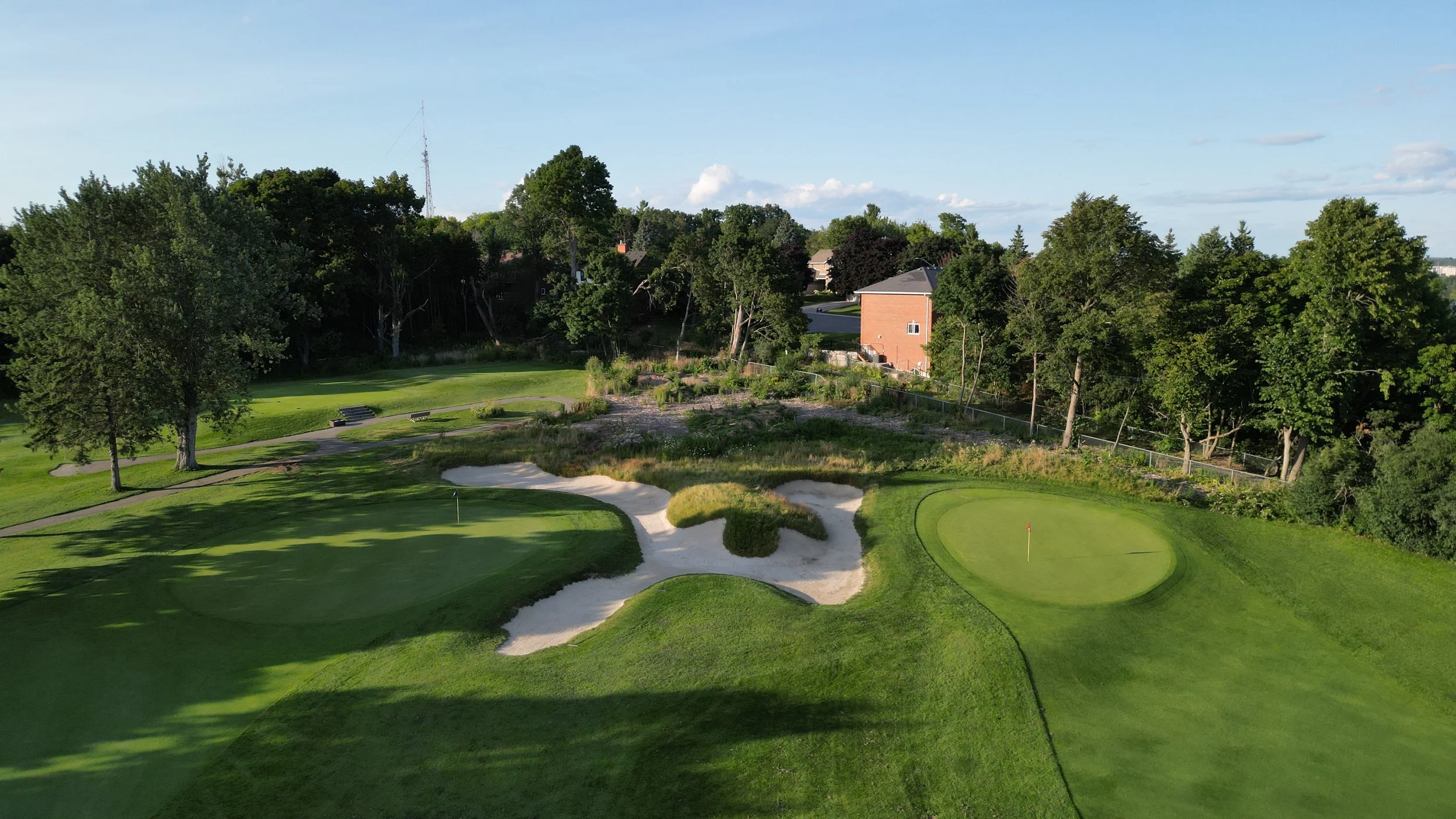
Kawartha’s magnificent bunkers on full display here between the first (left) and tenth (right) greens
It's enough to give the greater public the impression that courses that are simply nice to look at are rewarded over those that possess the fundamentals key to making a great course. As someone who studies the architectural side of the game and has taken time to travel to far-flung places across Canada to see its courses across the spectrum, it's disappointing that we're leaving the public with a mishmash of ideals.
In the last few years, meaningful progress has been made advancing the discourse around golf design in Canada — the level of critical thinking and public conversation has changed substantially from a decade ago. As our country's most visible piece of media on the subject, this ranking feels left behind, a holdover against the vernacular of those well informed on the subject. The gap comes down to architectural understanding. This isn't about how many courses a panelist has seen — anyone can visit a golf course and play — it's whether they can evaluate what they're looking at. Travelling, reading, listening, and studying the trends shaping the world's great courses is what builds that understanding. We don't need agreement on the list. We need panelists capable of forming one on architectural grounds, not one based on beauty and conditioning. Addressing the foundational gaps in architecture knowledge remains paramount for this ranking to reflect the postmodern thinking and ordered progress on the subject.
What is evaluated in thse rankings?
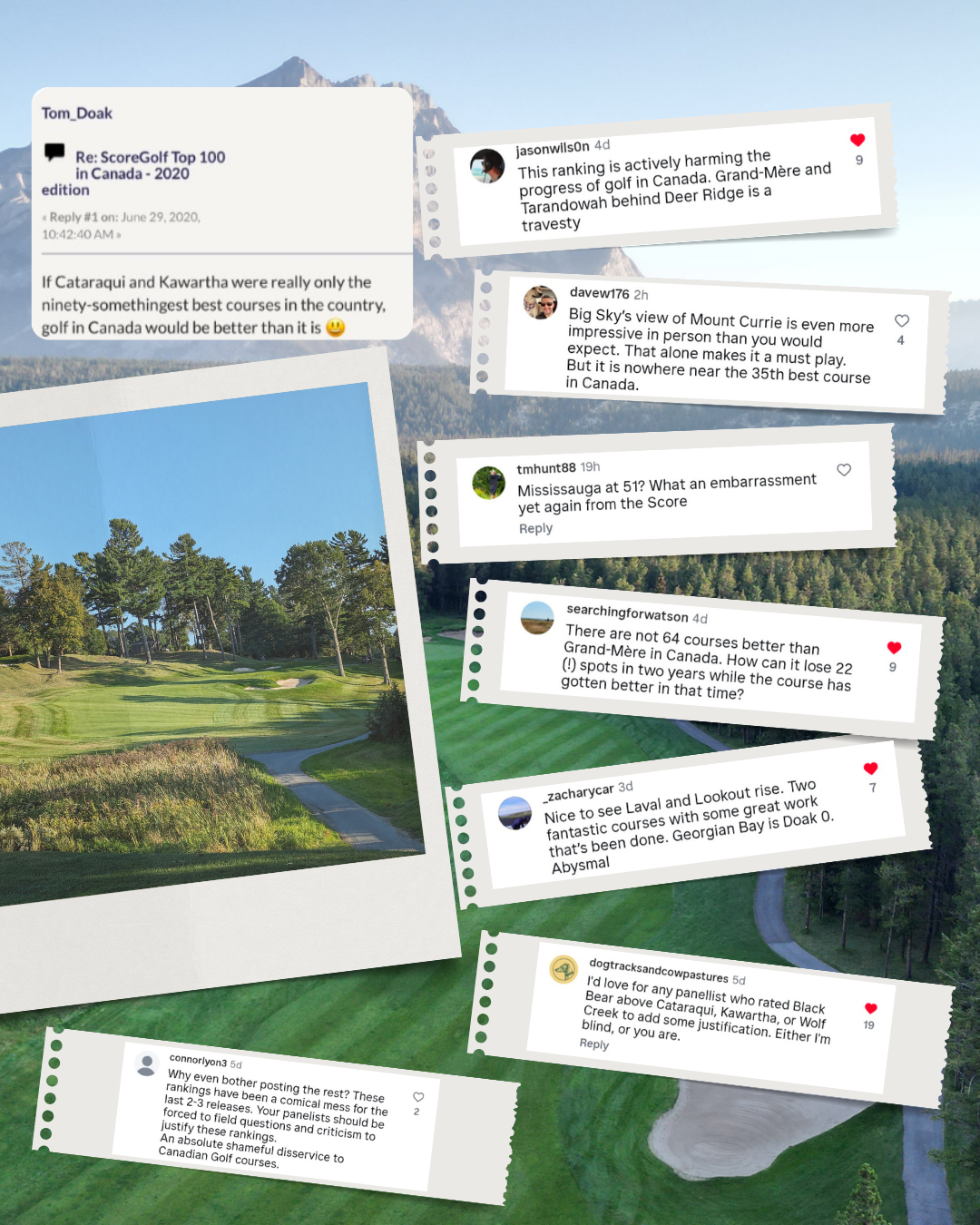
Numerous criticisms on social media.
Panelists receive guidelines they are supposed to follow — including seminar’s on these guidelines and expectations of panelists in an attempt to produce a list that would (hopefully) avoid the issues we are witnessing. SCOREGolf as a publication does a good job at laying out the criteria for everyone to understand. The content they produce from the data we input is notable and helps convey the message about what great golf can look like from coast to coast.
My methodology is pretty simple - i’ve outlined this well here on my website. But that doesn’t translate directly to the methodology used by SCOREGolf, so i’ve written a quick insight into some of my thinking when using these guidelines. It’s not wholesome, but gives the reader an idea of what goes on behind the scenes.
Beauty
This isn’t a question about the inherent beauty of the setting. Not every golf course can be laid out along the Bow River like Banff, or perched atop a sandy cliffside overlooking the ocean like Cabot Cliffs. Golf courses can be stunningly beautiful in their own settings, far away from any natural geographical interest. Toronto Golf Club is a great example of this — no mountains, no ocean, just straight up great visuals for golf — although very notably on a diverse piece of property. That’s a design that has been carefully crafted using the natural topography it was afforded, and one which has properly stewarded its land to what it is today.
Strategy
There are few golf courses in Canada that truly excel in strategic design. More often than not, the “strategy” is just to play away from hazards — this is the penal school of golf design. In evaluating strategy, one firstly considers if the design even has strategic elements to it. Next, one considers: “how do players navigate that strategy?” Finally, conditioning plays an important role. If I can clearly see some strategic elements are afforded to the player, but the turf is too soft, or the course is overcome with trees that inhibit the design, it lacks the overall polish that allows these strategic considerations to come to life. I bring up “soft” as a texture because patchy or hard pan features naturally amplify these design elements, while soft and lush typically detract from them. You can play what many would consider a “poorly” conditioned golf course and still understand the design elements if the typology of those conditions is right — Highlands Links is a great example of this.
Challenge
Golf isn’t a test of who can withstand the most brutally difficult tasks at hand, unless of course you play The National Golf Club of Canada. Rather, how can players navigate the land’s complexities to challenge their game to the greatest extent without being overly penal? A one-dimensional golf course lacks the architectural diversity necessary to allow all types of players to succeed.
Design
The things that great golf courses do so well revolve around defining interest — be it fairway contours or bunkers that frame tee shots, mounding in and around greens, and how that all comes together as a cohesive set using a range of characteristics. There is a key difference between functional design and needlessly convoluted architecture.
Par 3’s, Par 4’s, Par 5’s
Evaluating the strength of par 3s, 4s, and 5s, one must consider things like variety — details like direction of play, length of holes, shaping and construction of fairways, bunkers, and greens. These categories really boil down the individual aspects of what defines the golf course and which elements are stronger than others. For example, sometimes a course really excels with a great set of Par 3’s, but lacks the same depth when it comes to two or three-shot holes.
Fun
This really asks the panelist, what do you enjoy in golf? And is that replicated here? For me, my taste is very clearly focused on quirk, charm, a good set of greens, and incorporating proper texture. A course like Lakeview rates highly on my fun scale given its particularly quirky features and interesting set of green complexes. While a course like Stewart Creek with its gross misuse of such beautiful property, leading to the creation of unnatural and unwalkable golf, ranks low for me. I simply don’t enjoy scenic cart rides. I can hike a mountain or sit at the beach for free. Why pay for golf at extraordinary rates if all you want to do is enjoy the scenery around you?
Conditioning
For all the talk about how conditioning plays such a small factor in these rankings (5%), its pretty evident that panelists are (or at least, should be) considering conditioning as part of almost every aspect that goes into the evaluation of golf courses. Yet, conditioning is not always about the fastest greens, or most lush fairways. “Patchy” golf courses with slower greens absolutely have their place in golf - just as they did during golf’s golden age. Lush, “green” golf is a disease on golf’s broader landscape.
Exclusions and Other Considerations
Courses are ranked based on what is presented from the first tee to the 18th green. No amount of amenities, such as a practice facility or cart paths or a magnificent clubhouse with a great restaurant, should sway a panelist’s golf course recommendations. We evaluate golf course design and the presentation of that design. Great golf need not have the frills of luxury or unnecessary infrastructure to be considered exceptional.
Whether you agree or not, clubs without gender parity in their membership are excluded from the rankings — that’s a publisher-driven (TorStar) boundary, not one by this panel or by the editor. That excludes one or two golf clubs in Canada from rankings. For what it's worth, one of them is a top 20 course (my opinion), the other not a contender in its current form.
Naturally there are courses that don’t want panelists to visit or may only permit a visit with a member host. And there are some courses which are geographically sullied, such that panelists rarely visit (a shame). These are some complexities which may broadly impact a ranking such as this.
It’s not always possible to visit a course during peak season. Many courses have busy schedules, as do the volunteers who make up this panel. As a group we must have some consideration when it comes to conditioning and overall appearance — that’s one of the reasons evaluations should focus heavily on the architectural side of golf. As an example a little bit of scruffy edge on the bunkers, in the fairways, or slower greens should not dock huge marks from truly great courses built using the essential tenants of design.
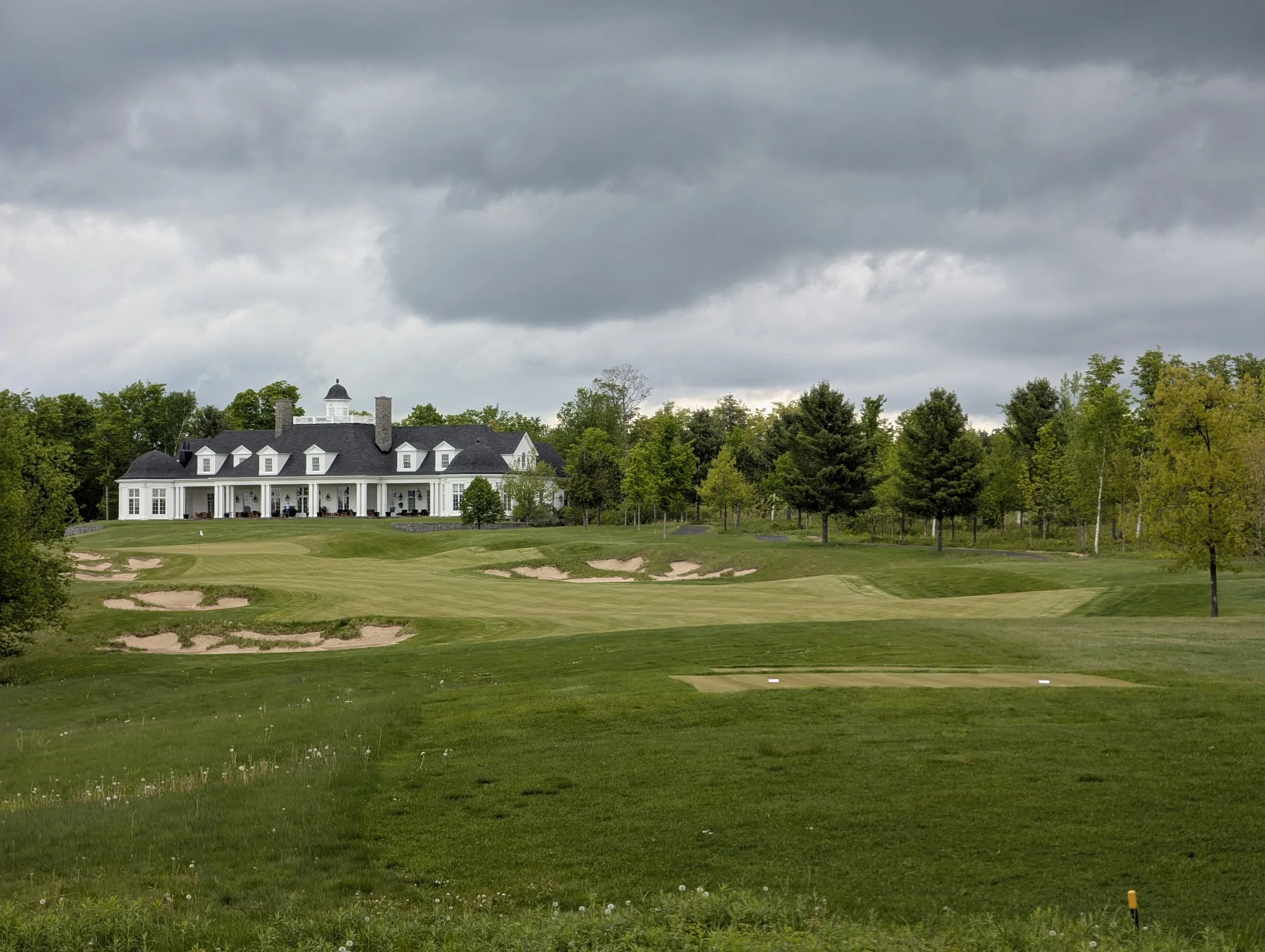
A May visit to Memphremagog shows time is necessary for the finer details of the golf course to come into its own. However, I conclude that this is a resoundingly beautiful, and strategically imperative golf course either way.
Reflections
SCOREGolf produces this list by way of input from approximately 90 panelists - I myself included in that list. They take the data input to produce videos and website content that makes the list easily digestible for all to see. They do a good job of producing this content. I’ve even collaborated with Jason Logan on a few pieces — It's fun to produce this work with people who are passionate about golf in Canada. I hope to continue this work in the many years to come (assuming they still want me after this piece! ha ha).
I guess what irks me about the list is this divide we seem to have created in what I’ll describe as “architecturally focused” and “presentation focused”.
It’s clear to me that this group really focuses on presentation of the golf course. Is the setting beautiful? Are the bunkers well maintained? Do I get a crisp lie in the fairway every time? Are the greens rolling fast? These are the frills of golf which I consider to be minimally important to the game. Take Grand-Mère, for example; people rush to judge the slowness of the greens or patchy nature of the fairways or the rag-tag feeling of the bunkers —but these shallow comments mask the architectural prowess on display that is nearly unmatched. It’s the type of product that you’d see at some of the world’s best golf courses, if perhaps a little worn down. Clearly, this is a factor of its remote location — a little less conducive to the conditions and revenue it might get if it were situated in the GTA.
Context matters. Having seen much of the list to this point, my journey through golf architecture has greatly evolved, and thus, my tastes have too. I am much more likely to overlook a weaker hole or two on a course in sacrifice of great golf features found elsewhere on property — one of the key reasons a course like Copper Point (Point) makes my own personal list. Simply having a nicely conditioned course is not enough to place it in the Top 100 for me — impressive architecture whether adequately built or sincerely of the land is key in my eye.
There are numerous golf courses I have deeply appreciated since I first laid eyes on them — one such example is Lookout Point — but there are also ones I thought I enjoyed, but upon a return visit, realized they no longer hit the mark. Improving the strength of the list comes from perspective and constant education. Still much to learn and digest as the years go on.
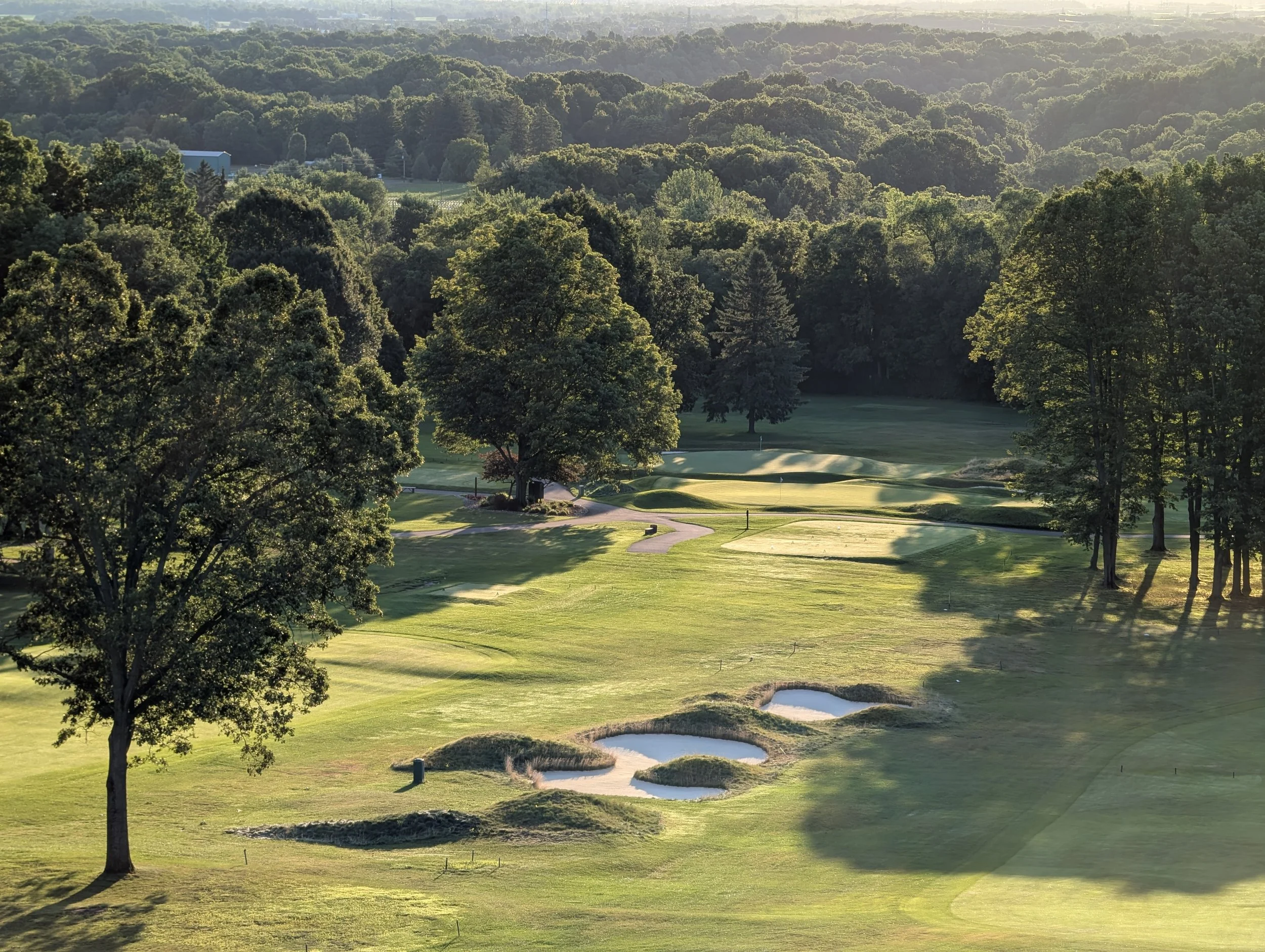
View from first tee at Lookout Point, across Travis’s fairway bunkers and mounding between 1 & 18 towards the second and 17th greens.
Oddities
I am sure that many find it very peculiar for clubs to have these massive swings in rankings every two years, especially when there are no big developments occurring. But the truth of the matter is that tastes change, panelists come and go, rankings fall off after 10 years, and the collective is a small group which can lead to big swings when only a dozen or two might have actually seen the course. There are also flaws in the mathematics behind these categories. When scores are 7.5311 vs. 7.5325 that can easily mean jumps of 5 to 10 spots when courses are being clumped together. Naturally, I think that’s why I preferred the ranking style used when I was contributing over at Beyond The Contour. It allowed us to contribute to the list in buckets for every course they had seen, and for those who hadn’t seen as much as the next, the weight of their ratings was fractionally smaller. Naturally you’ll see in my rankings that I use buckets to categorize golf beyond the top 30, where the intricate details of #31 vs. #48, as an example, are so minute it really doesn’t matter.
As for personal outliers, there are many courses where I just don’t “get it”. The likes of Credit Valley, Black Bear Ridge, Kananaskis Mt. Lorette, Oakdale (at least not the Homeniuk/Knudson routing), and Deer Ridge come to mind. I don’t mean to pick on these courses — in a vacuum they are adequate to the nature of everyday golf — but they are clearly not my taste for the Top 100. Quite frankly, there is nothing that sets these courses apart from many others in this country. One’s that few panelists visit and would deserve their own mention on a more diverse list. Needless to say, it’s disappointing that we have come to the conclusion that such mediocrity is suitable for Top 100 status. Harsh to read, but relatively uncomplicated to fix.
How golf courses like Pulpit (19!), London Hunt, and Bigwin Island continue to place above the likes of Lookout Point, Scarboro, and Weston i’ll never understand.
There are not 10 better courses in Canada than Sagebrush and Highland Links. While Highland Links may not be in the best shape of its life, the golf course is incomparable and has the single best set of par 5’s in the country. And Sagebrush has come out of its hibernation in the last few years to deliver both a fantastic experience (which many of you are looking for in a golf trip!) and an exceptional golf product. No one builds greens like Rod Whitman and that shows at Sagebrush which just marvellously fits into the dramatic landscape so elegantly. The debate over the top 10 can be a bit messy, and I can see valid opinions as to where each might reside on that list, but the golf courses that make up those 10 are really not up for debate.
Will a golf course ever knock Cabot Cliffs off the top spot?
The (small) difference between Cabot Cliffs and Links is always a shocking one to me, especially given details I know from fellow panelists I trust. Cliffs is such a beautiful routing, so it’s easy to pick that one as the “best” golf course in the country. But, to me at least, it plays a lot less like proper golf and more like an amusement park at times. Delivering the shock and awe of the scenery instead of great golf features (although at times it certainly does both!). Links, on the other hand, contends with a much more subdued parcel and excels at strategic design, alongside its wonderful green complexes, which are among the best in the country. It's harder to digest, but once you do, it becomes easily apparent that the contest isn’t particularly close. Perhaps my opinions may change as I head back to Cabot this fall, but undoubtedly in my mind there is no better golf course in Canada than that of Rod Whitman’s Links course.
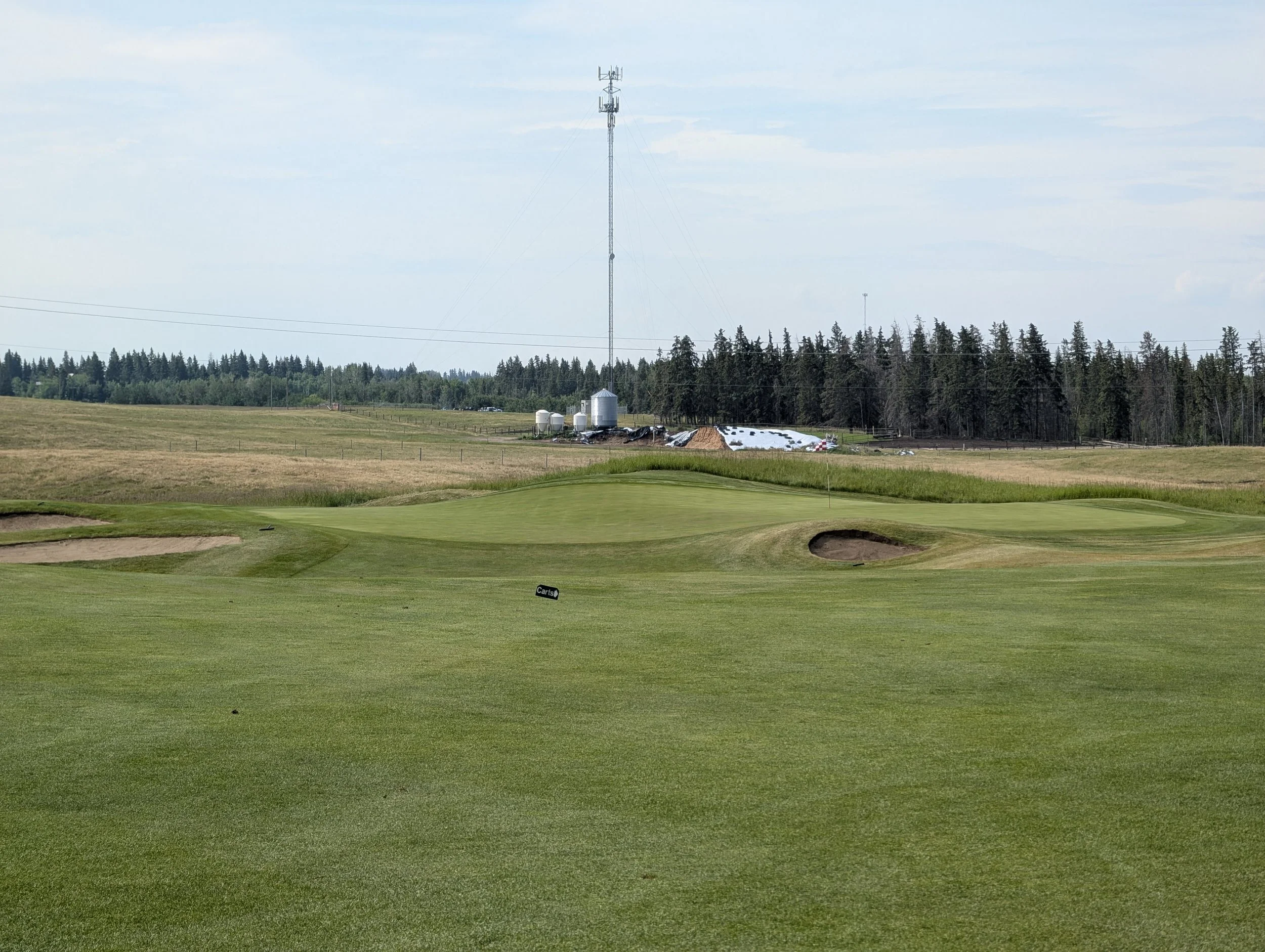
The Old course at Wolf Creek’s wonderful set of green complexes should be considered amongst the Canada’s best sets.
Appreciations
I am happy to see great work be rewarded. Many clubs have invested so much time and effort into renovation work, by architects who have done things the right way. Kudos to Jeff Mingay’s work at Rivermead and Beaconsfield, Christine Fraser’s work at Northumberland (which I have yet to see, but do see much intrigue there), and Jim Urbina and Riley Johns’ effort at St. Charles. With St. Charles landing back on the list, it is the first time in a long time that Manitoba has a golf course represented. Not for my lack of trying; I have three Manitoba golf courses ranked in my personal top 100.
There was also some positive movement for clubs like Rosedale, Laval-sur-le-Lac (both Blue and Green), and Lookout Point. Club’s that I deeply appreciate for their approaches to maintaining golden age architecture and in the case of the Blue course at Laval, one of the best modern takes on design this country has seen. I understand readers get frustrated with the lack of access to these great properties; you're preaching to the choir here. I would love it if every golf course maintained some level of access for architecturally inclined golfers — a small (reasonable) greens fee with a properly introduced letter, accompanied by a member or professional host for a day. Either way, there is great golf to be had at these properties, so it’s nice to see them get their due.
Not to be overly rude, but there is a small appreciation for places like Glen Abbey and Angus Glen to no longer be situated on these lists. Something I do take a bit of an issue with is this prestige that comes with hosting our National open and its relationship to securing a spot in Canada’s Top 100. These modern abominations are a product of this legacy and panelists have very clearly continued to award hosting with placement on, or movement up, the list. We saw that recently with Oakdale and again with TPC Toronto — both courses which I would clearly see in my personal list but ones which would find themselves closer to the bottom than they currently are, and with Oakdale a different routing, from their 27-hole property, entirely.
I commented above about how I don’t enjoy “scenic cart rides”. Golf is a game that was meant to be played while walking. While there are some places which truly cannot avoid the use of a golf cart to navigate players around, the details in the architecture must be routed in the foundational aspects of the game to make their way into and towards the top of these lists. Places like Sagebrush, Greywolf, Predator Ridge (Ridge), Tower Ranch, and even Crowsnest Pass to a certain extent do a great job at delivering proper tests of golf without being overly whacky. On the other hand it is delightful to see the likes of Black Bear Ridge and Stewart Creek make their way down these lists. Much work still to be done in this regard, can’t have abominations like the Predator course at Predator Ridge on this list for much longer.
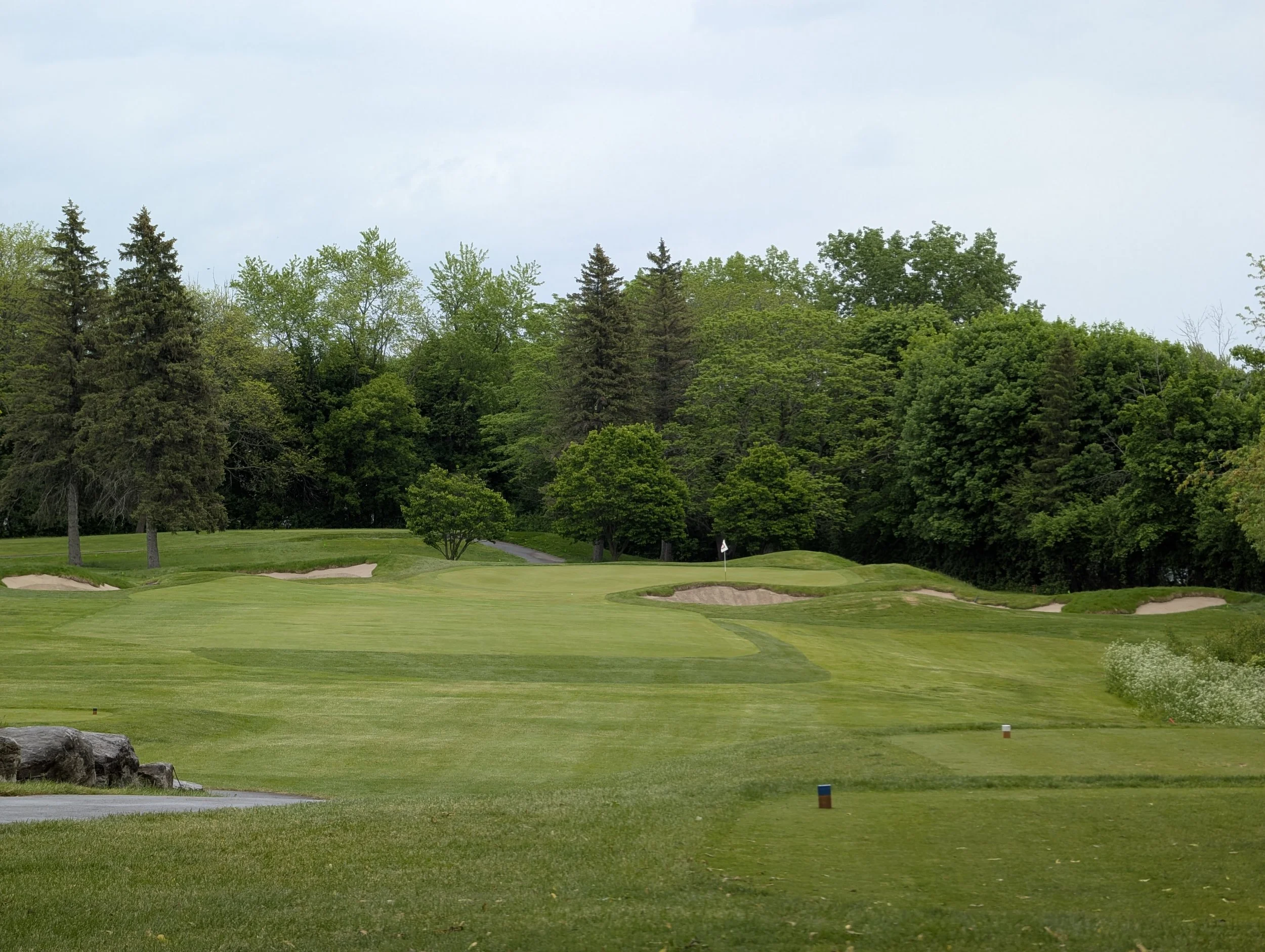
The delightful par 3 13th hole at Beaconsfield Golf Club - one of the course’s strongest.
Suggestions
If you are a club member or a golf professional and you want to know what you can do to improve your golf course, consider the following:
Travel. See the great golf courses of the world and study what makes them great. These concepts can be replicated, but should never be duplicated, with the varied natural interest that is present in your own property.
Study. Read about golf design or listen to architects speak via podcasts or videos if that’s more your flavour.
Get out of the way. Hire a good architect and let them do the work. Don’t try to force a certain concept on your course that is not suitable for what you have. Don’t needlessly flatten or remove features because they are difficult to maintain — find ways to make it work.
Conclusion
It’s compelling to try to tell the story of great golf in Canada; that’s why I built this website in the first place. Upon reflection, and in the spirit of full transparency, I am displaying my personal rankings of Canada’s top 100 golf courses. This isn’t meant to compete with SCOREGolf or any other list. You may love it or hate it, but it will evolve over time as my tastes change, I make return trips, and clubs make improvements.
There are still many hidden gems and a small handful of notables that I have yet to see: Calgary, Humber Valley, Terra Nova, James Island, Thornhill, Northumberland Links, to name a few. These places, passion for writing about architecture, and dedicated readers, continue to fuel my drive for golf in this country.
If you read this far, thank you. Sometimes I don’t know if any of this effort is worthwhile, but I push on regardless. The first five people to email me will get an OnGolf hat for free (must be Canadian resident to enter, shipping only included within Canada). I will reply, through official channels, only to those who “won”.
Until next time, cheers.